

Maven Resource Blog
Commercial Roof Maintenance Cost Breakdown: What Drives Your Annual Budget
A commercial roof maintenance cost breakdown shows what drives your annual budget, from inspections to repairs. Learn how to plan and compare proposals.
Book a free roof inspection
Last Updated: November 12, 2026
Quick Summary
A commercial roof maintenance cost breakdown separates your plan fee from total annual roof spending, which also includes out-of-scope repairs, emergency leak calls, drainage work, and larger repairs building toward replacement. Key cost drivers are roof size and penetrations, roof type and materials, condition and age, and access, drainage, and weather exposure.
- Most commercial roofs do well with two inspection visits a year, plus a check after any major storm.
- Penetration-dense roofs generally carry more per-visit labor than a clean roof of the same size.
- Budget four categories: plan fee, routine repair and materials, drainage and access work, and contingency reserve.
- A lower plan fee often means fewer visits, a narrower minor-repair definition, or exclusions billed as extras.
- Ask for exclusions in writing, since a plan that hides its limits is a surprise waiting to happen.
Table of Contents
- What a Commercial Roof Maintenance Cost Breakdown Actually Covers
- The Factors That Move Commercial Roof Maintenance Costs
- Your Commercial Roof Inspection Checklist
- Building a Commercial Roof Maintenance Schedule
- Commercial Roof Repair vs. Replacement: The Cost Decision
- What a Commercial Roof Maintenance Plan Should Include
- How to Compare Proposals and Budget for Surprises
- Book a Free Commercial Roof Inspection
- Frequently Asked Questions
What a Commercial Roof Maintenance Cost Breakdown Actually Covers
A commercial roof maintenance cost breakdown separates two numbers that owners often blend together: what a maintenance plan charges, and what the roof actually costs you across a year. Building owners often read a plan fee and assume that is the whole budget.
It is not. A plan fee covers scheduled visits and small fixes. Total annual spending also includes one-off repairs, emergency calls, drainage work, and the slow build toward replacement.
Plan Fees vs. Total Annual Roof Spending
Think of a maintenance plan as a service agreement. You pay a set amount for routine inspections and minor repairs on a schedule. That fee is predictable.
Total annual roof spending is wider. It adds:
- Out-of-scope repairs the plan does not cover
- Emergency leak calls after a storm
- Drainage cleaning and roof access setup
- Larger repairs that build toward a future replacement
Budget for both lines. Owners who only track the plan fee get surprised when a storm pushes them past it. Owners who track total spending can plan ahead.
The Factors That Move Commercial Roof Maintenance Costs
No two commercial roofs price the same. The variables below drive most of the difference, and knowing them helps you read any estimate with a clear head. We break them into two groups: what the roof is, and what it takes to service it.
Roof Size and Building Characteristics
Square footage sets the scale. A larger roof area means more walking, more seams to check, and more time on every visit. But size alone is a crude measure. What actually drives labor is the number of roof sections, the parapet walls and roof-to-wall transitions, the count of penetrations (HVAC curbs, exhaust fans, pipe boots, skylights), and how many levels or split roofs the building has.
Penetration-dense roofs generally carry more per-visit labor than a clean roof of the same size, because every curb and boot is a place to inspect, seal, and re-check.
Roof Type and Roofing Materials
Each system has its own labor pattern, and that pattern is what a maintenance budget really tracks:
- Standing-seam metal: fastener and clip review, sealant at penetrations, coating condition, and panel movement. Metal roofs often need less frequent patching but more attention to sealants and coatings over time.
A maintenance plan should be priced against your actual roof system, not a generic rate. Ask any contractor to price the plan against your specific system.
Roof Condition and Age
Condition and age decide how much repair work sits behind the routine visit. A newer roof with tight seams mostly needs inspection and drainage work. An older roof with active leaks, widespread blisters, or saturated insulation needs repair labor on top of every visit, and that repair labor is the part a plan fee rarely covers in full.
Condition generally falls into tiers: sound roofs need inspection and minor upkeep, aging roofs need more frequent minor repairs, and failing roofs need repeated repairs that can approach replacement cost.
Access, Drainage, and Weather Exposure
How your crew gets on the roof changes the price.
Drainage is another. Clogged drains and ponding water cause repeat leaks, and clearing them takes time on every scheduled service. Roofs with few drains, poor slope, or debris from nearby trees need more drainage attention.
Coastal weather exposure adds wear. Salt air, wind-driven rain, and sun all shorten the life of roofing materials.
What This Means for Your Estimate
When you read a proposal, match each factor above to a line in the scope. If a bid does not state your roof system, your penetration count, your access method, and your inspection frequency, it is not priced to your building, it is a guess. That is the single most useful test we can offer before you compare numbers.
Your Commercial Roof Inspection Checklist
A good inspection is the backbone of any maintenance program. Here is the checklist we walk on a commercial roof:
- Check seams, flashing, and penetrations for splits or lifting
- Look for ponding water and blocked drains
- Inspect HVAC curbs and pipe boots for gaps
- Photograph any blisters, punctures, or worn patches
- Note roof age, condition, and repair history
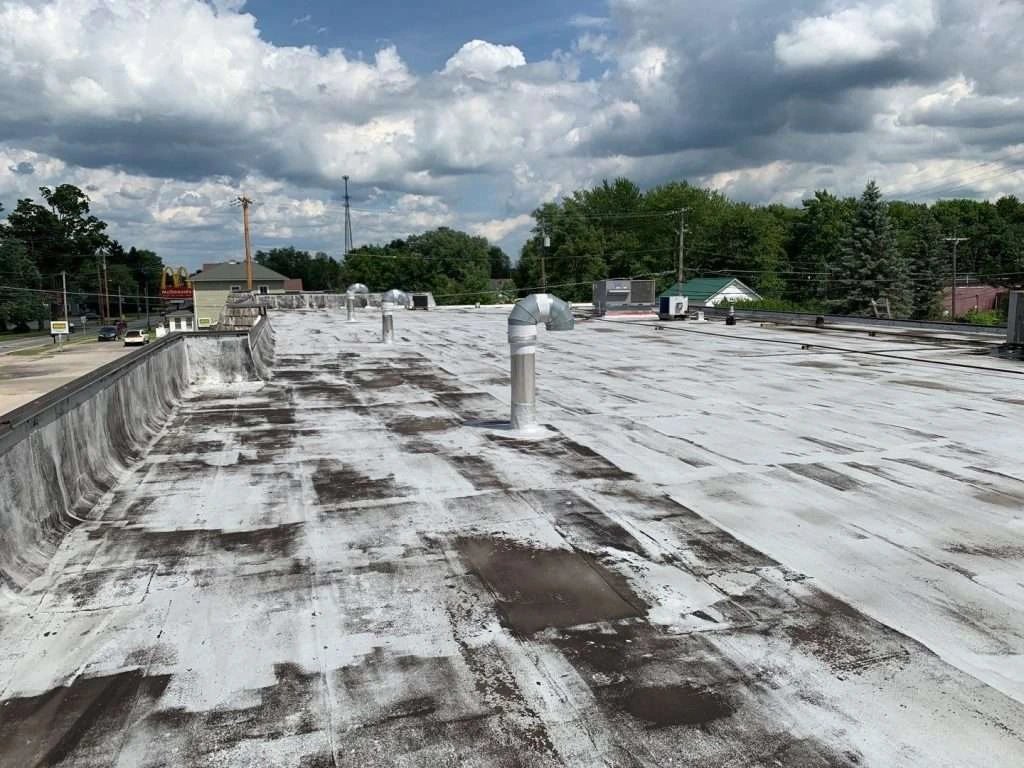
Inspection frequency depends on the roof. Most commercial roofs do well with two visits a year, plus a check after any major storm. To get the most from that visit, see how to prepare for a professional roof inspection.
Building a Commercial Roof Maintenance Schedule
A maintenance schedule turns good intentions into a calendar. We build ours around the seasons and the roof’s weak points.
A simple schedule looks like this:
- Spring: full inspection, drainage clearing, seam check
- Summer: storm-season readiness, fastener and coating review
- Fall: pre-winter inspection, debris removal, minor repairs
- Winter: emergency response plan and leak checks
Pair the schedule with a written log. Every visit, repair, and photo goes in one place. That record helps with budgeting and with insurance documentation if a storm hits.
For a deeper set of practices to plug into your schedule, see our guide to roof maintenance best practices.
Commercial Roof Repair vs. Replacement: The Cost Decision
The repair-or-replace call drives your long-term budget more than any single invoice. Get it right and you spread costs over years.
Repair makes sense when the roof is sound overall and the problem is local.
Replacement makes sense when repairs pile up. Repeated leaks, widespread wear, and a roof near the end of its service life point to replacement.
For a fuller decision framework, read our guide on roof replacement vs. minor repair.
What a Commercial Roof Maintenance Plan Should Include
A solid commercial roof maintenance plan covers more than a yearly look. Here is what to expect in a service agreement:
- Scheduled inspections with written reports
- Minor repairs included or clearly priced
- Drainage cleaning and debris removal
- Photo documentation of roof condition
- Priority response for leaks and storm damage
Ask for the exclusions in writing. A plan that hides its limits is not a plan, it is a surprise waiting to happen.
How to Compare Proposals and Budget for Surprises
Comparing proposals is where careful owners save the most, and building a real annual budget is where they stop getting surprised. Here is how to itemize the budget and how to line up scopes so you are comparing the same work.
Itemize Your Annual Roof Budget
A useful budget separates four categories, because they behave differently:
- Plan or service fee, the scheduled inspection and minor-repair agreement. Predictable, paid on a set schedule.
- Routine repair and materials, out-of-scope patches, sealant, flashing, and small fixes the plan does not include. Semi-predictable if you track history.
- Drainage and access work, drain clearing, debris removal, and any access setup. Recurring, and easy to underestimate on tree-heavy or low-slope roofs.
- Contingency reserve, a set-aside for storm damage, emergency leak calls, and larger repairs. This is the line that keeps a bad month from becoming a bad year.
Track each category separately for a year and you will see your own pattern. Owners who only watch the plan fee get surprised when a storm pushes them past it; owners who track all four can plan ahead.
Compare Proposals Line by Line
Line up every bid against the same checklist so you are comparing like with like:
- Scope of work, itemized, what is inspected, what is repaired, and what is excluded
- Inspection frequency and visit count, two visits a year is common; confirm it in writing
- What counts as a minor repair vs. an extra, the definition matters more than the label
- Emergency response terms, response time, after-hours availability, and whether storm calls are included
- Documentation and reporting, photos, written findings, and a condition log you can hand to an insurer
Watch out: a lower plan fee often means fewer visits, a narrower definition of “minor repair,” or exclusions that push routine work into billable extras. Compare the scope, not just the number.
Build the Contingency Line
Storm damage and emergency repairs are hard to predict, so budget a reserve rather than pretending they will not happen. A reserve also covers the larger repairs that build toward a future replacement, so you are not caught flat when the repair-or-replace decision arrives.
Before you sign a maintenance or repair agreement, read our guide on how to hire local roof repair contractors. And if you want to confirm what a legitimate free inspection looks like first, read our guide on how to spot a free roof inspection scam.
A useful annual roof budget separates four categories, because each one behaves differently.
| Budget category | What it covers | How it behaves |
|---|---|---|
| Plan or service fee | Scheduled inspection and minor-repair agreement | Predictable, paid on a set schedule |
| Routine repair and materials | Out-of-scope patches, sealant, flashing, small fixes | Semi-predictable if you track history |
| Drainage and access work | Drain clearing, debris removal, access setup | Recurring, easy to underestimate |
| Contingency reserve | Storm damage, emergency leak calls, larger repairs | Set-aside for the unpredictable |
Book a Free Commercial Roof Inspection
Every budget above starts with one thing: knowing the true condition of your roof.
Maven Roofing is a veteran-owned contractor serving commercial property owners across Eastern North Carolina. We offer free roof inspections with straightforward, no-pressure recommendations.
If you want to confirm what a legitimate free inspection looks like first, read our guide on how to spot a free roof inspection scam.
Your roof will not tell you when it is about to fail.
Frequently Asked Questions
What factors affect commercial roof maintenance costs?
The biggest cost drivers are roof size, roof type, and current condition. A large flat roof with many penetrations and poor drainage takes more labor and material to service than a simple standing-seam metal roof. Access matters too: roof hatches, safety rails, and interior obstacles slow crews down. Local weather exposure, including salt air and storm frequency along the coast, raises how often repairs are needed. A commercial roof maintenance plan prices all of this, so two buildings of the same square footage can carry very different annual budgets.
How often should a commercial roof be inspected?
Most commercial roofs benefit from at least two inspections a year, typically in spring and fall, plus a check after any major storm. Buildings with older roofs, heavy foot traffic, or lots of rooftop equipment may need quarterly visits. A commercial roof inspection checklist should cover membrane seams, flashing, drains, penetrations, and ponding water. Pairing inspections with a written commercial roof maintenance schedule keeps small issues from turning into leaks and gives you records for warranty and insurance purposes.
When should a commercial roof be repaired instead of replaced?
Repair usually wins when damage is isolated, the roof is still within its expected service life, and the underlying deck and insulation are sound. Replacement makes more sense when leaks are widespread, repairs keep recurring, or the roof is near the end of its life. A commercial roof maintenance plan can help you track repair frequency so the repair vs. replacement call is based on records, not guesswork. A free inspection gives you a clear picture of condition before you commit to either path.
What should a commercial roof maintenance plan include?
A solid plan spells out inspection frequency, the tasks performed each visit, minor repair allowances, drainage cleaning, and documentation with photos after every service. Ask whether emergency repairs are covered and how they are billed. The plan fee is only part of your total annual roof spending, so compare proposals on scope, not just the headline number. Maven Roofing provides free inspections and no-pressure recommendations so property managers can see what their roof actually needs before signing anything.
