

Maven Resource Blog
Best Roof Maintenance Practices for 2026
Roof maintenance practices for 2026 that protect Eastern NC homes from salt spray, hurricanes and algae. Learn the checks that extend roof life.
Book a free roof inspection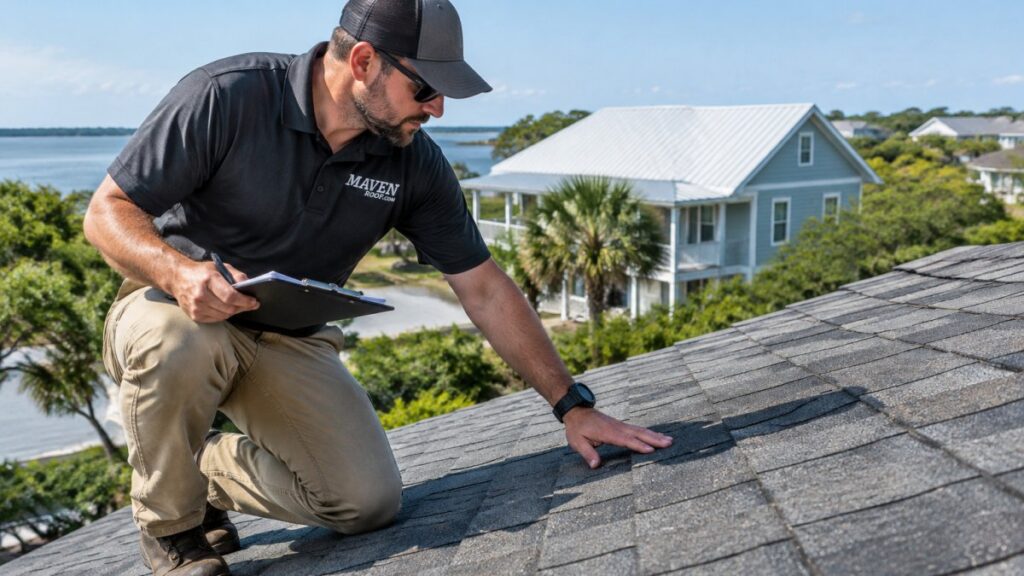
Last Updated: November 4, 2026
Quick Summary
The best roof maintenance practices for 2026 start with local conditions: schedule a professional roof inspection twice a year, check the roof after every major storm, keep gutters and debris cleared, trim overhanging branches, and clean algae gently before it holds moisture against shingles. Eastern NC’s salt air, humidity and storm winds wear roofs faster than many homeowners expect.
- Schedule a professional roof inspection in spring and in fall.
- Inspect after any major storm, even if the damage looks minor.
- Avoid pressure washers, since high pressure can strip shingle granules.
- Clear gutters and downspouts so water drains away from the foundation.
- Trim tree branches so they stay several feet clear of the roof.
Table of Contents
- Why Eastern NC Roofs Need a Different Maintenance Plan
- Schedule a Professional Roof Inspection Twice a Year
- How to Remove Algae From Roof Shingles Safely
- Signs of Roof Storm Damage to Check After Every Major Storm
- Clearing Gutters, Debris and Vegetation Year-Round
- Roof Rejuvenation Benefits for Coastal Homes
- Book Your Free Roof Inspection Before Next Season
- Frequently Asked Questions
Why Eastern NC Roofs Need a Different Maintenance Plan
Maven Roofing works on roofs across Eastern North Carolina, and we know the coast is hard on them.
That is why the best roof maintenance practices for 2026 start with local conditions. For commercial properties, adapting these checks to building-specific risks makes preventative maintenance for businesses a practical extension of a locally informed roof care plan.
- Salt spray can corrode metal flashing and fasteners over time.
- Humidity encourages algae and moss on shady slopes.
- Storm winds can lift shingles and loosen edges.
- Heavy rain exposes small leaks that were hidden during dry months.
Keeping up with roof maintenance helps prevent small problems from turning into major repairs. It also protects your home investment and can extend the life of your roof.
Schedule a Professional Roof Inspection Twice a Year
We recommend a professional roof inspection at least twice a year, once in the spring and once in the fall. Spring checks show what winter storms did. Fall checks prepare the roof for hurricane season and heavy rains.
A trained eye catches things a homeowner often misses from the ground. Our free roof inspections give you a clear picture of your roof’s condition with no pressure to buy anything.
- Spring: Look for storm damage from winter and early spring weather.
- Fall: Prepare for hurricane season and the rainy months ahead.
- After any major storm: Schedule an inspection even if the damage looks minor.
What a Professional Roof Inspection Checklist Should Cover
A thorough inspection should look at more than just the shingles. Here is what our checklist covers:
- Shingle condition, including curling, cracking, buckling, and granule loss
- Flashing around chimneys, vents, skylights, and valleys
- Sealant around penetrations and edges
- Gutters and downspouts for clogs or damage
- Ridge lines and roof edges for lifted or missing pieces
A professional inspection often finds problems before they turn into leaks. That can save you from costly interior damage later.
Here is a quick summary of what a professional roof inspection covers and when to schedule one.
| Timing | Why it matters | What to look for |
|---|---|---|
| Spring | Shows what winter storms did | Storm damage from winter and early spring weather |
| Fall | Prepares the roof for hurricane season | Heavy rain and hurricane readiness |
| After any major storm | Catches damage that looks minor | Schedule an inspection even if damage seems small |
How to Remove Algae From Roof Shingles Safely
Dark streaks on shingles are usually algae growth, and in humid coastal areas they show up fast. Algae does not just look bad.
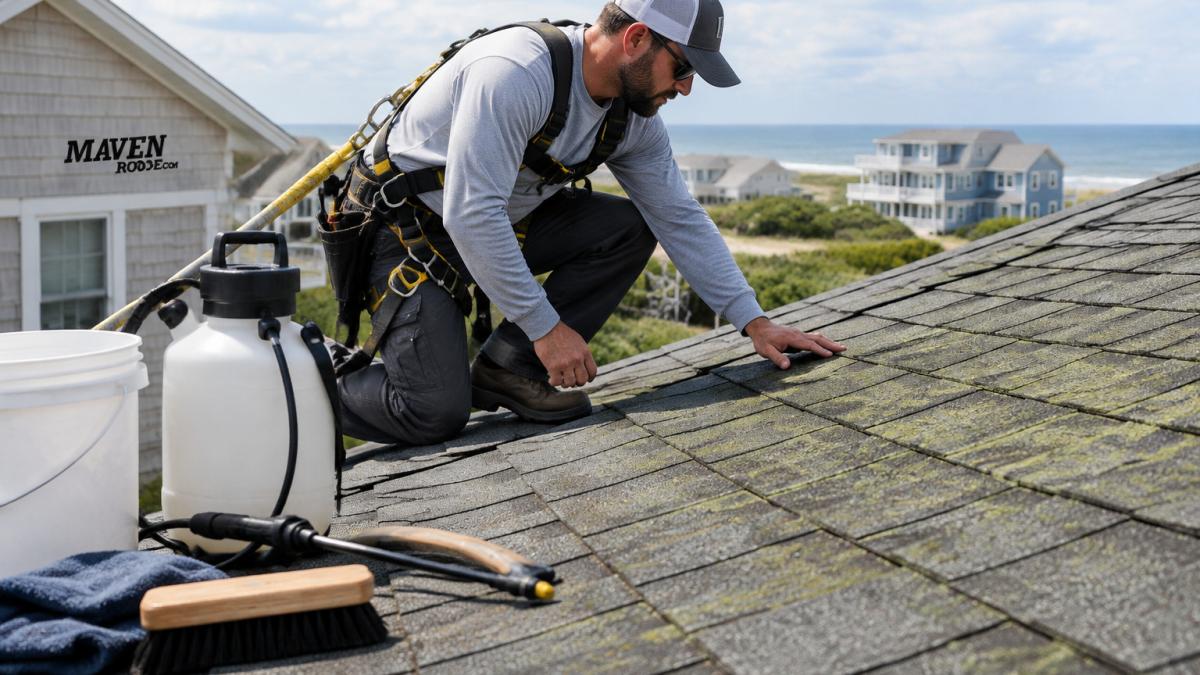
Some cleaning is safe for homeowners to try, but roofs are dangerous places to work. Heights, wet surfaces, and steep pitches cause serious injuries every year.
Here is a safe approach for light algae:
- Check the weather first. Pick a dry, calm day with no rain in the forecast.
- Use a ladder and a safety harness if you go onto the roof, or have a professional do the work.
- Use a gentle cleaning solution made for roofing, applied from the ground or with a low-pressure sprayer.
- Avoid pressure washers. High pressure can strip granules and damage shingles.
- Rinse gently and let the roof dry fully.
If the growth is heavy, or if moss has taken hold, the problem needs more than a quick rinse. Learn more about roof rejuvenation to see if it fits your home.
For a deeper look at moss removal on coastal roofs, read our guide on 7 Steps to Safely Remove Moss From Coastal Roofs. You can also review our Remove Algae From Roof Shingles: A Step-by-Step Guide for the full cleaning process.
Signs of Roof Storm Damage to Check After Every Major Storm
After a major storm, walk the perimeter of your home and look from the ground first. Never climb onto a roof that is wet, damaged, or unsafe. What you record in the first 24 to 48 hours often shapes how an insurance claim goes, so treat this walk-through as documentation, not just a glance.
What to Look For From the Ground
- Missing, cracked, lifted, or creased shingles, creases matter because they signal wind stress even when the shingle is still attached
- Granules collecting at downspout outlets or in gutter runs
- Dents, dings, or dimpling on metal flashing, vents, and ridge caps (hail often shows here before shingles fail)
- Bent or lifted drip edge and fascia line
- Water stains on ceilings, walls, or exterior soffits
- Damp spots, staining, or a musty smell in the attic
Match the Check to the Roof Material
Different systems fail differently, and knowing what to look for saves time:
Book Your Roof Inspection Online →
- Asphalt and GAF shingles: look for granule loss, bruised or soft spots after hail, and tabs that have lost their seal. On older three-tab roofs, wind can lift an entire course without tearing it, so a ground view can look fine while the seal is broken.
- F-Wave synthetic shingles: these resist impact well, but check the perimeter and ridge for lifted edges and confirm the sealant lines are still bonded after a wind event.
- Standing-seam metal: check panel edges, fasteners, and seams for lifted panels, backed-out screws, and finish scuffs. Hail can dent panels without puncturing them, and dents at seams are where leaks start.
- Flat roofing systems: look for blisters, splits, seam separation, and standing water that has not drained within 48 hours of the storm passing.
Document Like an Adjuster Is Watching
This is where most homeowners lose ground on a claim.
- Photograph wide, then close. Take wide shots that show the whole slope and the surrounding yard, then close-ups of each damaged area. Include something for scale.
- Date everything. Use the timestamp on your phone or write the date on a note in the frame.
- Keep a written log. Note the storm date, the time you inspected, what you saw, and any interior symptoms (stains, drips, attic moisture).
- Save receipts and records. Any temporary tarping, emergency repairs, or interior cleanup belongs in the file.
- Do not discard damaged materials. If shingles or flashing come loose, keep samples until the claim is settled.
Watch out: signing anything from a door-to-door storm chaser before your own inspection can complicate the claim and the repair. Get your own documentation first.
Maven Roofing can help document storm, wind, hail, and leak damage and coordinate with insurance adjusters when appropriate. If you suspect damage, book a free roof inspection before you file so your documentation is complete.
Clearing Gutters, Debris and Vegetation Year-Round
Gutters and debris are often the first step toward roof trouble. When gutters clog with leaves, pine needles, and shingle granules, water backs up under the shingles and along the fascia, and that is where leaks and rot begin. On the coast, the debris load is heavier and more constant than inland, so a twice-a-year pass is a floor, not a ceiling.
A Year-Round Cadence That Fits Eastern NC
- Late winter (February-March): clear what winter storms dropped, check hangers and fasteners for pull-out, and confirm downspouts are still discharging away from the foundation.
- Late spring (May-June): clear pollen, seed pods, and early leaf drop before hurricane season. This is the pass that matters most for storm readiness.
- Late summer (August): a quick mid-season check after the heaviest rain months, look for granule buildup that signals shingle wear upstream.
- Late fall (November-December): the big leaf and pine straw pass. Clear valleys and low spots, not just the gutter runs.
Homes under pines, oaks, or tall hardwoods often need a third or fourth pass. If you can see daylight through the gutter from the ground, it is overdue.
What to Check Beyond the Gutter Itself
- Downspouts: confirm water exits well away from the foundation and that splash blocks or extensions are in place. A clear gutter feeding a buried or clogged downspout still backs up.
- Valleys and low spots: debris collects here first and holds moisture against the roof surface.
- Drip edge and fascia: look for staining, soft wood, or separation that suggests long-term overflow.
- Fasteners and hangers: sagging runs pull loose over time and need re-securing before the next storm.
- Flat roof drains and scuppers: on flat systems, clear drains and scuppers directly. Ponding water that sits more than 48 hours after rain is a drainage problem, not a weather problem.
- Metal roof panels: keep debris off panel seams and out of the pan; trapped debris holds moisture and can stain the finish.
Vegetation Control
Trim tree branches so they stay several feet clear of the roof.
Watch out: pressure-washing gutters or blowing debris with high-pressure air can drive granules and grit into downspouts and damage shingle edges. Use hand tools and a gentle rinse.
If gutters, valleys, or flat-roof drains are beyond a safe DIY reach, a free roof inspection is a good place to start.
Roof Rejuvenation Benefits for Coastal Homes
Roof rejuvenation is a maintenance option for roofs that are still in good structural shape but show dirt, moss, or algae.
For coastal homes, the benefits often include:
- Removing dirt, moss, and algae that hold moisture against shingles
- Helping protect the roof surface from further buildup
- Supporting a longer roof life when the roof is structurally sound
- Improving curb appeal without a full replacement
Rejuvenation is not the right fit for every roof. Severe damage, widespread shingle failure, or a roof past its useful life usually needs repair or replacement. You can read more about what to expect from rejuvenation before you decide.
Book Your Free Roof Inspection Before Next Season
The best roof maintenance practices for 2026 are simple to start: inspect twice a year, check after storms, keep gutters and trees under control, and clean algae before it spreads. Taking these steps early costs far less than waiting for a leak.
Maven Roofing offers free roof inspections with straightforward, no-pressure recommendations. If you want to prepare your roof before the next storm season, book your free roof inspection today.
Frequently Asked Questions
When is the best time to clean algae from roof shingles?
Early spring and fall are the most practical windows in Eastern North Carolina, when temperatures are mild and the roof is dry for several days in a row. Avoid cleaning during peak heat or after heavy rain, when the surface is slick and shingles are more vulnerable to damage. Cleaning should use methods that do not strip granules, such as a gentle low-pressure rinse with an appropriate cleaning solution. If you are unsure whether your roof is safe to walk on, schedule a free roof inspection with Maven Roofing before you start.
What are the signs of storm damage on asphalt shingles?
Look for missing or lifted shingles, cracked or curling edges, granules collecting in gutters or downspouts, and dents or dark spots on vents and flashing. Soft spots in the attic, water stains on ceilings, or daylight visible through the decking are also warning signs. Because hail and wind damage is not always visible from the ground, a professional inspection is the most reliable way to confirm it. Maven Roofing can document damage and coordinate with your insurance adjuster when appropriate.
How often should I schedule a professional roof inspection in Eastern NC?
Most homeowners in Eastern North Carolina benefit from an inspection twice a year, once in spring and once in fall, plus after any major storm. Salt spray near the coast, humidity, and hurricane-season winds all accelerate wear on flashing, sealants and shingles. Regular checks catch small leaks and loose components before they turn into interior water damage. Maven Roofing offers free roof inspections with no-pressure recommendations.
Is roof rejuvenation a viable alternative to replacement?
Roof rejuvenation can be a practical option when a roof is structurally sound but has moss, algae or surface buildup that is reducing its performance. It is not a fix for missing shingles, widespread granule loss, or deck damage, and a roof in that condition will generally need repair or replacement. Whether rejuvenation makes sense depends on the roof’s age, material and overall condition. A free inspection from Maven Roofing can help you decide which path fits your situation.
