

Maven Resource Blog
Roof Replacement vs Minor Repair: 2026 Decision Guide
Roof replacement vs minor repair: use this 2026 decision framework to weigh repair costs, roof age, and storm damage before you call a contractor.
Book a free roof inspection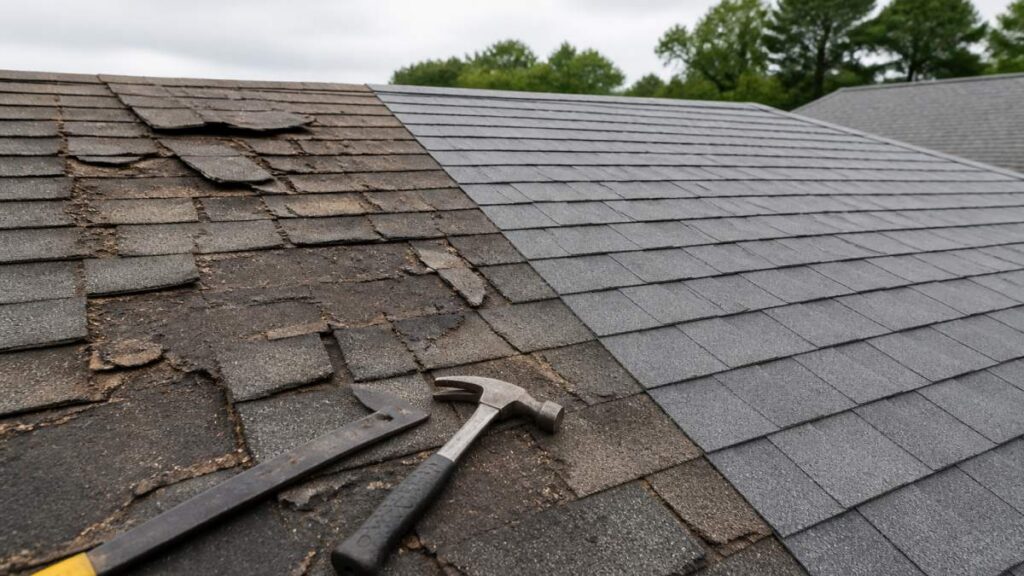
Table of Contents
- Roof Replacement vs Minor Repair: The Comparison Table That Answers It First
- Signs of Roof Failure That Point to Replacement, Not Repair
- The 25% Rule and Other Thresholds That Trigger a Full Replacement
- What Drives the Cost of Residential Roof Replacement
- Roof Repair ROI: When a Minor Fix Is the Better Financial Call
- Storm Damage, Insurance Claims, and the Repair-or-Replace Decision
- DIY vs Professional Threshold: What Homeowners Should Never Touch
- Conclusion: Making the Call on Roof Replacement vs Minor Repair
- Frequently Asked Questions
Last Updated: October 4, 2026
Roof Replacement vs Minor Repair: The Comparison Table That Answers It First
Roof replacement vs minor repair is a decision every homeowner eventually faces, and no single threshold fits every roof. At Maven Roofing, we’ve inspected roofs across Eastern North Carolina, and homeowners who understand the difference between surface wear and structural failure make better, cheaper decisions.
Here’s the short version before the details:
| Factor | Minor Repair | Full Replacement |
|---|---|---|
| Best when | Damage is isolated to a few shingles or one flashing point | Damage covers roughly a quarter or more of the roof |
| Typical lifespan added | A few years, if the rest of the roof is sound | A full new service life for the roof system |
| Insurance angle | Often paid as a repair claim | Usually triggered once damage crosses the threshold |
| Structural risk | Low if addressed early | High if water infiltration continues |
| Best for | Young roofs with one problem area | Aging roofs, storm damage, sagging rooflines |
According to the National Roofing Contractors Association, most asphalt shingle roofs are designed to last around 20 years with proper maintenance, which is why a 22-year-old roof with widespread granulation loss rarely justifies another patch.
Signs of Roof Failure That Point to Replacement, Not Repair
Roof failure shows up on the surface and underneath it. Surface clues are visible from the ground; structural clues require an attic inspection or professional assessment.
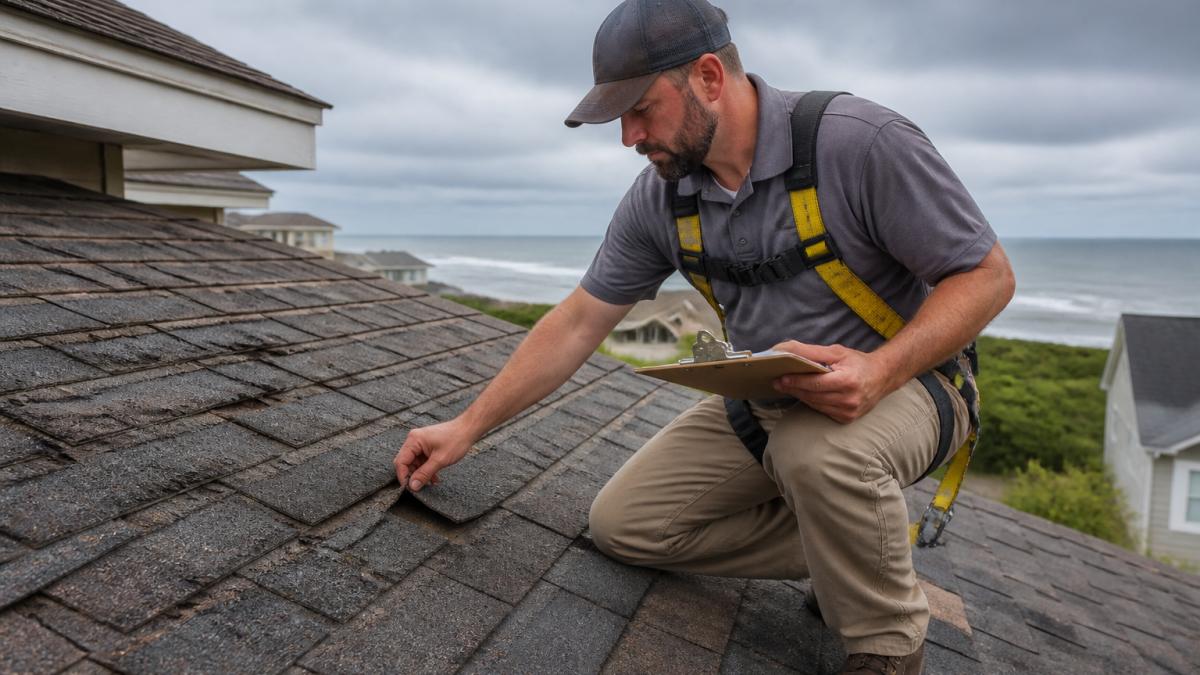
Surface Clues: Curling Shingles, Granulation Loss, and Flashing Gaps
Curling shingles, heavy granulation loss, and gaps around flashing are the three surface signals that most often tip a roof toward replacement. Granulation loss means the protective mineral layer is gone and the asphalt underneath is exposed. Flashing gaps around chimneys, vents, and valleys let water infiltration start quietly. Missing shingles are obvious, but curling and granulation are the slow killers.
Structural Clues: Sagging Roofline, Decking Integrity, and Attic Moisture
A sagging roofline means the decking or framing beneath the shingles is compromised, and that is not a repair job. In the attic, look for dark staining, damp insulation, or a musty smell, signs of an active leak. Soft, spongy wood cannot hold new fasteners, so even a well-installed patch will fail, and dry rot spreads as mold follows moisture.
Patching over soft decking is a common mistake. The repair looks fine for a season, then the fasteners pull loose and the leak returns, usually bigger.
The 25% Rule and Other Thresholds That Trigger a Full Replacement
The 25% rule is industry shorthand: once damage or the repair scope covers roughly a quarter of the roof surface, replacement usually costs less over the life of the roof than patching.
The threshold becomes real in two places: building codes and insurance policies. Many local codes treat a roof as a system and limit how much can be repaired before the whole assembly must meet current standards, pulling in requirements like ice-and-water underlayment, updated flashing details, or ventilation minimums a spot repair would not trigger.
Beyond the 25% rule, four thresholds tend to stack up and push a roof over the line:
- Age: A roof past roughly three-quarters of its expected service life with more than one problem area. A 20-year asphalt shingle roof that is 15-plus years old and leaking in two places is past the point where another patch pays back.
- Repair frequency: Three or more separate repairs in a two-year window. Each repair resets nothing, the clock on the rest of the roof keeps running, so frequency beats any single repair’s size as a signal.
- Storm scope: Damage spread across multiple slopes, or damage that follows a straight line across the roof, points to a system-wide event rather than one weak spot. A FEMA guide on roof damage assessment makes the same point: widespread damage is a system problem, not a spot problem.
How to Measure Scope Without Guessing
You do not need to climb the roof for a rough read. Walk the perimeter and estimate what fraction of each slope shows curling, granulation loss, or exposed underlayment. If the affected area on any single slope is more than about a quarter of that slope, or more than one slope is involved, treat it as a replacement conversation. One small cluster on one slope with the rest uniform usually means a repair is defensible.
A quick field test: count the problem areas, not the shingles. One problem area on a young roof is a repair. Two or more problem areas, or any problem area on a roof past three-quarters of its service life, is a replacement conversation.
When two or more thresholds stack up, a minor fix is usually throwing money at a roof that has already told you its answer. Get the scope documented, photos, measurements, and an inspection report, so the decision rests on what is actually on the roof.
What Drives the Cost of Residential Roof Replacement
The cost of residential roof replacement comes down to four variables: roof size and pitch, material choice, decking condition, and labor access. A steep pitch slows installation and raises labor. Torn-off decking adds material and time.
Because pricing depends on all of these factors, we quote every roof individually after a free inspection. Anyone who quotes a firm price without seeing your roof is guessing.
Material-Specific Guidance: Asphalt, Metal, and Tile
Asphalt shingles are the most common choice, balancing cost against lifespan, and suit most homes. Metal roofing costs more upfront but lasts longer and handles coastal wind and salt spray well. Tile offers the longest lifespan but is heavy, sometimes needing structural reinforcement, and costs the most to install. The right pick depends on your roof pitch, budget, and how long you plan to stay.
Roof Repair ROI: When a Minor Fix Is the Better Financial Call
A minor repair wins on ROI when damage is isolated and the rest of the roof is young and sound. Replacing one flashing boot or a handful of shingles on a ten-year-old roof is a smart, low-cost call.
Think of it as capital expenditure versus maintenance. A repair is maintenance; a replacement is capital. Maintenance on a healthy roof protects long-term value.
The Three Numbers That Actually Decide It
“Repair is cheaper now, replacement is cheaper later” is true but useless without a way to run the comparison. Three numbers do the work:
Book Your Free Roof Inspection Online →
- Remaining service life. If the roof has 15 of its 20 years left, a repair buys access to that remaining life. If it has three years left, a repair is buying three years at a high price per year.
- Cost per year of life gained. Divide the repair cost by the years it realistically adds. A repair costing a few hundred dollars that buys five years is cheap per year; one costing a few thousand that buys two years is expensive per year, often more than amortizing a replacement over its full new service life.
- Probability of a second repair. If the same roof has already been patched once in the last two years, the odds of another repair soon are high, and the expected cost of the repair path climbs fast.
A common pattern: the first repair on a young roof is almost always right; the third repair on an aging roof almost never is. The cost-per-year-of-life-gained math settles the in-between cases.
What Replacement Does to Resale and Insurance
Two financial effects rarely show up in repair-vs-replace articles, and both matter:
- Resale value. A roof near the end of its service life is a known negotiating chip for a buyer. A documented, permitted replacement with a transferable manufacturer warranty removes that chip and shows up in an appraisal or inspection report. A patch does not, buyers and inspectors read a patched aging roof as deferred maintenance.
- Insurance premiums and eligibility. Carriers price risk, and an aging, repeatedly patched roof reads as higher risk. Some surcharge older roofs, some require an inspection before renewal, and some will non-renew a roof patched past a certain point. A new roof can reset that conversation, sometimes lowering the premium, often keeping the policy in force at all. The exact effect varies by carrier and state, so check your declaration page and renewal notice.
A Simple Way to Run Your Own Comparison
You do not need a spreadsheet for a defensible answer. Write down four figures: the repair quote, the replacement quote, the roof’s current age, and its expected service life. Then ask two questions. How many years does the repair realistically buy before the next problem? And if you divide the repair cost by those years, is that number lower than the replacement cost divided by the new roof’s full service life?
Ask any contractor for the repair quote and the replacement quote side by side, in writing, with the roof’s age and expected remaining life noted. A contractor who will only quote one path is not giving you the information you need to decide.
The point is not that replacement is always right or repair always a stopgap. The decision has a math behind it, and homeowners who run that math, instead of reacting to the loudest quote, tend to spend less over the life of the roof.
Storm Damage, Insurance Claims, and the Repair-or-Replace Decision
Storm damage changes the calculus because insurance often covers replacement when damage is widespread. Insurers typically pay for repair when damage is limited and for replacement when it crosses their threshold. The catch is documentation: photos, an inspection report, and a clear scope of damage make the difference between a smooth claim and a denial.
File your claim before you sign anything with a contractor. Insurers want to see the damage as it was, not after repairs have started. We document storm damage with photos and measurements so an adjuster sees the full scope.
If your roof is aging and your insurer is pressuring you about coverage, a documented inspection gives you real answers instead of guesswork. We help homeowners understand where they stand.

DIY vs Professional Threshold: What Homeowners Should Never Touch
Some roof work is safe for a careful homeowner; most is not. Replacing a loose shingle or clearing debris is reasonable if you are comfortable on a ladder. Anything involving the roof structure, flashing, valleys, or full sections should go to a professional. The line is simple: if the job touches water infiltration paths or load-bearing elements, stay off the roof.
Never attempt:
- Structural repairs or anything involving decking integrity
- Flashing, valley, or chimney work, where a small error causes big leaks
- Any repair after storm damage, which needs documentation for insurance
Homeowners with a young roof and one isolated issue who want a quick, low-cost fix. For anything structural, storm-related, or widespread, call a licensed roofing contractor.
Conclusion: Making the Call on Roof Replacement vs Minor Repair
The decision comes down to scope, age, and structure. Isolated damage on a young, sound roof points to repair. Widespread damage, a sagging roofline, or a roof near the end of its lifespan points to replacement.
That is where we come in. Maven Roofing offers free roof inspections, specializes in coastal weather protection, and provides roof rejuvenation services that remove dirt, moss, and algae to extend roof lifespan.
Frequently Asked Questions
Is it better to repair or replace a roof?
It depends on age, damage extent, and how much of the roof is affected. A roof under 15 years old with isolated damage, such as a few missing shingles or a flashing leak, is usually worth repairing. A roof past 20 years old, or one where damage covers roughly a quarter of the surface, typically favors replacement. A free inspection gives you the measurements and photos to make that call with real numbers instead of guesswork.
What is the 25% rule in roofing?
The 25% rule is a common insurance and code guideline: when storm damage affects about 25% or more of a roof slope or total surface, insurers and many building codes treat the roof as needing full replacement rather than a patch. The exact threshold varies by policy and local code, so ask your adjuster how they calculate it. An aerial measurement report can document the affected square footage objectively.
What counts as a minor roof repair?
Minor repairs cover isolated problems: replacing a handful of missing or cracked shingles, resealing flashing around a chimney or vent pipe, patching a small area of roofing underlayment, or re-caulking a boot around a plumbing vent. These jobs typically involve one small section and leave the rest of the roof intact. If the damage spans multiple slopes or the decking underneath is soft, it is no longer minor.
How do I know if my roof damage is severe enough for a replacement?
Look for clusters of symptoms rather than one: shingles curling or losing granulation across large areas, a sagging roofline, daylight or moisture in the attic, and a roof age past 20 years. Any one of these may be repairable. Two or more together usually signal the roof is near the end of its service life, and patching it just delays the inevitable while water infiltration and mold risk continue.
How does storm damage affect the repair versus replacement decision?
Storm damage changes the math because insurance often pays for covered repairs, and a claim may cover replacement when damage is widespread. Document everything before repairs begin: photos, dates, and a professional inspection report. If only a few shingles lifted, a repair claim is reasonable. If wind or hail compromised underlayment, flashing, or ventilation across the roof, pushing for full replacement is often the correct call.
The hardest part of this decision is knowing which side of the line your roof is on, and that is exactly what a professional assessment answers. Maven Roofing brings free inspections, coastal-weather expertise, and honest recommendations to every home we visit. Get started with Maven Roofing and book your free roof inspection online to protect your home investment with confidence.