

Maven Resource Blog
How to Hire Local Roof Repair Contractors With Confidence
Vet local roof repair contractors with the right questions. Learn how to check credentials, compare estimates, and decide between repair or replacement.
Book a free roof inspection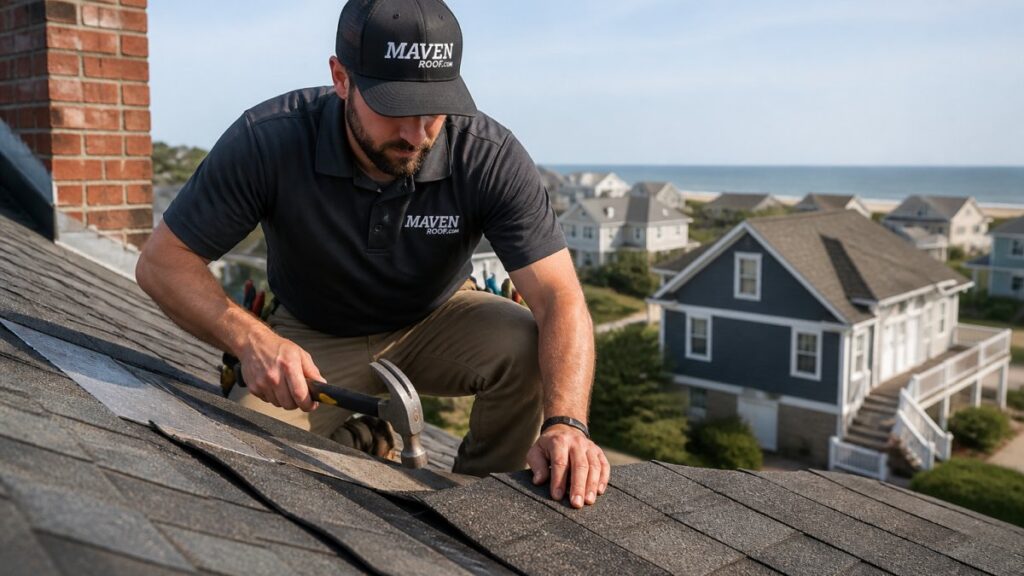
Last Updated: November 4, 2026
Quick Summary
Hiring local roof repair contractors means choosing a licensed and insured contractor who works in your area and stands behind the repair. Ask for a physical address and a certificate of insurance before you discuss the roof, and get a written, itemized estimate before any work starts.
- Ask for a physical address and certificate of insurance before discussing your roof.
- A written estimate should list materials by name, the repair area, labor, disposal, and timeline.
- A one-line lump-sum estimate is a red flag worth questioning before you sign.
- Tie payments to completed milestones rather than to the calendar.
- Get a written change order signed before any added work happens.
Table of Contents
- Why Hiring Local Roof Repair Contractors Pays Off in Eastern NC
- Questions to Ask a Roofing Contractor Before You Sign
- Your Roof Repair Estimate Checklist
- How a Storm Damage Roof Inspection Works
- Roof Repair or Replacement: How to Decide
- Contract Terms, Payment Schedules, and Red Flags
- Book Your Free Roof Inspection
- Frequently Asked Questions
Why Hiring Local Roof Repair Contractors Pays Off in Eastern NC
Hiring local roof repair contractors can make the difference between a roof that holds through hurricane season and one that leaks again by spring. A local roofing company can answer questions after the job is done, understands how salt spray and wind-driven rain affect coastal roofs, and can inspect your roof before the next storm hits.
Hiring local roof repair contractors means choosing a licensed and insured contractor who works in your area and stands behind the repair. That last part matters most.
What Local Actually Means for Your Roof
“Local” is not a zip code on a truck. It means the crew has experience with roofs in your area and understands the conditions that affect them. It also means you can reach the contractor in person if something goes wrong.
A common mistake is assuming any contractor with a local phone number is based nearby. Ask for a physical address and a certificate of insurance before you discuss the roof.
Questions to Ask a Roofing Contractor Before You Sign
The right questions separate an experienced professional from a smooth talker. Ask these before anyone climbs a ladder:
- Are you licensed and insured, and can I see the certificate?
- How long have your local crews worked in this area?
- Will I get a written estimate before work starts?
- Who handles roof damage documentation if I file an insurance claim?
- What does your workmanship warranty actually cover?
- Can you provide references from recent jobs nearby?
A contractor who hesitates on any of these is telling you something. For a deeper walkthrough of what to check, our guide on how to choose the right roofing contractor covers the full homeowner vetting process.
Your Roof Repair Estimate Checklist
A roof repair estimate checklist keeps you comparing apples to apples when you gather multiple estimates. Any legitimate roof estimate should include an on-site inspection, photos of the damage, and a written scope of work. The checklist below goes a step further than most: it tells you what actually moves the number and how to line up two bids so the cheaper one is not quietly the smaller job.
What Drives the Price of a Roof Repair
Repair pricing depends on several variables. Pricing depends on quantity, dates, and delivery, and the following factors commonly affect the difference between two quotes for the same leak:
- Access and pitch. A steep slope, a tall roof, or a tight lot that limits where a ladder and dumpster can sit adds labor time. Flat and low-slope sections often need different materials and detailing than pitched shingles.
- Extent of hidden damage. A leak at a flashing point may be a small repair, or it may have rotted decking and soaked insulation underneath. The honest estimate states what is visible and what is contingent on what the crew finds once the shingles are opened.
- Material match. Matching existing asphalt shingles, standing-seam metal panels, or F-Wave synthetic shingles to what is already on the roof affects both material cost and whether the repair blends in. Discontinued shingles can force a larger repair area to keep the roof looking consistent.
- Number of separate repair areas. One leak is one mobilization. Three leaks on three slopes mean three setups, more labor hours, and more disposal.
- Disposal and permits. Tear-off debris has to be hauled and disposed of, and permitted work carries inspection steps. An estimate that omits disposal or permit handling is not a complete bid.
How to Compare Two Itemized Bids
Put the bids side by side and check that each one answers the same questions. If one bid is silent on a line the other includes, treat that silence as a question to ask, not a savings.
| Estimate Element | What to Look For | Why It Matters |
|---|---|---|
| Materials | Named products, not “standard shingles” | Confirms quality and warranty eligibility |
| Scope of work | Specific repair areas and methods | Prevents surprise add-ons |
| Hidden-damage terms | What happens if decking or underlayment is found bad | Tells you whether the quoted number is a floor or a ceiling |
| Timeline | Start and completion dates | Sets expectations in storm season |
| Warranty | Workmanship and manufacturer terms | Protects you after the crew leaves |
| Payment schedule | Deposit and milestone terms | Keeps money tied to progress |
| Disposal and permits | Who hauls debris and pulls the permit | A missing line here is a cost waiting to appear |
A written estimate should list the roofing materials by name, the repair area, labor, disposal of old materials, and a clear repair timeline. It should also state whether the price is fixed or subject to change if hidden damage turns up. For current pricing or a quote, visit the Maven Roofing website.
Watch out: a one-line estimate with a lump sum is a red flag worth questioning. If the contractor will not itemize, you cannot compare bids or spot padding, and you have no written basis to dispute a surprise charge later.
When you are ready to put a real number against your roof, start with a free inspection so the scope is documented before anyone quotes it.
Book Your Roof Inspection Online →
How a Storm Damage Roof Inspection Works
A storm damage roof inspection is a documented assessment of wind, hail, and water damage performed before you file an insurance claim. The inspector checks shingles, flashing, valleys, and roof decking, then photographs every finding. You can also learn to recognize the signs of storm damage on your own roof.
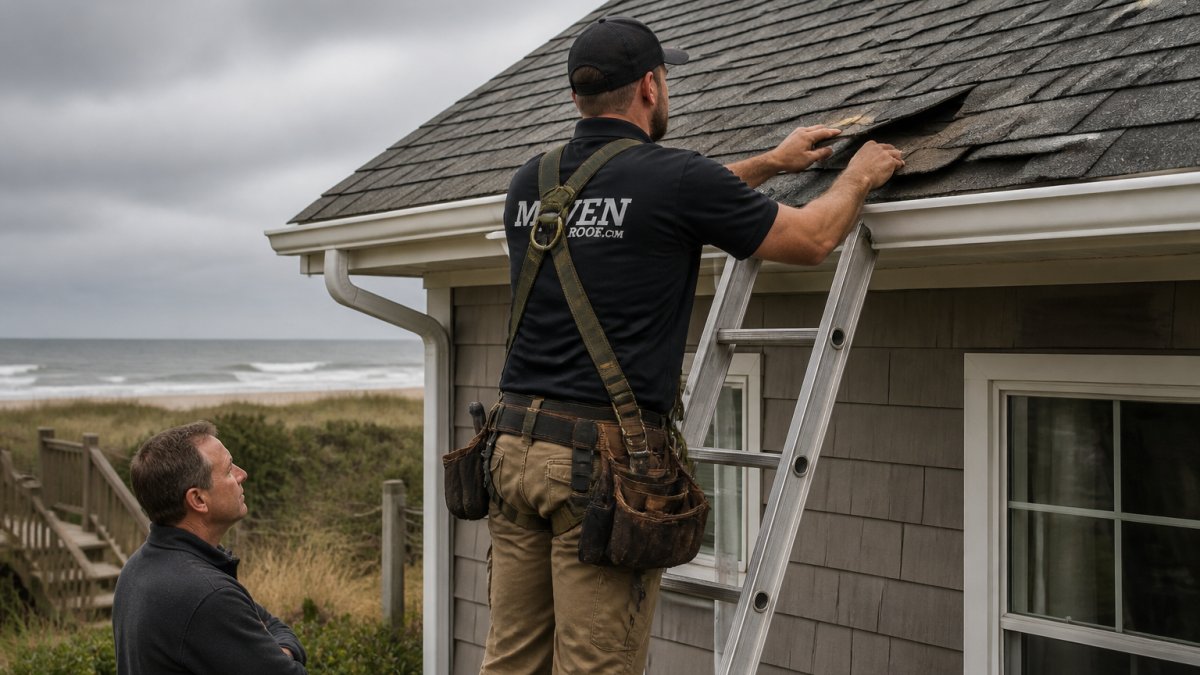
We document damage with close-up photos, wide shots for context, and notes on cause. That record can support your insurance claim.
Roof Repair or Replacement: How to Decide
Repair wins when damage is isolated: a few missing shingles, one failed flashing point, a single leak. Replacement makes more sense when shingles are failing across the whole roof, granule loss is widespread, or repairs keep recurring in different spots.
Age is a factor, not a verdict. A 22-year-old roof with one bad valley may still have years left. A newer roof with storm damage across multiple slopes may not. Ask for a damage assessment in writing so the roof repair or replacement call is based on evidence, not a sales pitch.
Contract Terms, Payment Schedules, and Red Flags
Get the contract in writing and read it before you sign. It should name the contractor, describe the scope, list materials, state the payment schedule, and spell out the workmanship warranty and manufacturer warranty terms. The clauses below are the ones homeowners most often skim past, and they are the ones that decide how a dispute gets resolved.
The Clauses That Actually Protect You
- Deposit and payment schedule. A reasonable schedule ties payments to completed milestones rather than to the calendar. Be wary of a contract that front-loads most of the money before materials arrive or before any work is done.
- Change orders. Any addition to the scope should be a written change order signed before the extra work happens, with the added cost stated. Verbal “we found more damage” approvals are how budgets slip.
- Lien waivers. After a payment, ask for a lien waiver from the contractor and, where subcontractors or suppliers are involved, from them as well. A waiver confirms those parties have been paid for their portion and reduces the risk of a lien being filed against your property.
- Cancellation terms. Know your cancellation window and how to exercise it in writing. A contract that makes cancellation difficult or penalizes you for asking questions deserves a second look.
- Warranty language. Confirm what the workmanship warranty covers, how long it runs, whether it transfers if you sell the home, and how a claim is filed. Manufacturer warranty terms are separate and usually depend on proper installation and ventilation.
- Insurance coordination language. If a claim is involved, the contract should be clear about what the contractor does (documentation, adjuster coordination) and what remains your decision as the policyholder.
Red Flags We See Often
- Large cash deposit demanded up front
- No written contract at all
- Pressure to sign the same day
- No local address or verifiable references
- A promise to “handle everything” with your insurer without your involvement
- A quote that changes verbally but never in writing
Watch out: a contractor who asks you to sign a contract before you have seen a written, itemized scope is asking you to commit to a number nobody has defined. Read the scope first, then the payment terms, then sign.
If any clause is unclear, ask for it in writing before you sign. Our guide on hiring certified roofers in Eastern NC walks through credentials and red flags.
Book Your Free Roof Inspection
A roof problem rarely fixes itself, and small leaks grow fast in coastal weather. If you are weighing contractors, start with a free inspection from Maven Roofing. We are veteran-owned, GAF Master Elite certified, and we serve homeowners and commercial properties across Eastern North Carolina, from Wilmington and Jacksonville to New Bern, Goldsboro, and Surf City.
Our free roof inspections include a damage assessment and straightforward, no-pressure recommendations. We back our work with published warranty and guarantee information.
Get started with Maven Roofing and book your free roof inspection today.
Frequently Asked Questions
How do I choose a reliable roof repair contractor?
Start with credentials: ask for proof of licensing, general liability and workers’ compensation insurance, and a written estimate before any work begins. Check that the contractor has a local address and can provide references from nearby homeowners. Read reviews and ask whether the crew is employed or subcontracted. Get at least two or three estimates and compare scope, not just the bottom line. A contractor who welcomes questions and puts everything in writing is usually the safer choice.
What should a roof repair estimate include?
A complete roof repair estimate should list the specific work to be done, materials and shingle type, the number of squares or repair areas, labor, cleanup and disposal, and any permit costs if applicable. It should state the total in writing, the payment schedule, and the workmanship warranty terms. Ask whether the price is fixed or subject to change if hidden damage is found. An on-site estimate that walks the roof and documents the damage is more reliable than a phone quote.
Should I get more than one roof repair estimate?
Yes. Multiple estimates give you a baseline for comparing scope, materials, and warranty terms. Two or three written estimates are usually enough. Use the same checklist for each contractor so you compare like for like, and pay attention to what is excluded, not just the total. If one bid is far lower than the others, ask what is missing. A free roof inspection from a local contractor can help you understand what the work should cover before you compare numbers.
How can I tell whether a roof leak needs repair or replacement?
The answer depends on the roof’s age, the extent of the damage, and whether the leak is isolated. A single flashing failure or a few damaged shingles can often be repaired. Widespread granule loss, multiple leaks, sagging, or a roof near the end of its service life usually point toward replacement. A storm damage roof inspection can document what is actually happening and give you a clear repair-or-replace recommendation before you commit.
