

Maven Resource Blog
What Are the Signs of Storm Damage on a Roof?
Spot storm damage early to avoid bigger repairs. Learn the signs on a roof, from shingles to leaks, and how to document it all for insurance.
Book a free roof inspection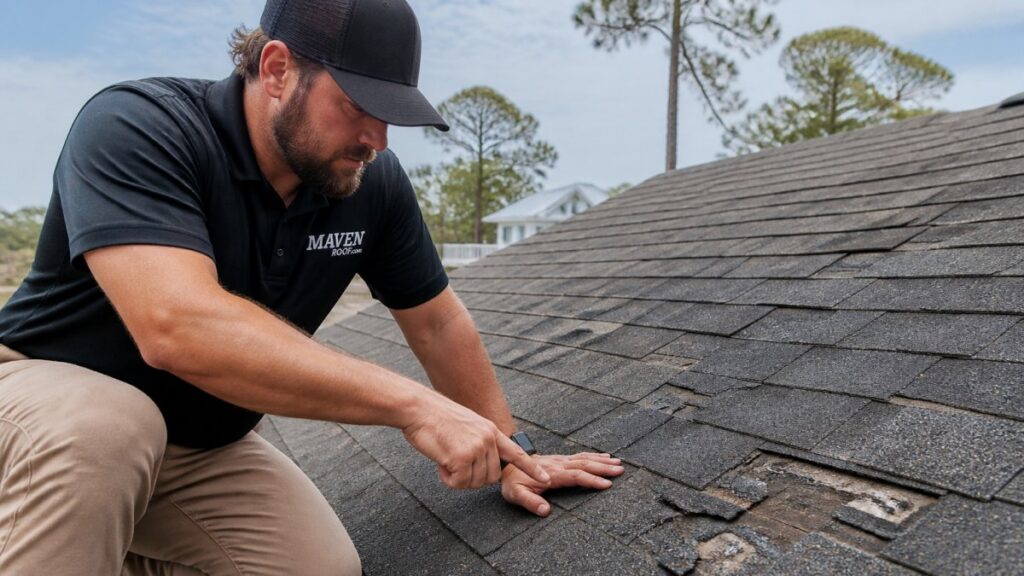
Last Updated: October 30, 2026
Quick Summary
The signs of storm damage on a roof include missing, lifted, curled, or cracked shingles, granule loss and granules collecting in gutters, dented gutters and vents, water or ceiling stains indoors, exposed bare spots, damaged flashing, and debris impact marks. Much of this damage is invisible from the ground, so check from a safe distance with binoculars and let a professional confirm what you find.
- Storm damage shows up in seven main ways, so check each one from the ground with binoculars.
- Wind damage clusters on the windward slope, roof edges, rake, and ridge caps.
- Hail bruises fracture the shingle mat underneath and often leak months later.
- A roof leak after a storm needs action within hours, not days.
- Photograph affected areas with a date stamp before anything is cleaned up or repaired.
Table of Contents
- Why Storm Damage Often Goes Unnoticed After a Storm
- 7 Signs of Storm Damage on Your Roof
- Wind Damage to Roof Shingles: What Lifting and Tearing Look Like
- Hail Damage on Roof Surfaces: Dents, Bruises, and Hidden Fractures
- Roof Leak After Storm: Immediate Steps to Limit Interior Damage
- How to Document Roof Damage for Insurance
- Safe Homeowner Inspection vs. a Professional Roof Inspection
- Book Your Free Roof Inspection
- Frequently Asked Questions
Why Storm Damage Often Goes Unnoticed After a Storm
Most homeowners look at their roof after a storm, see shingles still in place, and assume everything is fine. That assumption is the problem.
After storms, roofs across Eastern North Carolina often show damage that is easy to miss from the ground. Lifted shingles that look flat from the driveway.
Here is what to look for, how to check safely, and what to do next.
7 Signs of Storm Damage on Your Roof
Storm damage shows up in seven main ways. Check each one from the ground with binoculars before you consider getting on the roof at all. For a deeper walkthrough, see our step-by-step guide to identifying roof storm damage.
- Missing, lifted, curled, or cracked shingles
- Granule loss and granules collecting in gutters
- Dented gutters, downspouts, and roof vents
- Water stains, ceiling stains, or bubbled paint indoors
- Exposed bare spots and torn shingle edges
- Lifted or damaged flashing around chimneys and vents
- Debris impact marks and uneven roof lines
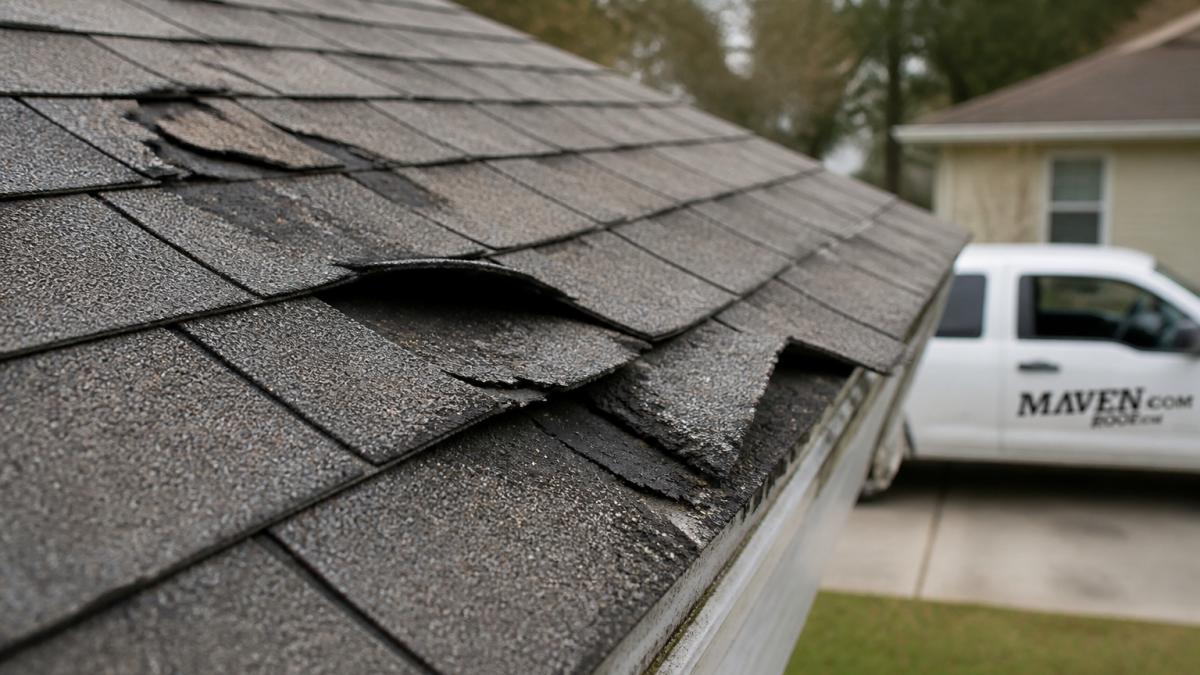
Missing, Lifted, Curled, or Cracked Shingles
Missing shingles are the easy call. Lifted, curled, and cracked shingles are the ones people miss. A lifted shingle has lost its seal and sits slightly raised, letting wind-driven rain slide underneath. Curled edges and cracked surfaces often appear on the slope that took the brunt of the wind. Walk the perimeter and look for breaks in the shingle pattern, uneven shadows, and discoloration that stands out.
Granule Loss and Granules in Your Gutters
Asphalt shingles shed granules as they age, but a sudden dump after a storm can point to hail impact or wind abrasion. Check the ground at downspout outlets and look inside gutters for a gritty, sand-like buildup. Heavy granule loss leaves the shingle surface exposed.
Dented Gutters, Downspouts, and Roof Vents
Dents are the clearest hail signature on a home. Hail dents on gutters and downspouts tell you hail was large enough to damage metal, which means it was also hitting shingles and roof vents. Check vent tops and metal flashing for the same dimpling. A bent gutter also stops draining properly and sends water toward the foundation.
Water Stains, Ceiling Stains, and Bubbled Paint
Interior signs mean water is already inside. Look for water stains on ceilings, brown rings on walls, bubbled paint, and any wetness or musty smell in the attic. Moisture intrusion rarely comes from a single obvious hole; it usually traces back to lifted flashing, a cracked shingle, or a failed seal. Any ceiling stain deserves a professional look, even a small one.
Wind Damage to Roof Shingles: What Lifting and Tearing Look Like
Wind damage to roof shingles follows a predictable pattern, and knowing it lets you tell storm damage from normal wear. Wind breaks the seal strip that holds each shingle tab down, lifts the tab, and forces rain underneath. Once the seal is broken, the shingle flaps in later wind, the tab creases, and the mat eventually cracks. That is why a roof can look intact after a storm and still be taking on water.
Where Wind Damage Shows Up First
Wind damage is not evenly distributed across a roof. Check these areas first, from the ground with binoculars:
- Windward slope: the side the wind hit. Look for lifted shingles, torn edges, and bare spots.
- Leeward slope: uplift and turbulence often show up here as creased tabs and shingles that look pressed or wrinkled.
- Roof edges and rake: the first sections to lift, because edge shingles take the full force of the wind.
Wind Damage vs. Normal Wear
This is the distinction most guides skip, and it is the one that matters for a claim. Curled shingles can be age. Granule loss can be age. Lifted shingles after a specific storm, with matching damage on the windward slope, point to wind. A few clues help:
- Pattern: wind damage clusters on the windward slope and edges. Wear is uniform and worse on sun-exposed sections.
- Timing: damage after a named storm, with debris and torn edges, points to wind. Gradual curling over years points to age.
- Seal condition: a broken seal strip on otherwise sound shingles is a wind signature. A curled, brittle shingle is wear.
Coastal Storm Considerations
Coastal storms make wind damage worse. Salt spray weakens sealant over time, so shingles that survived inland winds can fail near the coast. After any named storm, check roof edges and ridge caps first. If you see lifted edges, do not wait for the next rain to confirm it; a free roof inspection gives you a straight answer about whether the seal is broken and what it will take to fix it.
Photograph what you can see from the ground before anything is cleaned up or repaired. Dates, storm names, and clear photos of lifted edges and torn tabs make a professional inspection and any insurance conversation easier.
Hail Damage on Roof Surfaces: Dents, Bruises, and Hidden Fractures
Hail damage on roof surfaces is the hardest damage to see from the ground, and the most often misread. Distinguishing these impact patterns from common aesthetic issues is vital, as homeowners often mistake the organic growth responsible for dark shingle streaks for physical trauma caused by a storm.
The mechanism explains why a hail-damaged roof can look fine in July and leak in October. When a hailstone strikes an asphalt shingle, it compresses the granule layer and asphalt coating, then flexes the fiberglass mat beneath.
Book Your Roof Inspection Online →
What Hail Damage Looks Like on Each Roof Type
- Asphalt and GAF shingles: soft spots that give slightly under thumb pressure, dark circular marks, exposed mat, and granules knocked loose in a pattern that follows the hail swath.
- F-Wave synthetic shingles: impact marks and surface scuffing; the synthetic composition behaves differently from asphalt, so the tell is often a change in surface texture rather than a bruise.
- Standing-seam metal: dimples and dents on the panels and on ridge caps, which can also compromise the seam seal.
Ground-Level Checks for Hail
You do not need to get on the roof to gather useful evidence. From the ground:
- Look at gutters and downspouts for fresh dents, especially on the storm-facing side.
- Check metal vent tops, chimney caps, and metal flashing for dimpling.
- Look at the ground at downspout outlets for a fresh concentration of granules.
- Check window screens, outdoor light fixtures, and metal furniture for impact marks; hail that dents those was large enough to bruise shingles.
- Note the storm date and keep any weather alerts; the timing helps a professional match the damage pattern to the event.
Do not walk a hail-damaged roof to test for soft spots. Bruised shingles can be fragile, and a wet or steep roof is not a safe place to confirm what a professional can verify from a ladder and a close inspection.
Hail Damage vs. Normal Wear
Hail damage and age-related wear can look alike from ten feet away, and the distinction drives whether a claim is approved and whether you repair or replace. A few clues help separate them:
- Pattern: hail damage clusters on the slopes that faced the storm and often follows a swath. Wear is uniform and worse on south- and west-facing sections.
- Timing: damage after a specific storm, with matching dents on gutters and vents, points to hail. Gradual granule loss over years points to age.
- Location: hail bruises show up on shingles, vents, and metal alike. Wear shows up first on the oldest, most sun-exposed shingles.
If you suspect hail, our guide on whether your roof is covered after a hail storm walks through what insurers typically look for. When you are ready for a hands-on answer, book a free roof inspection and we will document what we find with photos and a written report.
Roof Leak After Storm: Immediate Steps to Limit Interior Damage
A roof leak after a storm needs action within hours, not days. Water spreads fast through insulation and drywall, and mold can start in damp materials within a couple of days. Here’s what to do:
- Move furniture, electronics, and rugs away from the leak
- Place buckets under drips and lay towels to catch runoff
- Poke a small drain hole in a bulging ceiling to release trapped water into a bucket
- Turn off power to affected ceiling fixtures at the breaker
- Photograph everything before you clean up
- Call for help rather than climbing up in wet, windy conditions
Watch out: Do not tarp or climb the roof yourself during or right after a storm. Wet shingles and wind are how homeowners get hurt. If you need fast help, read how emergency roof leak repair services work and what to expect.
How to Document Roof Damage for Insurance
Documentation decides claims. Claims are easier to support when they include clear evidence such as organized photos, dates, and a professional assessment. Build your file before you call anyone:
- Photograph every affected area from the ground with a date stamp
- Photograph interior water stains, ceiling stains, and bubbled paint
- Save receipts for any emergency repairs or hotel stays
A professional inspection can help your adjuster see the damage clearly and separate storm damage from normal wear and tear. That distinction matters, because policies cover sudden storm damage but not age-related deterioration. For a step-by-step walkthrough, see how to file a wind damage insurance claim.
Safe Homeowner Inspection vs. a Professional Roof Inspection
A homeowner inspection is a ground-level check with binoculars. A professional roof inspection is a hands-on assessment of the roof surface, flashing, vents, and attic. Both have a place, but they are not the same thing.
| What You Check | Safe From the Ground | Needs a Professional |
|---|---|---|
| Missing or lifted shingles | Yes, with binoculars | Confirming seal damage |
| Granules in gutters | Yes | Assessing shingle wear |
| Dented gutters and vents | Yes | Hail bruising on shingles |
| Ceiling stains | Yes, indoors | Tracing the moisture source |
| Cracked flashing | No | Yes |
| Hidden damage under shingles | No | Yes |
What most guides miss is that storm damage and normal wear look alike from ten feet away. Curled shingles can be age. Granule loss can be age. Only a close inspection tells you which is which, and that answer drives whether you repair or replace.
Book Your Free Roof Inspection
You don’t have to guess. Maven Roofing offers free roof inspections across Eastern North Carolina, and our veteran-owned team works with asphalt and GAF shingles, F-Wave synthetic shingles, standing-seam metal, and flat roofing systems.
If you’ve spotted any of these signs, don’t wait for the next rain to confirm it. For a broader checklist on storm-damaged homes, our guide on what to do if your house is damaged by a storm covers the next steps.
Frequently Asked Questions
What are the most common signs of storm damage on a roof?
The most common signs include missing, lifted, curled, or cracked shingles; granule loss and granules collecting in gutters; dented gutters, downspouts, and roof vents; and water stains on ceilings or walls. Wind damage often shows as lifted or torn shingle edges, while hail damage on a roof appears as dents or bruised spots. Check flashing around chimneys and roof vents too, since lifted flashing is a frequent entry point for moisture intrusion.
How can I tell if wind has damaged my roof shingles?
Wind damage to roof shingles usually shows as lifted or peeled edges, missing shingles, or bare spots where shingles have torn away. Look for shingle edges that no longer lie flat and shadow patterns or uneven roof lines that suggest displaced shingles. Because wind damage can loosen shingles without removing them, a post-storm roof inspection from a professional is the most reliable way to confirm what happened and how urgent the repair is.
Can storm damage cause a roof leak days or weeks later?
Yes. A roof leak after a storm often appears days or weeks later because wind or hail can loosen flashing or fracture shingles without creating an immediate opening. Water then works its way in slowly, showing up as ceiling stains, bubbled paint, or wetness on interior walls. If you noticed storm damage signs but no leak yet, schedule an inspection promptly so small issues do not turn into moisture intrusion and interior repairs.
How do I document roof damage for insurance after a storm?
Start by photographing and dating every sign of damage you can safely see, including shingles, gutters, and any interior water stains. Keep a written log of when the storm occurred and when you noticed each issue. Then have a professional roof inspection produce a documented assessment you can share with your adjuster. Avoid guessing at causes or costs when speaking with the adjuster, and let the inspection report support your claim.
Storm season in Eastern North Carolina doesn’t give roofs a break, and small issues turn into major problems fast. Maven Roofing is a veteran-owned, GAF Master Elite certified contractor serving homeowners and property managers across the region with free inspections, honest assessments, and repairs backed by published warranty information. Get started with Maven Roofing and protect your home before the next storm finds the weak spot.
