

Maven Resource Blog
Emergency Roof Leak Repair Services: 2026 How-To
Emergency roof leak repair services explained: safety steps, tarping, insurance documentation, and what a repair timeline looks like. Get help fast.
Book a free roof inspection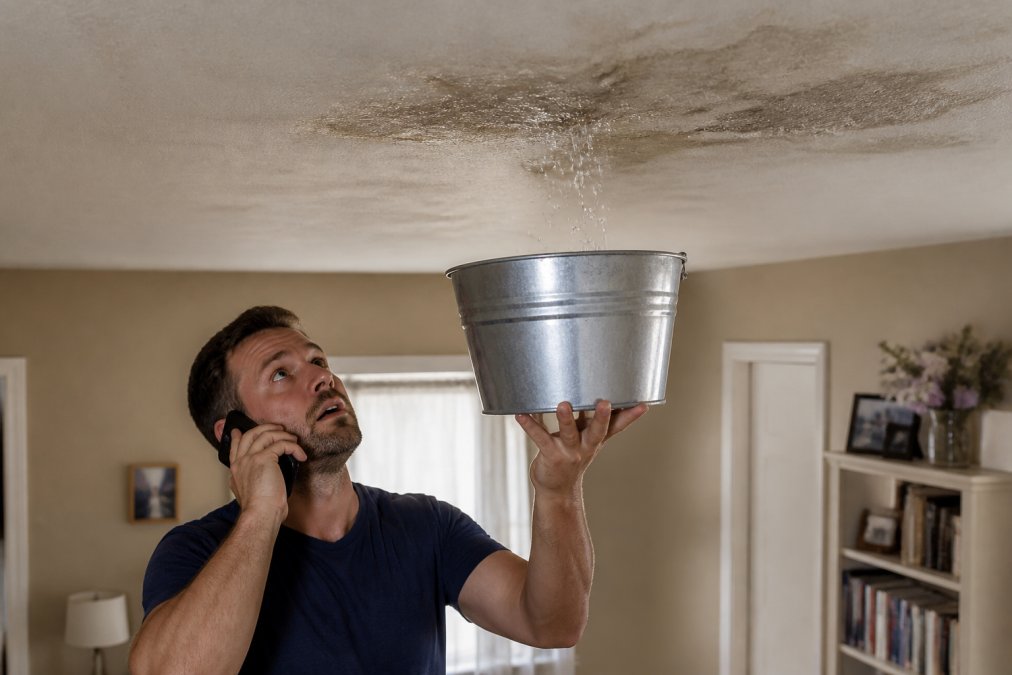
Table of Contents
- What Counts as a Roof Leak Emergency
- What to Do When You Discover a Leak
- Emergency Roof Tarping Services: DIY vs. Calling a Pro
- Signs of Severe Roof Water Damage
- The Roof Leak Repair Timeline: From Call to Fix
- How to Choose Emergency Roof Leak Repair Services
- Frequently Asked Questions
Last Updated: September 25, 2026
What Counts as a Roof Leak Emergency
An emergency roof leak is any active water intrusion that threatens your home’s structure, electrical systems, or interior contents and cannot wait for a standard business-hours appointment. At Maven Roofing, we’ve answered enough storm-season calls to know the difference between a slow drip and a real emergency roof leak repair services situation.
Water travels fast.
Leaks That Need Same-Day Attention
Call immediately if you see any of these:
- Water actively dripping or streaming into living space
- Ceiling bulging, sagging, or bubbling under paint
- Water pooling near light fixtures or outlets
- Missing shingles or exposed roof decking after wind damage
- Storm damage that left visible gaps or punctures
A slow stain in the attic can often wait a day or two. Active water near wiring cannot.
Never ignore water pooling around a ceiling light fixture. Moisture plus live electrical connections creates a shock and fire risk, and it’s one of the few leak scenarios where waiting even a few hours is genuinely dangerous.
What to Do When You Discover a Leak
Move fast, but move safely. The first hour matters more than most homeowners realize.
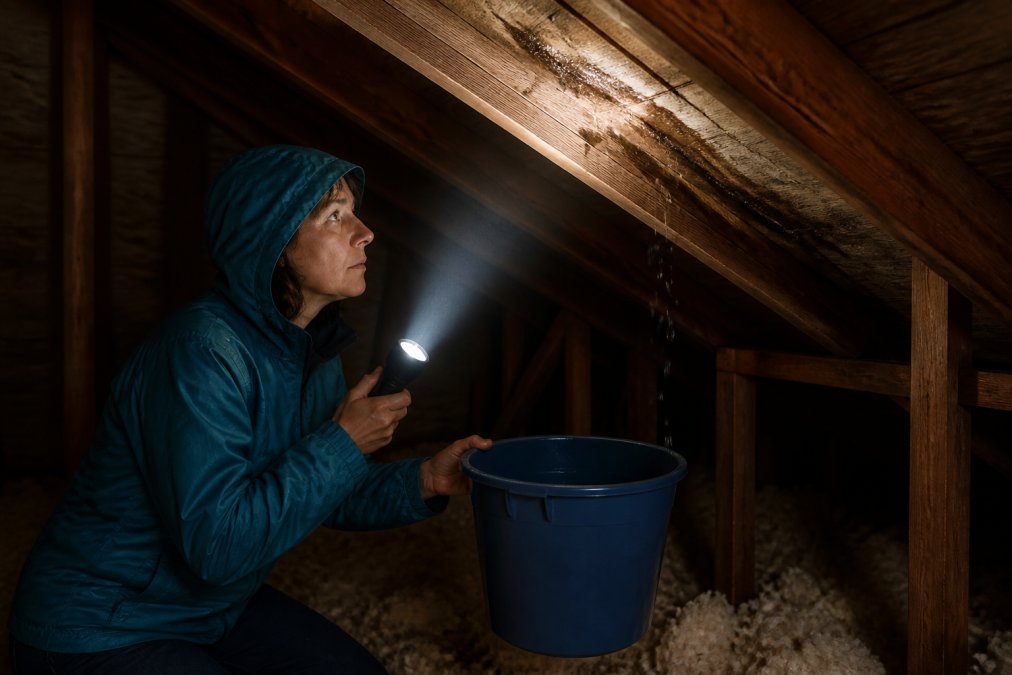
- Contain the water. Place buckets and towels under the drip. Move furniture, electronics, and rugs out of the path.
- Kill the power to affected areas. If water is near outlets, lights, or a breaker panel, shut off power at the panel before touching anything wet.
- Document everything. Photograph the leak, the ceiling stain, and any damaged belongings. You’ll need this for an insurance claim.
- Puncture a bulging ceiling. If paint is ballooning with trapped water, poke a small hole at the low point with a screwdriver to release it into a bucket. This prevents a sudden collapse.
- Call for emergency roof leak repair services. A licensed roofer can assess the roof assessment and stop the source, not just the symptom.
Safety Precautions During Roof Leaks
Stay off the roof during active rain, lightning, or high wind. Wet shingles and coastal gusts are a bad combination, and falls are the leading serious injury in roofing work. Skip the attic too if you see sagging decking or standing water, since both signal structural weakness. When in doubt, wait for a professional.
Emergency Roof Tarping Services: DIY vs. Calling a Pro
Emergency roof tarping services are a temporary waterproofing measure that covers the damaged area until permanent repairs can happen. The question is whether you tarp it yourself or call a professional. Most homeowners can safely handle interior water control. Far fewer should be on the roof itself.
What You Can Safely Do Yourself (Interior Mitigation)
These steps stop secondary damage while you wait for a crew, and none of them require getting on the roof:
- Kill power to the affected zone. Trip the breaker for any circuit near the leak before you touch wet ceiling or wall material.
- Catch the water. Buckets, bins, and a plastic sheet funneled into a container keep water off flooring and framing.
- Relieve a bulging ceiling. If paint is ballooning, drill or poke a small hole at the low point and let it drain into a bucket. A controlled pinhole beats a sudden collapse.
- Move and elevate contents. Get furniture, electronics, and rugs out of the drip path, and lift what stays onto blocks or pallets.
- Start airflow. Box fans and a dehumidifier slow mold growth in the first 24 to 48 hours.
- Photograph everything before, during, and after, from multiple angles.
What You Should Not Do Yourself
Getting on the roof during or right after a storm is where homeowners get hurt. Skip the ladder if any of these apply:
- Rain, lightning, or wind is still active
- The roof pitch is steep or the surface is wet
- The damage is high, large, or near the ridge
- You see sagging decking or standing water in the attic
- You have no harness, anchor point, or second person on the ground
How a Pro Tarps a Roof
A professional tarping job is more than draping plastic. A crew typically:
- Runs the tarp over the ridge and past the damaged area on all sides
- Fastens with cap nails or 1×4 and 2×4 battens rather than relying on the tarp’s grommets
- Seals seams and edges so wind can’t get underneath
- Photographs the before-and-after for your claim file
When to Call Instead of Tarp
Call for professional tarping when the damage is large, high, or steep; when storms are still active; when you need documentation for an insurance claim; or when you simply aren’t comfortable working at height. The cost of a tarp is almost always less than the cost of the interior damage it prevents.
Never climb onto a wet roof to place a tarp. Interior mitigation you can do safely; roof-level work is where the serious injuries happen. Wait for a crew with fall protection.
Signs of Severe Roof Water Damage
Catching water damage early saves money. These signs mean the problem has moved past a minor leak:
- Ceiling stains that are brown, yellow, or spreading
- Soft or spongy drywall and roof decking
- Musty odors signaling hidden mold
- Peeling paint or bubbling wallpaper
- Sagging ceilings or warped framing
- Daylight visible through the roof boards in the attic
| Sign | What It Means | Urgency |
|---|---|---|
| Ceiling stains | Water reaching interior | Schedule within days |
| Soft decking | Rot in roof structure | Call immediately |
| Musty odor | Hidden mold growth | Call immediately |
| Sagging ceiling | Structural compromise | Emergency call |
| Daylight in attic | Failed roof system | Emergency call |
The Roof Leak Repair Timeline: From Call to Fix
Understanding the roof leak repair timeline helps you plan, manage expectations, and keep the bill predictable. Here’s how a typical emergency call unfolds.
What Drives Emergency Pricing
Emergency work costs more than a scheduled repair, and it’s fair to ask why. The main factors:
- After-hours timing. Nights, weekends, and holidays carry a premium because crews are pulled from rest.
- Access and height. Steep pitches, multi-story homes, and tight lots take more labor and equipment.
- Weather conditions. Working in active rain or wind requires more safety gear and slower progress.
- Scope of mitigation. A small tarp is one thing; boarding, water extraction, and interior drying are another.
- Materials on hand. Matching shingles or underlayment may need a supply run.
How to Keep the Bill Predictable
- Get the estimate in writing before work begins
- Ask what’s included in mitigation versus repair
- Confirm whether the assessment fee is credited toward the repair
- Keep every receipt for tarping, patching, and any temporary lodging
- Ask the roofer to document cause and scope for your insurer
Ask for photos of the roof before, during, and after mitigation. Insurers process claims faster when the damage is documented from multiple angles, and it protects you if the adjuster questions the scope.
Insurance Documentation Guide
Your claim lives or dies on documentation. Gather these before the adjuster arrives:
- Photos and video of the leak, interior damage, and roof from the ground
- A written timeline of when you noticed the leak and what you did
- Receipts for emergency tarping, temporary patches, and hotel stays if you had to relocate
- A professional roof assessment identifying the cause, such as hail damage, wind damage, or flashing failure
- Your policy number and a copy of your coverage
How to Choose Emergency Roof Leak Repair Services
Not every roofer handles emergencies well. Use these criteria before you sign anything:
- 24/7 availability and genuine rapid response
- Licensed and insured in your state
- Local enough to arrive quickly
- Clear documentation for insurance claims
- Written estimates before work begins
Insurance Documentation Guide
Your claim lives or dies on documentation. Gather these before the adjuster arrives:
- Photos and video of the leak, interior damage, and roof from the ground
- A written timeline of when you noticed the leak and what you did
- Receipts for emergency tarping, temporary patches, and hotel stays if you had to relocate
- A professional roof assessment identifying the cause, such as hail damage, wind damage, or flashing failure
- Your policy number and a copy of your coverage
Frequently Asked Questions
How much does it usually cost to fix a roof leak?
Pricing depends on the leak’s cause, roof pitch, and how much decking or underlayment is damaged. A small flashing failure costs far less than a leak that has soaked insulation and ceiling drywall. Maven Roofing does not publish flat rates because every roof is different; book a free inspection and you will get a written estimate before any work begins.
What should I do when my roof starts leaking?
Move furniture and electronics away from the drip, place buckets underneath, and if the ceiling bulges, pierce a small hole at the low point to release trapped water. Do not climb onto a wet roof. Call emergency roof leak repair services, then photograph the damage for your insurance file. Quick action limits interior water damage and keeps your claim documentation clean.
How long does emergency roof tarping services take to arrive?
Most providers with 24/7 availability dispatch within a few hours, though severe storms can push response times out. When you call, ask for a realistic arrival window and whether the tarp is included in the service call. Tarping is a temporary patch, not a repair, but it stops water intrusion until materials and crews are available for a permanent fix.
Will my homeowners insurance cover emergency roof repairs?
Policies usually cover sudden damage from wind, hail, or fallen debris, but not leaks caused by neglected maintenance. Document everything: photos, dates, and receipts. Keep temporary mitigation costs separate, since many policies reimburse reasonable emergency mitigation. Review your deductible and coverage limits before filing, and ask your roofer for a written damage assessment to support the claim.
A roof leak never waits for a convenient moment, and neither should your response. Maven Roofing protects homes across Eastern North Carolina with free roof inspections, expert emergency mitigation, and documentation that supports your insurance claim from the first call. As a veteran-owned team serving the coast since 2015, we stand behind every repair. Book your free roof inspection online and stop the damage before it spreads.