

Maven Resource Blog
How a FORTIFIED Roof Can Protect Your Home’s Resale Value
A FORTIFIED roof can help protect your home's resale value and lower insurance premiums in Eastern NC. Wait, that is the original.
Book a free roof inspection
Last Updated: November 8, 2026
Quick Summary
A fortified roof is built and inspected to storm-resistance standards from the Insurance Institute for Business & Home Safety, which helps it hold up better against high winds, wind-driven rain and debris. Resale premiums have been reported, but averages do not guarantee a result for any single home. Keeping verifiable records of the roof’s condition helps buyers trust it.
- Reported resale premium figures are averages across sampled homes, not guaranteed outcomes for your house.
- Local buyer awareness, insurer discounts and roof age all affect whether a premium is plausible.
- Some insurers may offer discounts, but amounts and eligibility vary by company and policy.
- Keep installation invoices, warranties, inspection reports and certification paperwork together in one file.
- Book a roof inspection before listing to find repairs buyers’ inspectors would likely raise.
Table of Contents
- What a FORTIFIED Roof Designation Means
- How FORTIFIED Construction Improves Wind and Storm Resistance
- What the Research Says About Resale Value and How It Is Measured
- FORTIFIED Roof Insurance Savings and Annual Premium Impact
- FORTIFIED Roof Certification Steps, Inspections and Sale Documentation
- FORTIFIED Roof vs. Regular Roof: Cost, Lifespan and Buyer Appeal
- Booking a Roof Inspection Before You List Your Coastal Home
- Frequently Asked Questions
What a FORTIFIED Roof Designation Means
A FORTIFIED roof is a roof built and inspected to a set of storm-resistance standards developed by the Insurance Institute for Business & Home Safety (IBHS). For homeowners in coastal Eastern North Carolina, the designation signals that the roof was built to hold up better against high winds, wind-driven rain and flying debris. Maven Roofing installs and inspects roofing systems with these storm-resistance goals in mind, and we can walk you through what the designation involves for your home.
The designation focuses on the roof system as a whole, not a single product. Ask any contractor which parts of the roof assembly they are changing and which they are leaving alone, because that answer tells you how much of the designation the work actually covers.
How FORTIFIED Construction Improves Wind and Storm Resistance
Wind damage usually begins at the edges, the ridges and the places where shingles or panels are attached. Strong gusts lift those points first, and once the covering loosens, wind-driven rain can reach the roof deck and interior. This is why attachment details matter so much in our coastal area.
Catching loose shingles, lifted flashing, failed sealant and aging fasteners early is one of the simplest ways to reduce storm risk, whether or not you pursue a formal designation. Our coastal roof inspection checklist explains why regular checks matter for storm protection. We are happy to point out these weak spots during a free roof inspection.
What the Research Says About Resale Value and How It Is Measured
A resale-premium figure is often repeated in discussions of FORTIFIED roofs. Understanding how that research was built is the best way to decide whether the number means anything for your home.
What the figures mean. Published resale-premium estimates are averages across a sample of homes, not a promise for any single house.
Local context matters. A premium observed in one coastal market is evidence, not a guarantee, in another. Eastern North Carolina’s buyer pool, insurance market and program adoption may differ from the markets where estimates were made.
What the number does not measure. A price difference at closing does not isolate how much a buyer attributed to the roof versus to the overall condition of a well-maintained home.
How to judge applicability to your home. Ask four questions. First, does your local market have enough designated homes for buyers and agents to recognize the label? Second, is your insurer actively writing discounts for it, which signals the value to the market? Third, is your roof approaching replacement age anyway, so the incremental cost of the upgrade is small relative to a full re-roof? Fourth, can you document the designation cleanly at sale? When the answers line up, the premium is more plausible; when they do not, treat the 7% figure as an upper-bound talking point rather than a planning number.
What buyers actually verify. Buyers and their agents tend to respond to evidence they can check, such as the roof’s age, installation date, inspection history and certification paperwork. We recommend keeping every invoice, warranty and inspection report for your roof in one file. If you want to know where your roof stands before you list, book a free roof inspection and we will document its condition in plain terms.
The figures behind resale claims are averages, and the table below summarises how to judge whether they apply to your home.
| Question to ask | What it tells you | Why it matters |
|---|---|---|
| Are designated homes common locally? | Buyers and agents recognize the label | A premium needs a market that understands it |
| Does your insurer offer a discount? | Insurers value the designation | Signals value beyond the sale price |
| Is your roof near replacement age? | Upgrade cost is smaller | Incremental cost stays low |
| Can you document the designation? | Paperwork is verifiable at sale | Buyers act on evidence they can check |
FORTIFIED Roof Insurance Savings and Annual Premium Impact
Insurance is often the most direct way a stronger roof can pay off. Some insurers may offer premium discounts for homes with storm-resistant roofs, and discount amounts and eligibility vary by company, policy and location. Before you assume savings, ask your insurance agent whether they recognize the designation and what documentation they need. Long-term financial benefits extend beyond annual premiums, as the decision regarding replacing your roof before selling can significantly influence your property’s market appeal and final closing price.
It also helps to know that insurers look at roof age and condition whether or not a designation applies. An older roof can prompt questions at renewal, which is why scheduling a free roof inspection before your policy comes up is a practical step. Our guide to insurance requirements older roofs commonly face covers what insurers often ask about. A roof inspection can give you a clear picture of its condition to share with your agent.
FORTIFIED Roof Certification Steps, Inspections and Sale Documentation
A designation is only as useful as the paper trail behind it. Treat certification as a lifecycle with four stages, obtain, maintain, verify, transfer, and build the file as you go rather than scrambling at listing time.
1. Obtain the designation. Confirm the current standard version and evaluator requirements directly with the certifying organization before you plan a project around them, because requirements and renewal rules can change.
2. Maintain it. A designation reflects the roof as inspected on a given date. Storm damage, unrepaired leaks, altered flashing or a later repair done to a lower standard can compromise both the roof’s performance and the credibility of the paperwork. Keep up with routine maintenance, roof cleaning and prompt repairs, and keep the records of that work alongside the certification, so you can show every subsequent repair at resale.
3. Verify before you list. Pull the file and read it end to end. You want the installation records, the evaluator’s inspection report, the certification document itself and the warranty information. Check that names, addresses and dates match the property and that the standard version cited is current. If anything is missing or unclear, resolve it before a buyer’s agent asks, a gap discovered during due diligence costs more leverage than a gap fixed in advance.
4. Transfer at sale. Confirm the transfer process with the certifying organization, since the answer depends on the program’s current rules and on whether the designation is still valid. Then package the file for the listing: a one-page summary of the roof’s age, designation status, inspection date and warranty, with the supporting documents behind it.
What buyers should request. If you are on the buying side, ask for the certification document, the installation invoice, the warranty and records of any repairs since certification, and confirm whether the designation is still in force.
If you are unsure what your roof’s records show, a roof inspection can help you understand the roof’s condition. Our step-by-step guide to filing wind damage claims and documenting storm history walks through the paperwork. Book a free roof inspection and we will help you build the file before you list.
FORTIFIED Roof vs. Regular Roof: Cost, Lifespan and Buyer Appeal
!A homeowner and a roofing inspector standing in a driveway of a coastal home, reviewing shingles together on a clipboard
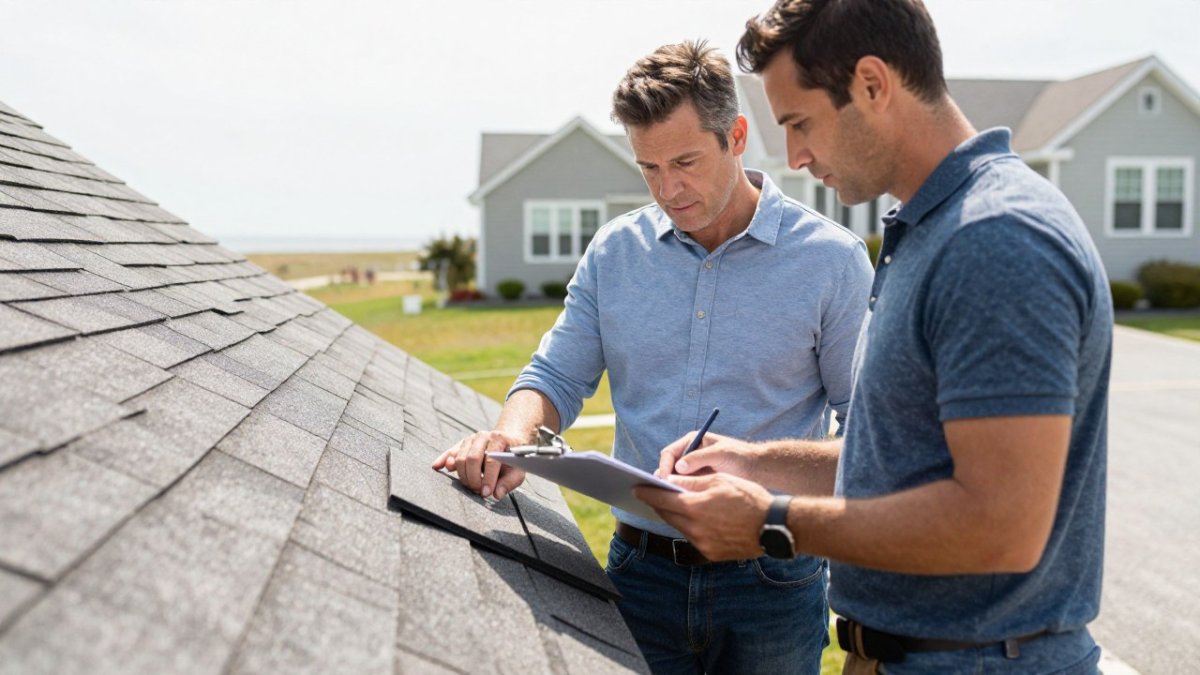
A standard roof and a FORTIFIED roof can use similar materials, and the differences depend on how the system is built and inspected. Costs vary with the roof’s size, pitch, materials and the amount of work required, so we give you a written estimate after the inspection rather than guessing from a general figure.
Lifespan depends on material quality, installation and exposure to salt spray, sun and storms. A well-maintained roof in a coastal setting needs regular checks, cleaning and prompt repairs. Buyer appeal comes from a roof that looks well kept and comes with records that prove it. Careful workmanship and good records support that outcome for either option.
Booking a Roof Inspection Before You List Your Coastal Home
If you plan to sell in the next few years, a roof inspection is one of the most useful steps you can take. It shows you the roof’s current condition, flags repairs that buyers’ inspectors would likely raise, and gives you documentation to share. You can book a free roof inspection with Maven Roofing, and we will explain what we find in plain terms with no pressure to commit.
Start by gathering your existing roof records. Browse the Maven Roofing blog for more guidance before you book. Then schedule the inspection early enough to handle any repairs before you list. Eastern North Carolina homes face salt air, humidity and storm seasons, so a clear record of the roof’s condition helps both you and the buyer. We serve homeowners across Eastern North Carolina, and we are ready to help you prepare.
Frequently Asked Questions
What is a FORTIFIED roof?
A FORTIFIED Roof is a designation from the Insurance Institute for Business & Home Safety (IBHS) for roofs built and inspected to stronger standards for wind and storm resistance. The designation is tied to specific construction requirements and, where applicable, an independent inspection, so a homeowner can show documentation of what was built rather than relying on a general claim that the roof is strong. Requirements and the certification process should be confirmed with the designating program before any work begins.
Does a FORTIFIED roof increase home resale value?
Some research on FORTIFIED roofs has reported a resale premium for homes with the designation. Such estimates depend on the study’s sample, local market conditions, and how value was measured, so they are best treated as estimates rather than guarantees. A higher sale price is more likely when the designation is documented and buyers can see it on paper. Your Eastern NC market, comparable sales, and a local real estate professional should inform what the designation is worth for your specific property.
How much can a FORTIFIED roof save on insurance?
Insurance savings depend on your insurer, policy, and location, and some carriers that recognize FORTIFIED construction may offer a premium discount rather than a fixed amount. Savings are usually realized on the annual premium, so the value builds over the years you keep the policy. Ask your agent whether your carrier offers a FORTIFIED discount, what documentation it requires, and how the discount applies to wind and hurricane coverage. Coastal homeowners in Eastern North Carolina should compare the discount against the upfront cost of the roof before deciding.
How do you verify FORTIFIED Roof certification?
Verification may involve a designation certificate issued after a qualified inspection, depending on the program’s requirements. Keep the certificate with your home records, since it may be needed for an insurance discount, a sale, or a future claim. Ask your contractor which inspection steps were completed and whether the designation is transferable to a new owner. Confirm current requirements with the designating program, as standards and certification procedures can change.
