

Maven Resource Blog
Coastal Roof Maintenance for Storm Protection
Coastal roof maintenance defends your home against wind, salt air, and driving rain. Learn our year-round checklist and storm prep steps.
Book a free roof inspection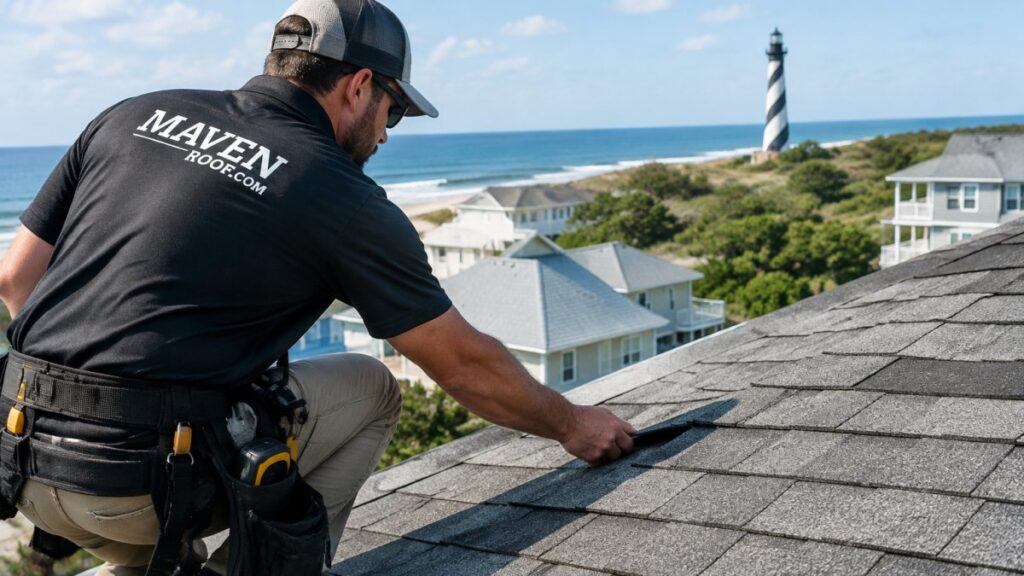
Last Updated: November 5, 2026
Quick Summary
Coastal roof maintenance means inspecting, cleaning, and repairing your roof on a schedule built around salt air, high winds, and wind-driven rain rather than a generic inland timeline. We recommend a year-round calendar that includes a pre-storm inspection before peak hurricane season and a post-season inspection each fall.
- Check the roof from the ground with binoculars; never climb onto a wet, steep, or older roof.
- Clear pollen, seed pods, and winter debris from the roof surface and gutters each spring.
- Have a professional inspect flashing, vents, pipe boots, and roof edges in late spring.
- Trim overhanging limbs back from the roof line in early summer to reduce debris load.
- Photograph storm damage from the ground and keep a written record before any repair begins.
Table of Contents
- Why Coastal Roof Maintenance Is Different
- Your Year-Round Coastal Roof Maintenance Checklist
- How to Prepare a Roof for a Hurricane
- Roof Inspection After a Storm: What to Check and When to Call
- Salt Air Corrosion on Metal Roofs and Fasteners
- Prioritizing Repairs and Documenting Damage for Insurance
- Book Your Free Roof Inspection
- Frequently Asked Questions
Why Coastal Roof Maintenance Is Different
Coastal roof maintenance is the practice of inspecting, cleaning, and repairing a roof on a schedule built around salt air, high winds, and wind-driven rain rather than a generic inland timeline. At Maven Roofing, we work on Eastern North Carolina roofs every day, and the difference is not subtle. A roof a few miles inland might coast for years on the same routine. A roof near the water is under constant attack from three directions at once.
Wind, Salt Air, and Driving Rain
Wind is the obvious one. It doesn’t just blow across a coastal roof; it lifts at the edges, works at fasteners, and pushes water into places shingles were never meant to see.
Salt air is the quieter problem. It settles on metal, accelerates corrosion, and eats at fasteners until they loosen. Moisture intrusion follows close behind, showing up as interior water stains long after the actual breach began.
Local conditions matter more than general advice. Readers who want local context on how coastal weather affects roofs in Wilmington NC can find it here. Homeowners who want to understand why regular inspections matter so much out here can read why coastal homes need roof inspections before scheduling anything.
Your Year-Round Coastal Roof Maintenance Checklist
A coastal roof maintenance checklist should be tied to the calendar, not to memory. The single biggest mistake we see is homeowners waiting for a leak before they look at the roof at all. By then, a small issue has usually become a repair. The schedule below is built around the storm season, the pollen and debris cycles, and the salt-air exposure that never really stops.
The Annual Calendar We Recommend
| Timing | Task | Who Should Do It | Why It Matters |
|---|---|---|---|
| Late winter (February-early March) | Ground-level walkaround: check for lifted, cracked, or missing shingles; look for granules at downspout outlets | Homeowner, from the ground | Catches winter wind damage before spring rains find it |
| Early spring (March-April) | Clear roof surface and gutters of pollen, seed pods, and winter debris | Homeowner for gutters if safely reachable; professional for the roof surface | Debris holds moisture against shingles and clogs drainage |
| Late spring (May) | Professional inspection of flashing, vents, pipe boots, and roof edges | Professional | These are the first points wind-driven rain reaches |
| Early summer (June) | Trim overhanging limbs back from the roof line | Homeowner or tree service | Reduces debris load and storm-driven branch damage |
| Pre-season (late July-August) | Pre-storm inspection: fastener integrity, edge and ridge condition, sealant at penetrations | Professional | Confirms the roof is secured before peak hurricane season |
| Fall (October-November) | Post-season inspection and any repairs identified during the summer | Professional | Repairs made now hold through winter storms |
| After any named storm or high-wind event | Ground-level damage walkaround and interior check | Homeowner, from the ground and inside | Documents damage while it is fresh and before repairs begin |
What You Can Safely Check Yourself
Most of the routine eyeballing can be done without ever leaving the ground. With a pair of binoculars, you can scan the roof plane for lifted or missing shingles, look at the ridge line, check whether gutters are sagging or detached, and spot granules piling up at downspout outlets.
What you should not do is climb onto the roof, especially a wet, steep, or older roof, to inspect or make repairs.
Prioritize What You Find
Not every finding is equal. Sort what you see into three buckets:
- Emergency, act now. Active water entering the house, a section of roof deck that feels soft or spongy, missing shingles over a large area, or daylight visible in the attic. Call a professional immediately and, if water is actively coming in, get a temporary tarp in place.
- Prompt, schedule within weeks. A handful of lifted or cracked shingles, corroded or backed-out fasteners, sealant that has cracked at a vent or pipe boot, or a gutter pulling away from the fascia. These will not fail today, but they will fail in the next storm.
- Routine, fold into the next scheduled visit. Granule loss, minor debris accumulation, or cosmetic wear. Note it, and address it at the next inspection.
The routine is simple: clean what collects, inspect what flexes, and repair what has started to fail. A roof that gets this attention tends to reach the far end of its expected lifespan. One that doesn’t usually tells you about it during the worst possible week.
How to Prepare a Roof for a Hurricane
Preparing a roof for a hurricane comes down to securing what wind can grab and clearing what water can dam.
Start with the roof surface. Loose or missing shingles are the first thing wind finds.
Then handle the drainage. Clean gutters and downspouts so roof drainage has somewhere to go. Clear debris from valleys.
Watch out: the most common pre-storm mistake is a homeowner climbing onto a wet or steep roof to check things personally.
Roof Inspection After a Storm: What to Check and When to Call
A roof inspection after a storm should begin from the ground the moment it is safe, and it should focus on what changed. Walk the perimeter and look up.
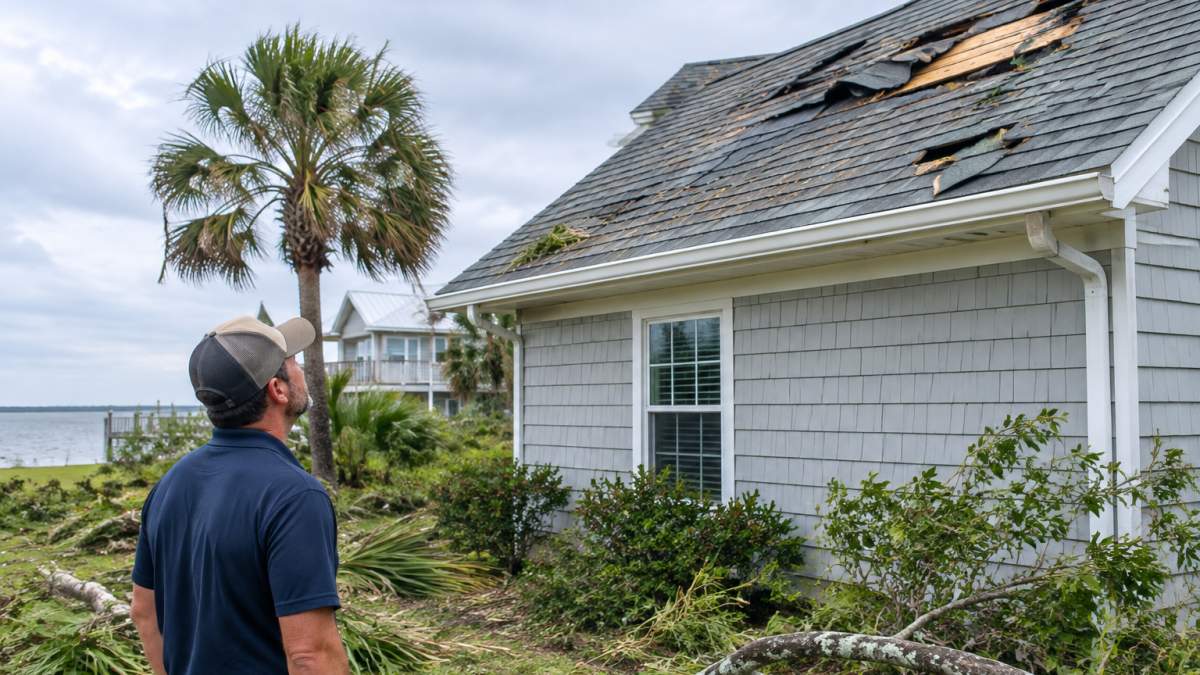
The Ground-Level Walkaround
Start at one corner and work your way around the house in a consistent direction so you do not miss a side. Look specifically at:
- The roof plane. Lifted, creased, or missing shingles; shingles that look out of line with their neighbors.
- The edges and ridge. Wind uplift concentrates at roof edges, ridges, and corners, so these are the first places to show damage.
- Flashing and penetrations. Vents, pipe boots, and chimneys, look for bent, lifted, or missing flashing and cracked sealant.
- Gutters and downspouts. Detached gutters, granules piling at downspout outlets, or debris that has dammed a section.
- The yard. Shingle tabs, granules, or pieces of flashing on the ground tell you something came off the roof.
Inside the house, check the ceiling and attic for interior water stains, which often appear before a drip does, and look for daylight coming through the roof deck.
Book Your Roof Inspection Online →
Document Before You Repair
This is the step most homeowners skip, and it is the one that matters most if a claim is part of the picture. Before any repair begins, photograph the damage from the ground, wide shots of each roof plane and close-ups of anything you can safely reach with a zoom lens. If you are filing a claim, our step-by-step guide on how to file a wind damage insurance claim covers the sequence.
When to Call a Professional
Call a professional when you see any of the following:
- Missing or creased shingles, or shingles that have lifted and not sealed back down.
- Granules washing off in volume, a handful at a downspout outlet after a storm is normal; a steady stream is not.
- Daylight visible in the attic, or water stains on ceilings and walls.
- Gutter displacement, or flashing that is bent, lifted, or missing.
- A soft or spongy feel to the roof deck, which can indicate hidden moisture.
Our article on the signs of storm damage on a roof walks through each one in detail. When in doubt, a free inspection settles it without guesswork, and it is far better to have a professional confirm the roof is sound than to discover a hidden breach during the next storm.
Salt Air Corrosion on Metal Roofs and Fasteners
Salt air corrosion on metal roofs and fasteners is the coastal problem that gets ignored longest, because it fails slowly and quietly.
On standing-seam metal roofing, watch the seams and the cut edges, where coating is thinnest. On any roof, watch the fasteners.
The practical takeaway: during every inspection, someone should be looking specifically at metal components and fasteners, not just at shingles.
Prioritizing Repairs and Documenting Damage for Insurance
Prioritize repairs in this order: anything letting water into the house first, anything threatening the roof’s structural hold second, and cosmetic issues last. Active leaks and missing shingles go to the top of the list every time.
Documentation should happen before repairs begin. Photograph damage from the ground, keep a written record of what you observed and when, and save any receipts. If you’re filing a claim, our step-by-step guide on how to file a wind damage insurance claim covers the sequence.
Book Your Free Roof Inspection
The best time to find a problem on a coastal roof is before a storm finds it for you.
We’re veteran-owned and GAF Master Elite certified. If you’re weighing a stronger roof against future storms, you can learn about Fortified Roof options before you decide. We handle roof repairs, roof rejuvenation, and residential roof replacement, and we give straightforward, no-pressure recommendations.
Get started with Maven Roofing and book your free roof inspection online.
Frequently Asked Questions
What should I check on my roof before a storm?
Before a storm, walk your property from the ground and check for loose or missing shingles, lifted flashing around vents and chimneys, sagging gutters, and debris or overhanging branches that could become projectiles. Clear gutters and downspouts so heavy rain can drain. If you see cracked sealant, rusted fasteners, or granules collecting in gutters, schedule a professional inspection before the storm arrives. A coastal roof maintenance checklist should be completed well ahead of hurricane season, not the week a storm is named.
How often should a coastal roof be inspected?
Coastal roofs face salt air, high winds, and wind-driven rain year-round, so plan on a professional inspection at least once a year and again after any significant storm. Homes near the water or under heavy tree cover may benefit from twice-yearly checks. Between professional visits, do your own visual scan from the ground each season. Regular roof maintenance catches small issues, like lifted flashing or worn sealant, before they turn into leaks or interior water stains.
How can I protect roof edges from high winds?
Roof edges and flashing are where wind uplift first takes hold. Check that edge metal is fastened tightly, sealant is intact, and shingles along the perimeter are fully adhered. Trim overhanging trees so branches do not scrape or drop debris on the edges. After a storm, look for bent edge metal, missing fasteners, or shingles curling at the rake and eave. A professional inspection after a storm can confirm whether edge protection is still doing its job.
What should I do if I find a roof leak after a storm?
If you notice interior water stains, dripping, or a sagging ceiling after a storm, move valuables away from the area and place a bucket under the drip. Do not climb onto a wet roof. Photograph the interior damage and any visible exterior damage from the ground for your insurance records. Then call a roofing professional for a roof inspection after a storm. Prompt documentation and repair help prevent moisture intrusion from spreading into insulation, drywall, and framing.
Do roof rejuvenation products actually work?
Roof rejuvenation is a treatment for removing dirt, moss, and algae, but it is not a fix for storm damage, missing shingles, or active leaks. Whether it works for your roof depends on its age, condition, and material. A free inspection can tell you if rejuvenation is a reasonable option or if repair or replacement makes more sense. Treat any treatment as part of ongoing coastal roof maintenance, not a substitute for repairs.
What type of roof is best for coastal areas?
There is no single best roof for every coastal home, but wind resistance, corrosion resistance, and water resistance matter most. We work with asphalt/GAF shingles, F-Wave synthetic shingles, standing-seam metal roofing, and flat roofing systems, and we can assess which option fits your home. The right choice depends on your home’s structure, slope, and budget, so ask for a professional assessment before deciding.
