

Maven Resource Blog
7 Reasons Coastal Homes Need Roof Inspections
Coastal roof inspections catch salt corrosion, wind damage and leaks early. Learn how often to schedule checks and what to document before storm season.
Book a free roof inspection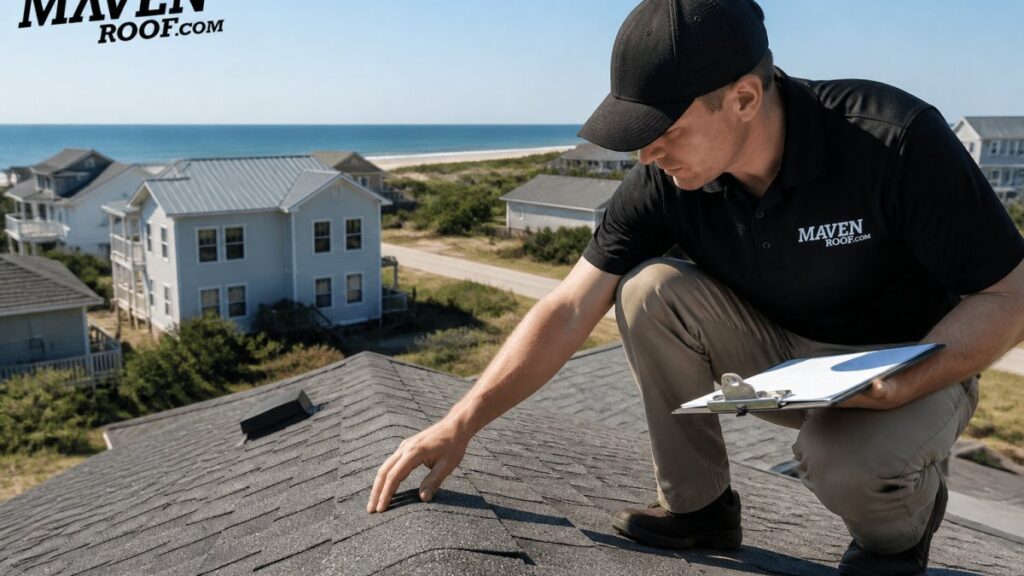
Last Updated: November 3, 2026
Quick Summary
Coastal roof inspections are needed because salt air breaks down shingles, flashing, and fasteners year-round, while wind and heavy rain expose weak spots. We recommend inspections at least twice a year, plus after any major storm, to catch small problems before they become leaks.
- Salt particles settle on shingles and metal fasteners, holding moisture against the roof surface.
- A lifted shingle lets the next storm push water onto the roof deck.
- Direct waterfront homes should be inspected every 6 months plus after storms.
- Document storm damage with photos and notes before anyone touches the roof.
- Sort findings into fix now, watch, and plan for replacement.
Table of Contents
- 1. Salt Air Quietly Breaks Down Coastal Roofing Materials
- 2. Wind Damage to Shingles Starts Small and Spreads Fast
- 3. Heavy Rain Finds Every Weak Spot in Flashing and Underlayment
- 4. How Often to Inspect a Roof on the Coast
- 5. Your Coastal Roof Inspection Checklist
- 6. Roof Inspection After a Storm: What to Check and Document
- 7. Turning Inspection Findings Into a Repair Plan
- Frequently Asked Questions
1. Salt Air Quietly Breaks Down Coastal Roofing Materials
Salt air is one reason coastal roofs benefit from more frequent inspections than roofs inland. Ocean spray carries salt particles that can settle on shingles, flashing, and metal fasteners. Over time, that salt can hold moisture against the roof surface.
The damage builds slowly. Shingle granules loosen. Metal edges pit and rust. Sealant strips dry out and stop gripping. None of it looks dramatic from the driveway, which is exactly why it goes unnoticed until a leak appears.
Roofs near the water face this exposure year-round, not just during storm season. A roof that would last decades inland can wear faster when it sits in salt spray and steady humidity.
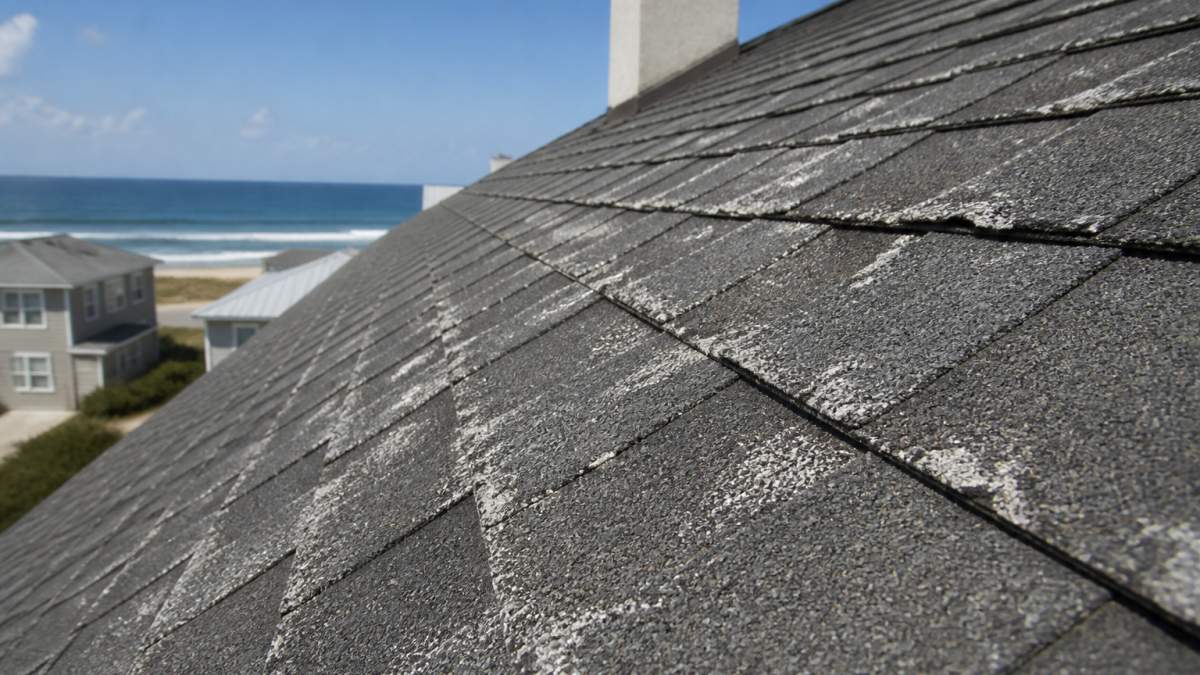
Because salt residue and worn granules can signal deeper exposure, a coastal home exterior inspection can help identify vulnerable roofing materials before damage spreads.
If your home sits near the water, how to maintain a roof in a coastal climate covers the year-round routine that slows this breakdown.
2. Wind Damage to Shingles Starts Small and Spreads Fast
Wind damage rarely announces itself. A nor’easter or hurricane can lift a few shingle tabs without tearing them off. The shingle looks fine from the ground. Underneath, the seal is broken.
Once a shingle lifts, the next storm gets under it. Water slips beneath the shingle field and onto the roof deck. One loose shingle becomes a wet deck, then a leak, then a repair that costs far more than the first fix would have.
What Lifted and Missing Shingles Look Like From the Ground
You can spot the early signs without climbing anything. Stand back and look for:
- Shingle tabs that curl or flip up at the corners
- Dark patches where granules have worn off
- Shingles lying in the yard or stuck in gutters
- Lines of missing shingles along roof edges and ridges
- Granule piles at downspout outlets
If any of that looks familiar, what storm damage looks like on a roof walks through the visual signs in more detail.
3. Heavy Rain Finds Every Weak Spot in Flashing and Underlayment
Heavy rain does not create leaks. It reveals them. Coastal downpours push water hard against flashing around chimneys, vents, and skylights, and into any gap in the underlayment.
Flashing is the metal that seals roof joints. Underlayment is the water-resistant layer beneath the shingles. Both wear out faster in salt air and constant moisture. When flashing pulls loose or underlayment dries and cracks, water reaches the roof deck.
By the time a stain shows on your ceiling, moisture has usually been working in for a while. That is when mold and rotted decking start. Catching it at the flashing stage keeps it a small repair.
4. How Often to Inspect a Roof on the Coast
Coastal roofs often benefit from inspections at least twice a year, plus after any major storm. That schedule can be more frequent than the once-a-year check often suitable for inland homes.
Why twice? Salt air and humidity never take a season off. A spring inspection catches winter wear, and a fall inspection gets the roof ready for storm season. Add a post-storm look any time high winds or heavy rain pass through.
Book Your Roof Inspection Online →
Exposure Zones and Inspection Schedules
How close you are to the water changes the schedule. Here is how we think about it:
| Exposure Zone | Distance From Water | Suggested Schedule |
|---|---|---|
| Direct waterfront | On the water or one row back | Every 6 months plus after storms |
| Near-coastal | Within a few miles of the sound or ocean | Twice yearly |
| Inland coastal | Further inland but still in the wind zone | Once yearly plus after major storms |
Roof age matters too. An older roof in a high-exposure zone needs closer watching than a new one.
5. Your Coastal Roof Inspection Checklist
A walkaround you can do from the ground between professional visits is a useful habit. Stay off wet or steep roofs.
- Look for curled, cracked, or missing shingles
- Check ridge caps and roof edges for lifting
- Scan gutters for granules and shingle pieces
- Look at flashing around chimneys, vents, and skylights
- Check ceilings and attic for stains or damp spots
- Look for moss, algae streaks, or dark buildup
- Note any rust on metal roofing or fasteners
- Check trees for limbs hanging over the roof
Anything on this list is worth a closer look by a professional. Small findings are cheap to fix. Ignored ones are not.
6. Roof Inspection After a Storm: What to Check and Document
A roof inspection after a storm should happen as soon as it is safe to look. Document everything before anyone touches the roof. Photos and notes are what insurance adjusters rely on.
Walk the yard first. Photograph fallen shingles, dented gutters, and any visible damage from the ground. Note the date and the storm. Then call a professional for a full assessment.
Insurance Documentation and Adjuster Coordination
Good documentation makes a claim go smoother.
For a full walkthrough of the process, see how to file a wind damage insurance claim. If the damage is active and water is coming in, emergency roof repairs explains how to get help fast.
7. Turning Inspection Findings Into a Repair Plan
An inspection is only useful if it leads to a clear plan. Findings from a roof assessment are often sorted into three buckets: fix now, watch, and plan for replacement.
- Fix now: active leaks, missing shingles, failed flashing
- Watch: worn granules, minor curling, early algae
- Plan ahead: an aging roof nearing the end of its service life
Not every finding means a new roof. Sometimes a targeted repair or roof rejuvenation solves the problem. If you are weighing the choice, what a roof replacement involves breaks down the decision.
A coastal roof takes a beating that inland roofs never see. Salt, wind, and rain work on it all year. The good news is that small problems caught early stay small. Maven Roofing offers free roof inspections across Eastern North Carolina, with no-pressure recommendations for roof repair and maintenance. As a veteran-owned, GAF Master Elite certified contractor, we back our work with published warranty and guarantee information. Get started with Maven Roofing and book your free roof inspection online today.
Frequently Asked Questions
Why do coastal homes need regular roof inspections?
Salt air, high winds, and heavy rain wear down roofing materials faster near the water than inland. Regular coastal roof inspections catch corrosion, loose shingles, and small leaks before they turn into water damage or structural problems. Regular checks, plus one after any storm, can help you spot minor damage while a repair can still fix it.
How often should a coastal home’s roof be inspected?
Most coastal homes benefit from a professional inspection at least twice a year, often in spring before storm season and in fall. Homes close to the water or on open, wind-exposed lots may need more frequent checks. Add a roof inspection after a storm any time high winds or heavy rain pass through, even if you see no obvious damage from the ground.
Can salt air affect a metal roof?
Yes. Salt air accelerates corrosion on fasteners, seams, and any exposed metal edges, even on standing-seam metal roofs. Left unchecked, that corrosion can loosen panels and open paths for water intrusion. A professional inspection checks fasteners, sealant, and panel edges so small corrosion points get addressed before they spread.
What should I do if I find a roof leak after a storm?
Document what you see with photos, move valuables away from the drip, and avoid climbing on a wet roof. Then call a professional for a roof inspection after a storm. A roofing professional can help trace the leak to its source and assess the damage.
