

Maven Resource Blog
How Do You Maintain a Roof in a Coastal Climate?
A coastal roof takes salt air, wind, and humidity year-round. Learn the maintenance checklist, storm inspection steps, and when to call a professional.
Book a free roof inspection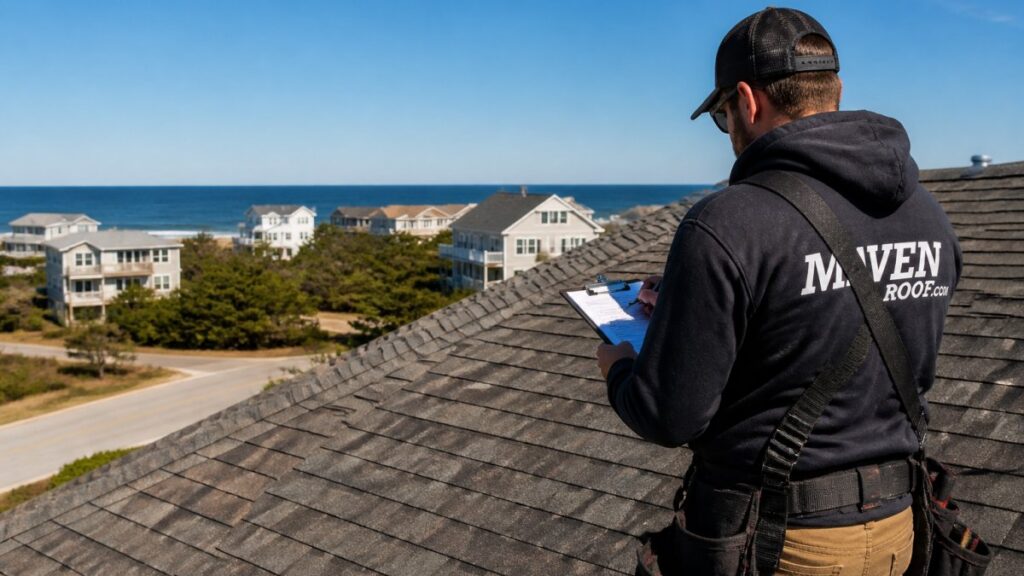
Last Updated: October 26, 2026
Quick Summary
Maintain a coastal roof by checking granules, shingles, gutters, and interior stains from the ground each season, then booking professional inspections in spring and fall and after any named storm. Salt film, pine straw, and wind-driven debris should be cleared whenever they accumulate, and storm damage should always be assessed by a professional rather than by climbing on the roof.
- Photograph your roof from the ground at the start of each season to track changes.
- Clear wet pine straw from valleys and behind chimneys whenever it accumulates.
- Rinse salt film from metal and shingle surfaces where you can reach safely.
- Treat any named storm as a trigger for a post-storm roof check.
- Standing-seam metal needs fastener and sealant checks more often than homeowners expect.
Table of Contents
- Why Coastal Roof Maintenance Is Different
- Your Coastal Roof Maintenance Checklist
- Seasonal Roof Maintenance Calendar for Eastern NC
- Roof Inspection After a Storm
- Signs of Wind Damage to a Roof
- Standing-Seam Metal Roof Maintenance
- When to Call a Professional Roofing Contractor
- Book Your Free Roof Inspection
- Frequently Asked Questions
Why Coastal Roof Maintenance Is Different
Salt air, driving wind, and heavy humidity can affect coastal roofs. That is the core truth behind coastal roof maintenance for homeowners: the same shingles that last decades in a dry climate face a tougher test near the water.
For a deeper look at why the coast is so hard on roofs, read why roof maintenance matters more on the coast.
Your Coastal Roof Maintenance Checklist
A coastal roof maintenance checklist can split into two jobs: what you can check from the ground, and what should go to a professional.
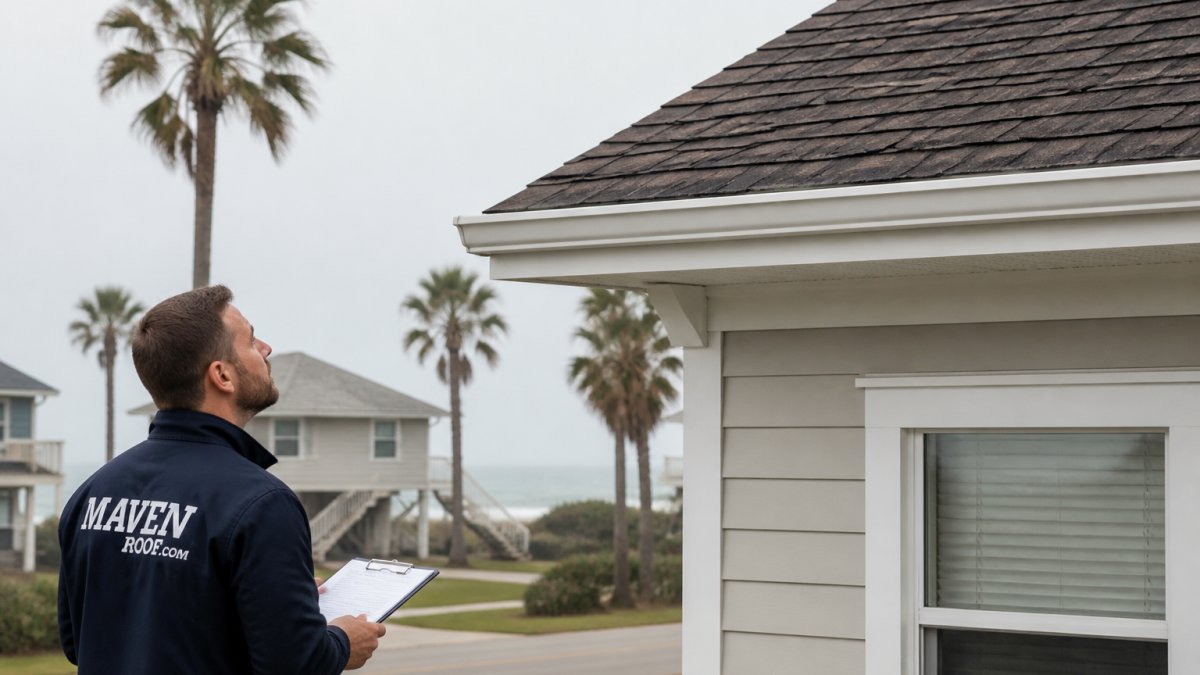
What Homeowners Can Safely Check From the Ground
- Granules in the gutters. Piles of shingle grit can be a sign to have the roof assessed.
- Curling or missing shingles. Look at the edges and ridgelines from a distance.
- Stains on ceilings or walls. A brown ring inside may warrant checking for a roof leak.
- Loose or sagging gutters. Check whether they run straight and drain away from the house.
- Debris on the roof. Branches, leaves, and pine straw hold moisture against the surface.
- Moss or dark streaks. Green growth and black algae may be signs to have the roof assessed.
Snap a few photos with your phone to track changes over time.
What to Leave to a Professional
Walking a wet or steep roof, poking at flashing, and climbing into the attic to trace a leak are tasks to discuss with a professional.
After a storm, consider having a professional assess the roof rather than climbing onto it.
Flashing around chimneys, vents, and skylights is another area to check. A free inspection can assess the roof.
Seasonal Roof Maintenance Calendar for Eastern NC
| Season | Main Focus | What to Do |
|---|---|---|
| Late winter / early spring | Storm recovery and sealant check | Walk the yard for shingle grit and debris, look for lifted or missing shingles after winter wind, clear gutters, book a professional inspection before the spring storm season |
| Spring | Pollen, debris, and algae start | Rinse pollen and salt film from the roof surface where safe, clear pine straw and seed pods from valleys and behind chimneys, watch for the first dark algae streaks |
| Summer | Heat, sun, and sealant fatigue | Watch for cracking, blistering, and curled shingle tabs, keep gutters clear of summer debris, trim overhanging branches before storm season, check attic ventilation |
| Late summer / fall | Peak storm season prep | Clear pine straw and leaves, confirm flashing and fasteners are tight, photograph the roof for your records, book a pre-storm inspection |
| Fall / early winter | Post-storm and pre-winter | Inspect after any named storm or heavy wind event, check for new ceiling stains, keep drains and downspouts clear, address small issues before the wet season |
| Winter | Moisture and wind | Watch for leaks after storms, keep drains clear, and address small issues before spring |
Consider a professional inspection in spring and fall, and after a major storm. We cover storm checks next.
A few coastal-specific notes that a generic calendar will not tell you:
- Pine straw is a coastal problem, not a fall problem. In this region it drops and piles up in valleys and behind chimneys through more than one season. Wet pine straw holds moisture against shingles and accelerates algae growth, so clear it whenever it accumulates rather than waiting for a single cleanup date.
- Salt film builds up between rains. On metal and shingle roofs near the water, salt residue collects on surfaces and in seams. A gentle rinse where you can reach safely, or a professional roof cleaning, helps remove it before it works into fasteners and cut edges.
- Storm season does not follow the calendar. Tropical systems can arrive outside the traditional window, so treat any named storm as a trigger for a post-storm check regardless of the month.
- Material changes the schedule. Standing-seam metal needs fastener and sealant checks more often than a homeowner expects, while asphalt and synthetic shingles need granule and algae checks. Flat roofing systems need drain and ponding checks after every heavy rain.
Photograph your roof from the ground at the start of each season. A dated photo set gives you a record of the roof’s appearance.
If you would rather not track all of this yourself, you can book a free inspection.
Roof Inspection After a Storm
Here is a simple step-by-step approach:
- Check inside first. Look at ceilings and attic walls for new stains, drips, or daylight showing through the roof boards.
- Walk the yard. Note shingles, granules, flashing pieces, or fasteners on the ground. Photograph what you find where it landed, before you pick it up.
- Look up from a safe distance. Spot missing shingles, dented metal, lifted edges, or displaced ridge caps from the ground with binoculars or a phone camera zoom. Do not climb onto a wet or storm-damaged roof.
- Check gutters and downspouts. Damage here often points to roof damage above, and clogged or detached gutters can send water into the fascia and walls.
- Document everything. Take dated photos and short notes on what you saw and where. Keep receipts for any temporary measures, like a tarp, and note the date and time of the storm if you know it.
- Call for a professional inspection. A professional inspection can assess what is not visible from the ground.
What to Document for an Insurance Claim
For a storm claim, you may want to keep records such as:
- Dated photos of the roof from the ground, the gutters, the yard debris, and any interior stains.
- A written timeline of when the storm hit, when you noticed the damage, and what you did about it.
- Receipts for any temporary repairs or emergency measures.
- Your maintenance records, if you have them. A history of inspections and repairs can provide context about the roof’s condition.
- Your policy number and claim contact, so the process does not stall on logistics.
We document storm damage and work with insurance adjusters. Our guide on how to identify roof storm damage step by step walks through the process in detail, and our guide on filing a wind damage insurance claim explains how to document the damage for your carrier.
Do not climb onto a coastal roof after a storm to “take a quick look.” After a storm, consider staying on the ground and having a professional assess the roof.
When Storm Damage Needs Urgent Attention
After a storm, consider contacting a professional about findings such as:
Book Your Roof Inspection Online →
- Active leaks or water coming through a ceiling during or after rain.
- Sagging rooflines or soft spots that suggest structural movement.
- Daylight visible through the roof boards in the attic.
- Missing shingles over a large area or exposed underlayment.
- Loose or lifted metal panels that could tear free in the next wind event.
If you see any of these, you can book a free inspection for a no-pressure recommendation about roof repair or replacement.
Signs of Wind Damage to a Roof
Watch for these signs of wind damage to a roof:
- Missing or torn shingles, especially along edges and ridges.
- Lifted or curled shingle tabs that no longer seal flat.
- Granules collecting in gutters after a storm.
- Dented metal on vents, flashing, or metal panels.
- New leaks or ceiling stains after heavy wind and rain.
- Loose fasteners or lifted panels on metal roofs.
If you spot any of these signs, consider booking an inspection. Our guide on filing a wind damage insurance claim explains how to document the damage for your carrier.
Standing-Seam Metal Roof Maintenance
Maven Roofing works with standing-seam metal roofing systems.
- Check fasteners. Loose or backed-out screws let water in. A pro can tighten or replace them.
- Inspect sealant. Seams and penetrations rely on sealant that dries and cracks over time.
- Watch for corrosion. Salt air attacks cut edges and any scratched panels.
- Keep the surface clean. Salt residue and debris should be rinsed or cleared.
If you need a qualified metal roofer to maintain or repair your roof, see our guide on how to find and hire a metal roofer near you.
When to Call a Professional Roofing Contractor
Some issues are fine to watch. Others need a call now. Here is how to tell the difference.
Call a professional right away if you see:
- Water stains spreading on ceilings or walls.
- Sagging rooflines or soft spots.
- Daylight showing through the roof boards in the attic.
- Missing shingles over a large area after a storm.
- Active leaks during rain.
- Moss or algae spreading across large sections.
A free inspection provides a no-pressure recommendation about roof repair or replacement.
Book Your Free Roof Inspection
You can book a free roof inspection from Maven Roofing.
We serve homeowners across Eastern North Carolina, including Wilmington, Jacksonville, New Bern, and Greenville. Our team works with asphalt and GAF shingles, F-Wave synthetic shingles, standing-seam metal, and flat roofing systems. We also offer roof cleaning and roof rejuvenation to remove moss and algae.
No pressure, just clarity. See what to expect from our free roof inspections and get started today.
Frequently Asked Questions
How often should a coastal roof be inspected?
You can book a free roof inspection. We provide free roof inspections and no-pressure recommendations.
What should homeowners check on a roof after a storm?
You can look for missing shingles, lifted or curled edges, granules in gutters, dented metal, and debris piles. Check ceilings and attic walls for new water stains, and note the date and take photos of anything unusual. If you see damage, you can book a free roof inspection. We document storm damage and work with insurance adjusters when appropriate.
How can homeowners reduce salt and moisture damage to a roof?
You can book a free roof inspection to discuss roof maintenance. Maven Roofing works with asphalt/GAF shingles, F-Wave synthetic shingles, and standing-seam metal roofing.
When should a homeowner call a roofing contractor for maintenance?
You can book a free inspection if you have concerns about your roof. We provide no-pressure recommendations about roof repair and replacement.
Your roof takes a beating on the coast, and small problems do not stay small for long. Maven Roofing is here to help you stay ahead of them with free inspections, honest recommendations, and work backed by published warranty information. Get started with Maven Roofing and protect your home with a roof that is ready for the next storm.
