

Maven Resource Blog
Should You Replace or Repair a Leaking Roof?
A leaking roof does not always mean replacement. Learn how roof age, leak frequency and damage extent point to repair or replacement for Eastern NC homes.
Book a free roof inspection
Last Updated: November 19, 2026
Quick Summary
Repair a leaking roof when the damage is limited to one area, the decking is sound, and the roof still has most of its service life ahead. Replace it when the roof is near the end of its life, leaks keep returning in different spots, or shingles are wearing across large areas. A professional inspection of the shingles, flashing, decking, and attic is the most reliable way to decide.
- A newer roof with an isolated leak and sound decking is usually a good candidate for repair.
- Leaks that return in several places often point to a system-wide problem rather than one failed component.
- Sagging, soft decking, or spreading interior stains signal damage a patch may not fix.
- Most leaks that come back are flashing leaks, so check flashing as well as shingles.
- Ask whether matching shingles are available and what the workmanship warranty covers before approving a repair.
Table of Contents
- Why a Leaking Roof Forces a Decision
- How Long Does a Roof Last Asphalt Shingles in Coastal Conditions?
- 5 Signs You Need a New Roof Instead of a Patch
- Leak Triage: Finding Where Water Is Actually Getting In
- Roof Repair vs Replacement Cost: A Decision Framework
- Emergency Roof Leak Repair Services: Protecting the Home Now
- Insurance, Permits and Warranties to Check Before You Decide
- Book a Free Inspection Before Deciding on Repair or Replacement
- Frequently Asked Questions
Why a Leaking Roof Forces a Decision
A leaking roof is one of the few home problems that can’t wait. Water that gets into the attic, insulation, or ceilings can cause damage in days, and a stain on the ceiling often means water has been moving through the structure for longer. The question most homeowners face is whether a targeted repair will stop the leak for good, or whether the roof has reached the point where replacement is the more sensible investment. Our guide on whether to repair or replace your roof walks through how to make that call for your specific situation.
At Maven Roofing, we help homeowners and property managers across Eastern North Carolina work through that choice. The answer depends on the roof’s age, how much of it is affected, and how often leaks have returned. Each factor points in a different direction, so it’s worth looking at all of them before deciding.
How Long Does a Roof Last Asphalt Shingles in Coastal Conditions?
Asphalt shingle roofs have a finite service life that depends on the product line and how the roof is installed. In Eastern North Carolina, that window often runs shorter. The reason is not one dramatic event but a steady combination of exposures that most inland roofs never face at the same intensity.
What actually wears a coastal roof
- Wind-driven rain. Along the coast from Hampstead and Surf City down to Wilmington and Leland, storms push rain sideways and upward, not just straight down. Water is forced under shingle tabs, into ridge vents, and against flashing at chimneys, skylights, and wall intersections. A roof that sheds ordinary rain fine can still leak in a nor’easter or a tropical system.
- Salt air and humidity. Salt-laden air and persistent humidity accelerate corrosion of fasteners and metal flashing and keep roof decks and attic framing damp longer after a storm. Damp decking is more likely to soften and delaminate, and trapped moisture feeds mold and rot that a shingle inspection from the ground will never reveal.
- Intense sun and heat cycling. Strong summer sun bakes shingles, driving the oils out of the asphalt and making them brittle. Repeated heating and cooling causes tabs to curl and crack, and granule loss exposes the asphalt underneath.
- Storm and hail exposure. Hail and wind events knock granules loose and bruise shingle mats. A bruised shingle may look intact but has a weakened spot that becomes a leak years later.
How to judge remaining service life
Age alone does not decide repair versus replacement, but it sets the context. A roof in the later part of its expected life has less remaining life to protect the repair investment, and new leaks are more likely to appear elsewhere even after a successful patch.
A pattern many homeowners in this region run into is a roof that has had repairs already and starts leaking again after a storm.
5 Signs You Need a New Roof Instead of a Patch
A patch makes sense when the damage is limited and the rest of the roof is in good shape. These signs suggest the opposite:
- The roof is near the end of its expected service life. Older roofs have less remaining life to protect your investment.
- Leaks keep returning in different spots. Multiple leaks often point to a system-wide problem rather than one failed component.
- Shingles are curling, cracking, or missing across large areas. Widespread wear means repairs will just move the problem.
- The roof sags or has visible gaps. Sagging can indicate structural or decking issues that a patch won’t fix.
- Water stains keep spreading inside. If interior damage grows despite repairs, the water is finding paths you haven’t addressed.
If you see several of these at once, a professional assessment is the best next step.
Leak Triage: Finding Where Water Is Actually Getting In
Water often travels before it shows up. It can run along a rafter, down a pipe, or along the underside of decking before dripping from a ceiling. That’s why the stain on your ceiling may not sit directly below the true source of the leak.
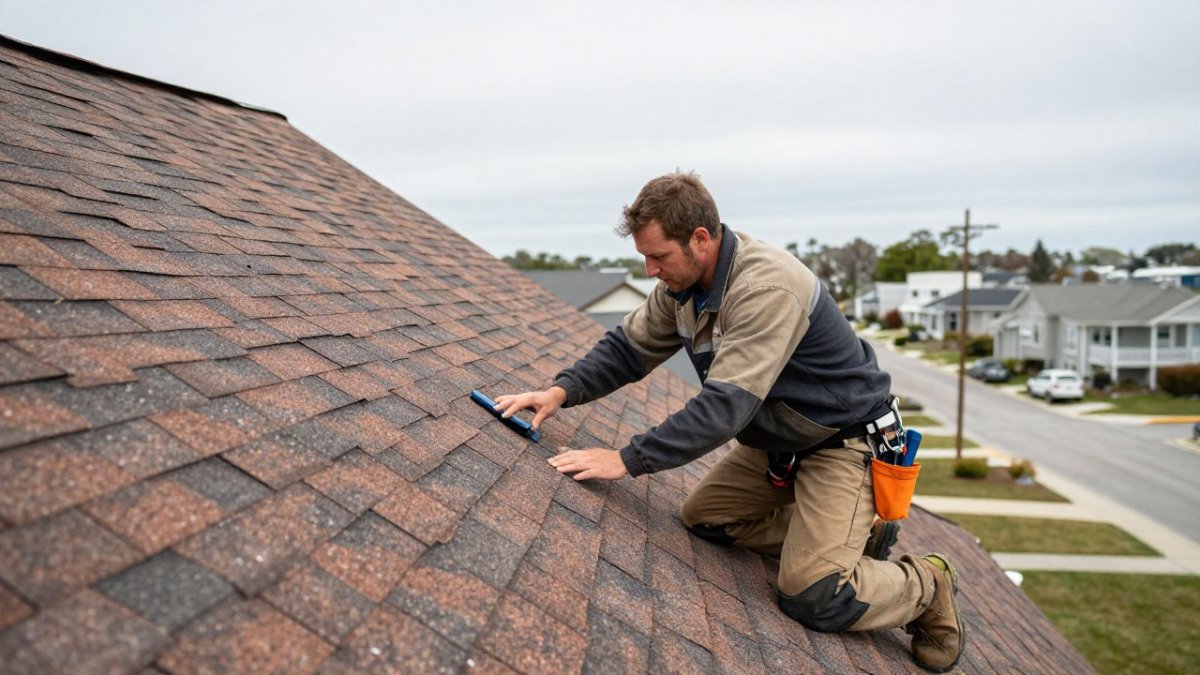
Common leak sources include damaged flashing around chimneys, vents, and valleys, cracked or lifted shingles, and worn sealant around penetrations. A careful inspection checks these areas and traces the water path from the attic and roof surface. Finding the actual entry point is the first step in deciding whether a repair is enough. Our article on how to tell if a roof leak is hidden explains the signs that point to water entering somewhere you can’t see.
Damage Behind the Surface
Shingles can look fine from the ground while the underlayment or decking beneath them is wet or rotted. Moisture trapped in the attic can also promote mold and weaken wood over time. Because this damage is hidden, a roof that appears to have one small leak may need more extensive work than expected. Before choosing between repair and replacement, ask for the attic and decking to be checked, not only the shingles.
Roof Repair vs Replacement Cost: A Decision Framework
Repair and replacement serve different situations, and the right call usually comes down to four questions: how much of the roof is affected, how much service life is left, whether the damage is visible or hidden, and whether a repair can be made to last. Cost follows those answers rather than leading them.
|
Factor |
Repair Makes Sense |
Replacement Makes Sense |
|---|---|---|
|
Roof age |
Relatively young roof with most of its service life ahead |
Near or past expected life |
|
Damage extent |
Small, localized area |
Widespread wear or multiple leaks |
|
Leak history |
First or isolated leak |
Recurring leaks in several places |
|
Decking condition |
Sound and dry |
Soft, rotted, or repeatedly wet |
|
Material match |
Matching shingles and flashing are available |
Matching is impractical or the roof is discontinued |
|
Long-term value |
Buys time on a roof with life left |
Resets the roof’s service life |
What drives the cost of a repair
A repair estimate reflects the scope of work, not just the size of the leak. The biggest variables are how accessible the leak is, how much flashing and underlayment must be replaced around it, whether decking has to be cut out and rebuilt, and whether matching shingles are still available for the roof.
What drives the cost of a replacement
Replacement pricing depends on roof size and pitch, the number of layers being removed, the material selected, and how much decking repair is needed once the old roof is off. Steep or complex roofs with many valleys, dormers, and penetrations take more labor.
The repair-quality question competitors skip
A repair is only as good as its weakest detail. Three things determine whether a localized repair holds:
- Material matching. If the existing shingles are discontinued or have faded, a patch may be visible and may weather differently from the surrounding roof. Ask whether matching material is available before committing to a repair.
- Flashing and underlayment. Most leaks that return are flashing leaks. A repair that replaces shingles but leaves tired flashing or saturated underlayment in place is likely to leak again.
- Workmanship and warranty. Ask what the workmanship warranty covers and for how long before you approve the work, since repair and replacement warranty terms can differ. Ask what the workmanship warranty covers and for how long before you approve the work.
A practical way to decide
If the roof is young, the leak is isolated, the decking is sound, and matching material is available, a repair is usually the sensible first move.
Emergency Roof Leak Repair Services: Protecting the Home Now
When water is actively coming in, the priority is limiting damage while you arrange permanent work. Move valuables away from the leak, place containers to catch water, and photograph the damage for your records. Turn off power to affected ceiling fixtures if water is near them.
Temporary protection, such as a tarp, can slow water entry until a crew can inspect the roof. Emergency repair services focus on stopping the leak and securing the area first, then planning a permanent fix. Our emergency roof leak repair guide outlines what to do right now while you wait for a crew. Keep in mind that a temporary cover is not a long-term solution.
Insurance, Permits and Warranties to Check Before You Decide
Storm-related leaks can be covered by homeowners insurance, depending on your policy and the cause of damage. Document the damage with photos and dates, keep copies of any inspection reports, and avoid discarding damaged materials until your claim is reviewed. Our step-by-step guide to filing a wind damage insurance claim covers the process from start to finish. When appropriate, Maven Roofing can document damage and work with insurance adjusters.
Ask your roofing contractor whether a permit is required for the work and whether the project will follow local requirements. Finally, review the warranty terms for both materials and workmanship, since they differ and affect your long-term costs. Maven Roofing publishes warranty and guarantee information that you can review before you decide.
Book a Free Inspection Before Deciding on Repair or Replacement
Deciding between repair and replacement is easier with a clear picture of your roof’s condition. A free inspection from Maven Roofing checks the shingles, flashing, decking, and attic, then explains your options without pressure. You can schedule your free roof inspection and get straightforward answers about whether a repair will hold or whether replacement makes more sense for your home.
Frequently Asked Questions
My roof is 20 years old. Should I replace it?
Age alone does not settle the question, but a 20-year-old asphalt shingle roof is often nearing the end of its useful life, especially in coastal Eastern North Carolina where salt spray, humidity and storms wear shingles faster. If the leak is isolated and the shingles are still flexible and mostly intact, a repair may hold. If shingles are curling, cracking or missing across several slopes, or leaks keep returning, replacement is usually the more sensible long-term choice. A professional inspection can tell you how much service life remains.
Can a leaking roof be repaired without replacing the whole roof?
Yes, many leaks come from a single failed area such as damaged flashing, a cracked pipe boot, or a small section of missing shingles. Repairing that area can stop the leak if the surrounding roof is in reasonable condition and the decking underneath is sound. Repairs become less reliable when leaks appear in multiple places, when water has soaked the decking, or when the shingles no longer bend without cracking. In those cases, a targeted repair may only delay a larger replacement.
How many roof leaks mean I need a new roof?
There is no fixed number, but multiple leaks in different areas usually point to a roof that is wearing out overall rather than failing in one spot. A single leak from a known cause, such as a damaged vent boot, is often a repair. Recurring leaks after previous repairs, or leaks appearing in several rooms, suggest broader deterioration. Ask for an inspection that checks shingle condition, decking, flashing and attic signs of water intrusion so the decision rests on evidence rather than leak count alone.
What happens if you don’t fix a leaky roof?
Water that enters through a roof can saturate insulation, stain ceilings, rot roof decking and framing, and encourage mold growth inside walls and attics. Over time, the cost of interior and structural damage can exceed the cost of the original repair. Temporary protection, such as a tarp or a prompt emergency repair, can limit further damage while you decide whether a permanent repair or replacement makes sense for your home.
