

Maven Resource Blog
Roof Insurance Claims: How to Handle the Process
Handling roof insurance claims starts with knowing the steps. Learn how to document damage, talk to adjusters, and file with confidence.
Book a free roof inspection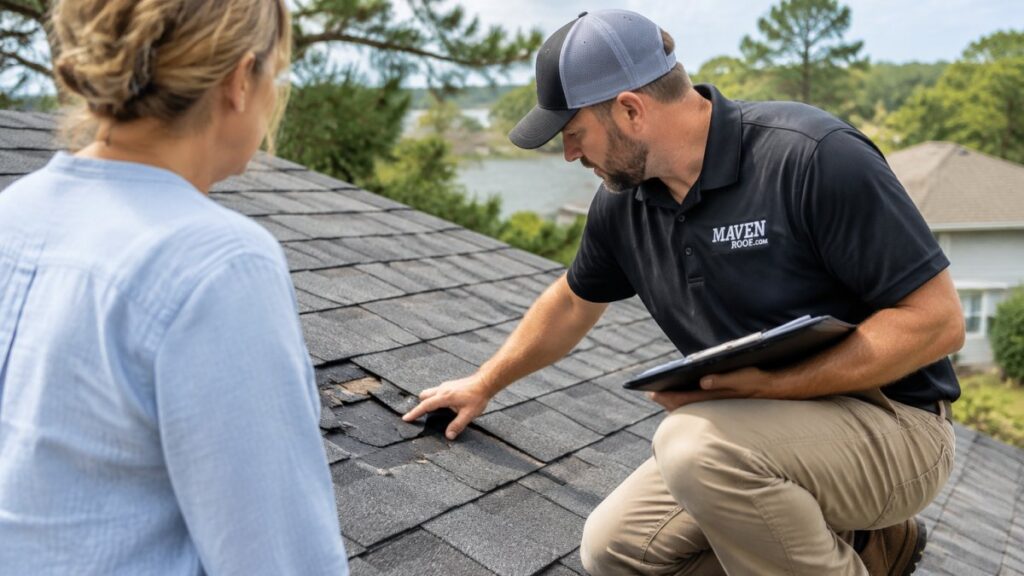
Last Updated: November 7, 2026
Quick Summary
To handle roof insurance claims, start with a free professional roof inspection so the damage is documented in writing before you notify your insurer. Then collect photos, storm dates, interior evidence, receipts, and a running log of every insurer contact, and report the damage promptly to meet your policy’s notice and proof-of-loss deadlines.
- Get a written inspection report with photos and a repair estimate before calling your insurer.
- Never climb a wet, steep roof after a storm to check for damage yourself.
- Report damage as soon as you find it, since delay is the most common reason insurers push back.
- Make temporary repairs to stop further damage and keep every receipt.
- Don’t replace the roof before the adjuster inspects it, because a new roof erases the evidence.
Table of Contents
- Start With a Free Roof Inspection and Damage Assessment
- Roof Damage Insurance Claim Documentation: What to Collect
- How Long Do I Have to File a Claim for Roof Damage?
- What to Say to a Roof Insurance Adjuster
- Handling a Roof Leak Insurance Claim While It’s Pending
- Storm Damage vs. Wear and Tear: What Insurance Covers
- Book Your Free Roof Inspection With Maven Roofing
- Frequently Asked Questions
Start With a Free Roof Inspection and Damage Assessment
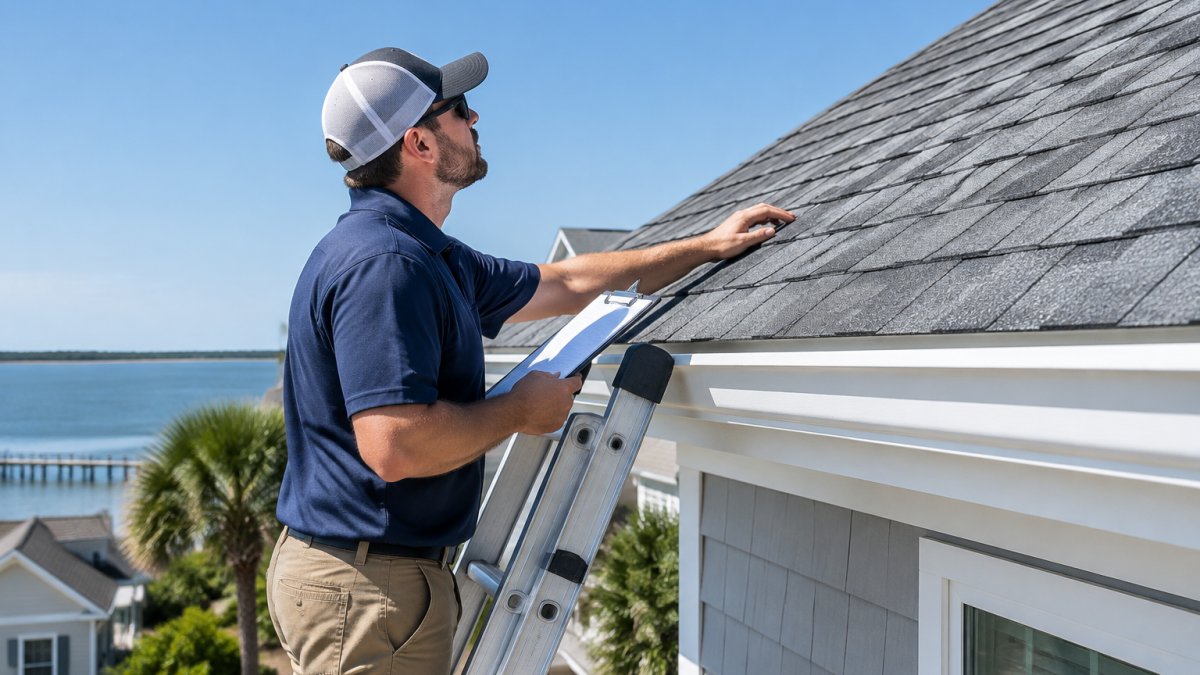
Learning how to handle roof insurance claims starts with one step: get the damage documented by a professional before you call your insurer about roof insurance claims.
A free roof inspection can give you:
- A written assessment of what failed and where
- Photos of the damage
- A repair estimate you can share with your insurer
You should not climb a wet, steep roof after a storm to check for damage yourself. Let a professional handle the inspection safely.
If you want to know exactly what happens during the visit, read what to expect from our free roof inspections before you book. And if you’ve never scheduled one before, learn how to spot a scam free roof inspection so you know the difference between a real assessment and a high-pressure sales pitch.
Roof Damage Insurance Claim Documentation: What to Collect
Roof damage insurance claim documentation is the paper trail that decides whether your claim gets paid, so build it before the adjuster arrives. A thin file invites questions.
Collect and organize these items:
- Photos and video of the damage, taken from the ground with your phone
- Date and time of the storm, plus any weather reports you can find
- Interior evidence: water stains on ceilings, buckets catching drips, damaged insulation
- Your policy number and the declaration page showing your coverage
- Receipts for any temporary repairs or emergency tarping
- A written inspection report from a roofing professional
- A running log of every call, email, and visit with your insurer
Keep everything in one folder, digital or physical. Note who you spoke with and what they told you, with dates.
For a storm-related claim, a step-by-step guide to filing a wind damage insurance claim shows how to organize these documents from day one.
How Long Do I Have to File a Claim for Roof Damage?
Two clocks run on a roof claim, and homeowners often only know about one. The first is the prompt-notice requirement in your policy. The second is the deadline your policy or state rules set for filing proof of loss and completing the claim.
Most homeowners policies require you to give notice of a loss promptly, and many set a contractual time limit for filing a sworn proof of loss after the insurer asks for it.
A few practical rules of thumb:
- Report the damage as soon as you find it. Delay is the most common reason insurers push back.
- Make temporary repairs to stop further damage, and keep the receipts. Most policies expect you to mitigate further damage.
- Don’t wait for a contractor’s schedule before notifying your insurer. Report first, document second, repair third.
- Calendar the proof-of-loss deadline the moment your claim number is issued, and put a reminder a week ahead of it.
One warning worth repeating: if a storm just passed through and someone knocks on your door offering to “handle your claim,” slow down. Legitimate roofing companies don’t need to chase storms door to door.
What Determines What You Actually Collect: ACV vs. RCV
The deadline gets your claim opened. The settlement math decides what you collect, and it’s the part most brief claim guides skip.
Most homeowners policies pay roof claims one of two ways:
- Actual cash value (ACV): the insurer pays replacement cost minus depreciation for the age and condition of the roof. You collect less up front, and the gap between ACV and replacement cost comes out of your pocket unless your policy includes recoverable depreciation.
- Replacement cost value (RCV): the insurer pays what it costs to replace the roof with like kind and quality, depending on policy terms. The first check is an ACV payment; the second releases the recoverable depreciation once the work is complete and you submit the final invoice or certificate of completion.
That two-payment structure is why homeowners are sometimes surprised by the size of the first check. It isn’t the final number.
A few mechanisms worth understanding before you file:
- Depreciation is calculated from the age and condition of your roof, not from the storm. An older roof depreciates further, which widens the ACV-to-RCV gap.
- Your deductible comes off the top of the claim, and many policies carry a separate wind or hail deductible stated as a percentage of the dwelling limit rather than a flat amount. Check your declaration page for that line before you assume your standard deductible applies.
- Recoverable vs. non-recoverable depreciation is a policy term, not a negotiation tactic. If your policy lists depreciation as recoverable, the holdback is payable after completion. If it doesn’t, the holdback is gone.
- Matching and code items can affect the final scope. Ask the adjuster to note in the report whether the estimate includes code-required items and any matching considerations for your roof type.
For a storm-related claim, a step-by-step guide to filing a wind damage insurance claim shows how to organize these documents from day one.
What to Say to a Roof Insurance Adjuster
What to say to a roof insurance adjuster comes down to three habits: stick to facts, point to evidence, and don’t guess. The adjuster is there to inspect and estimate, not to argue. Your job is to make their inspection easy and accurate.
Say this:
- “Here is my inspection report and the photos I took on [date].”
- “The damage started after the storm on [date]. Before that, the roof was [describe condition].”
- “I made temporary repairs to prevent further damage. Here are the receipts.”
- “Can you show me what you’re measuring and note it in the report?”
Avoid this:
- Guessing at cause or age
- Saying “I think it’s been leaking for years”
- Agreeing to a number on the spot before you’ve read the written estimate
If you’re deciding whether to bring in outside help for the negotiation, read whether hiring a public adjuster is worth it.
Handling a Roof Leak Insurance Claim While It’s Pending
A roof leak insurance claim rarely gets resolved overnight, and the leak won’t wait for paperwork. Your job while the claim is pending is to stop further damage without masking the evidence.
Do this:
- Place buckets and move furniture away from active drips.
- Photograph everything first, then make the temporary repair.
- Tarp or patch the leak to keep water out. Keep the receipt.
- Don’t replace the roof before the adjuster inspects it. A new roof erases the evidence.
- Check in weekly with your insurer and log each conversation.
Watch out: making permanent repairs before the adjuster inspects can make it harder to document the original damage.
Storm Damage vs. Wear and Tear: What Insurance Covers
Storm damage is sudden and accidental, and most policies cover it. Wear and tear is gradual and expected, and most policies exclude it. That distinction decides most roof claims, so it’s worth understanding before you file.
| Sign | Likely Storm Damage | Likely Wear and Tear |
|---|---|---|
| Timing | Appeared after a dated storm | Developed gradually over years |
| Pattern | Clustered on one slope or windward side | Even across the whole roof |
| Shingle condition | Cracked, lifted, or missing tabs | Curling, brittle, or granule loss |
| Interior | New stains after the storm | Slow, recurring stains |
| Decking | Fresh impact marks or dents | Rot from long-term moisture |
Hail leaves dents and bruised shingles. Wind lifts and tears tabs. Age curls and dries shingles evenly. A roof can show both at once, and that’s where partial approvals come from: the adjuster pays for the storm-caused slope and excludes the weathered one.
When a Claim Is Partially Approved or Denied
A partial approval or a denial is not the end of the process. It’s a documented disagreement, and insurers have a defined path for resolving it.
- Request the insurer’s reasoning in writing. Ask for the adjuster’s report and the specific policy language cited for each excluded item. You are entitled to know what was denied and why, line by line.
- Compare the report to your own file. Put the adjuster’s measurements and damage notes next to your inspection report and photos. Gaps in scope, a missed slope, an unlisted code item, a damaged vent or flashing, are the most common source of partial approvals.
- Submit additional evidence. A written report from a licensed roofing contractor that addresses the adjuster’s specific findings, with photos keyed to the disputed areas, gives the insurer something concrete to reconsider. Generic letters that restate the claim rarely move the file.
- Ask for a reinspection. If the dispute is about what’s on the roof, a second look with your contractor present is often the fastest resolution.
- Understand appraisal. Many policies include an appraisal clause for disputes over the amount of loss. Each side selects an appraiser, and the two appraisers pick an umpire if they can’t agree. Appraisal resolves value disputes, not coverage disputes, so read the clause before invoking it.
- Use the complaint channel if the process stalls. Every state has a department of insurance with a consumer complaint process. Filing a complaint is a formal step, not a threat, and it creates a record.
Watch out: read any release language carefully before cashing a partial settlement check. Endorsing it can close the claim on the insurer’s terms.
Keep every step in the same log you started at the documentation stage: dates, names, what was requested, what was received.
If your insurer denies the claim as wear and tear, don’t stop there. Read how to appeal a denied roof insurance claim step by step and follow the process rather than accepting the first answer.
Book Your Free Roof Inspection With Maven Roofing
The fastest way to protect a roof insurance claim is to get the damage documented correctly the first time.
One call gets you a free inspection, a written assessment, and a no-pressure recommendation.
Get started with Maven Roofing and book your free roof inspection online today.
A roof claim moves fastest when the damage is documented before the paperwork starts. Maven Roofing offers free roof inspections, honest repair-or-replace guidance, and help coordinating with insurance adjusters across Eastern North Carolina.
Frequently Asked Questions
What should I avoid saying to a roof insurance adjuster?
Avoid guessing at the cause or age of the damage, and don’t say the roof was already worn out or that you noticed the problem months ago. Stick to facts you can support with photos and dates. Don’t sign anything on the spot or accept a settlement before you’ve reviewed the scope of work with a roofing professional. Keep the conversation focused on what you observed and when.
Can a roofing contractor meet with my insurance adjuster?
Yes. Many roofing contractors will meet the adjuster on site to walk the roof and point out storm damage that may be missed from the ground. At Maven Roofing, we document damage and coordinate with adjusters as part of our free inspection process. Having a contractor present helps ensure the scope reflects the actual damage, not just what’s visible from a quick look.
Will homeowners insurance cover an older roof?
Coverage depends on your policy and the cause of damage. Most policies cover sudden storm damage regardless of roof age, but some insurers may apply depreciation or require an inspection before renewal. If your roof is aging, a professional inspection can document its condition and help you understand whether repair, rejuvenation, or replacement is the right path before you file a claim.
How do I handle a roof leak while my insurance claim is pending?
Take steps to prevent further damage, such as placing buckets, tarping the area if it’s safe, and photographing the leak and any interior damage. Keep receipts for temporary repairs, since many policies cover reasonable mitigation costs. Don’t make permanent repairs before the adjuster sees the damage. Document everything and let your insurer know what you’ve done to protect the home.
