

Maven Resource Blog
Is Hiring a Public Adjuster Worth It? A Roof Claim Guide
Is hiring a public adjuster worth it for your roof claim? We break down fees, pros and cons, and when to hire one before you sign anything.
Book a free roof inspection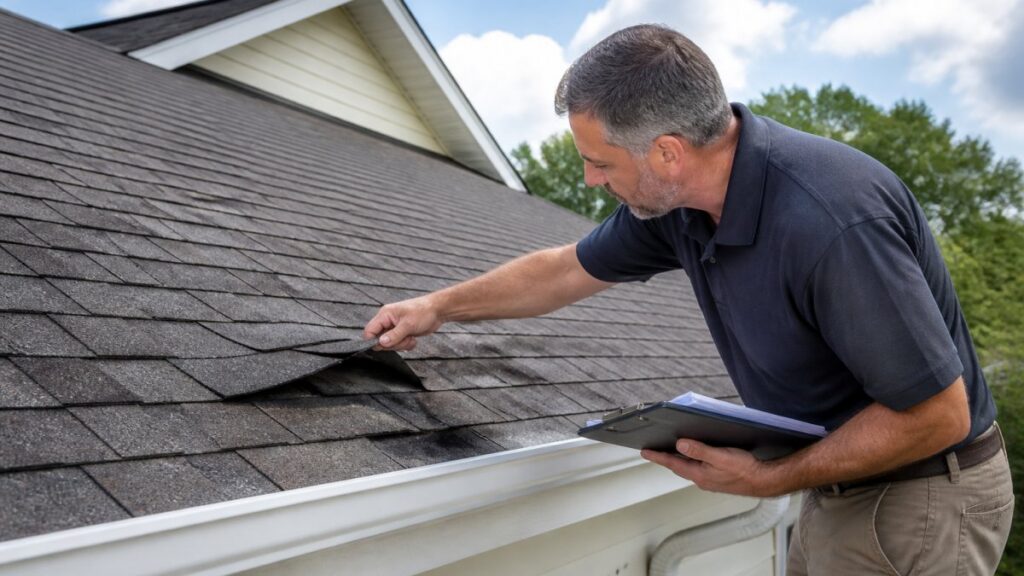
Table of Contents
- What a Public Adjuster Actually Does for a Roof Claim
- Public Adjuster Pros and Cons Homeowners Should Weigh
- When to Hire a Public Adjuster (and When to Handle It Yourself)
- The Fee Structure: What a Contingency Fee Really Costs You
- Roof Insurance Claim Documentation That Supports Your Settlement
- How to Dispute a Homeowners Insurance Claim That Comes Back Low
- Frequently Asked Questions
Last Updated: October 18, 2026
What a Public Adjuster Actually Does for a Roof Claim
A public adjuster is a licensed professional who represents you, the homeowner, during an insurance claim. They inspect the damage, document it, prepare the claim, and negotiate with your insurance company on your behalf. They work for you, not the insurer.
At Maven Roofing, we get asked about this constantly after a storm rolls through. Homeowners want to know if paying someone to handle their claim is worth it.
Here is the short answer: it depends on the claim. A simple shingle repair is usually not worth the fee. A disputed, large, or complex claim often is.
Public Adjuster vs. the Insurance Company’s Adjuster
These two roles are easy to confuse, and the difference matters.
- The company adjuster is paid by the insurer. They evaluate your loss and report back to the company.
- The public adjuster is paid by you. They build your case and push for a full settlement.
One works for the payer. One works for the policyholder. That is the whole ballgame.
Public Adjuster Pros and Cons Homeowners Should Weigh
The pros are real, and so are the costs. Here is the honest breakdown.
Pros:
- Deep knowledge of policy language and claim documentation
- More time to document damage than most homeowners have
- Experience negotiating disputed or underpaid claims
- Can take the stress of the claim process off your plate
Cons:
- Fees come out of your settlement, so your net recovery shrinks
- Not every claim needs one, and some are too small to justify the cost
- Quality varies widely, so vetting matters
- You lose some direct control over the back-and-forth with your insurer
The biggest mistake we see is signing with an adjuster before reading the contract carefully. Some agreements are hard to cancel once signed. Read the cancellation terms before you commit to anything.
When to Hire a Public Adjuster (and When to Handle It Yourself)
Hire a public adjuster when your claim is large, complex, or already disputed. Handle it yourself when the damage is clear, the claim is modest, and your insurer is responding reasonably.
That is the practical line most homeowners should draw.
Signs Your Claim Is Complex Enough to Need Help
- The insurer’s estimate is far below your contractor’s estimate
- Your claim was denied or only partly approved
- Damage is widespread, or the cause is disputed
- You have a large or high-value loss
- You have already filed and the process has stalled
For straightforward storm damage where the cause is obvious, many homeowners do fine on their own, especially with a contractor supplying solid documentation.
Get a free roof inspection before you decide anything. A clear damage report from a roofing contractor tells you what you are actually claiming, which makes the hire-or-handle-it decision much easier.
The Fee Structure: What a Contingency Fee Really Costs You
Public adjusters typically charge a contingency fee, meaning a percentage of your settlement. You pay nothing up front. The fee comes out of what the insurer pays you. That structure sounds painless, but the math is what decides whether hiring one is worth it, and the math is not “did I get more?” It is “did I get more after the fee than I would have gotten alone?”
The Break-Even Question
A contingency fee only pays off when the adjuster recovers enough above what you would have gotten alone to cover the fee and still leave you ahead. The break-even uplift depends on the fee percentage:
- At a 10% fee, the adjuster must recover roughly 11% more than your self-managed outcome just to tie.
- At a 15% fee, the break-even uplift is roughly 18%.
- At a 20% fee, the break-even uplift is roughly 25%.
Those figures are not a promise of results, they are the arithmetic of a percentage fee. If you would have settled at a given number on your own, the adjuster has to beat that number by the break-even margin before you see a single extra dollar.
Worked Examples
The table below isolates net recovery, not gross settlement. The self-handled column is what you would have received without help; the adjuster column is what you net after the fee.
| Scenario | Self-Handled Net | Adjuster Gross | Fee % | Adjuster Fee | Adjuster Net | Better Option |
|---|---|---|---|---|---|---|
| Small, clean claim | $8,000 | $8,000 | 15% | $1,200 | $6,800 | Self-handled |
| Small claim, modest uplift | $8,000 | $9,000 | 15% | $1,350 | $7,650 | Self-handled |
| Disputed claim, meaningful uplift | $12,000 | $16,000 | 15% | $2,400 | $13,600 | Adjuster |
| Disputed claim, large uplift | $12,000 | $20,000 | 15% | $3,000 | $17,000 | Adjuster |
| Large complex claim | $40,000 | $60,000 | 15% | $9,000 | $51,000 | Adjuster |
The pattern: on small claims, even a real uplift often fails to clear the break-even margin. On large or disputed claims, a meaningful uplift clears it comfortably. The fee is not the problem, the size of the gap between the two outcomes is.
Book Your Roof Inspection Online →
What the Fee Actually Buys
A contingency fee is not just for negotiation. It typically covers inspection and documentation, claim preparation, correspondence with the insurer, and representation through the back-and-forth. On a roof claim, that documentation work, date-stamped photos, measurements, a written damage assessment, and line-item estimates, is the same work that supports a full settlement whether you hire an adjuster or not. The question is who does it and whether the result justifies the percentage.
Fee rules and caps vary by state, and some states limit what a public adjuster may charge on certain claims. Check the rules that apply where you live, and read the cancellation terms before signing. A fee that looks standard can still be capped or restricted by regulation.
A Quick Self-Check Before You Sign
Ask yourself three questions:
- What would I likely recover on my own, based on my contractor’s written estimate and the insurer’s response so far?
- What uplift would the adjuster need to produce to clear the break-even margin at their fee?
- Is that uplift realistic given how disputed or complex my claim actually is?
If you cannot answer the first question, you are not ready to decide. A free roof inspection with clear documentation gives you the number you need to run the math. The National Association of Public Insurance Adjusters is a useful starting point for licensing and standards, and your state insurance department can confirm fee rules.
Roof Insurance Claim Documentation That Supports Your Settlement
Strong roof insurance claim documentation is what separates a full settlement from a lowball offer. Photos, measurements, and a clear damage report do most of the work.
What a solid file includes:
- Date-stamped photos of damaged shingles, flashing, and decking
- A written damage assessment from a qualified roofing contractor
- Repair or replacement estimates in writing
- Proof of loss and any required claim forms
- Records of temporary repairs and related costs
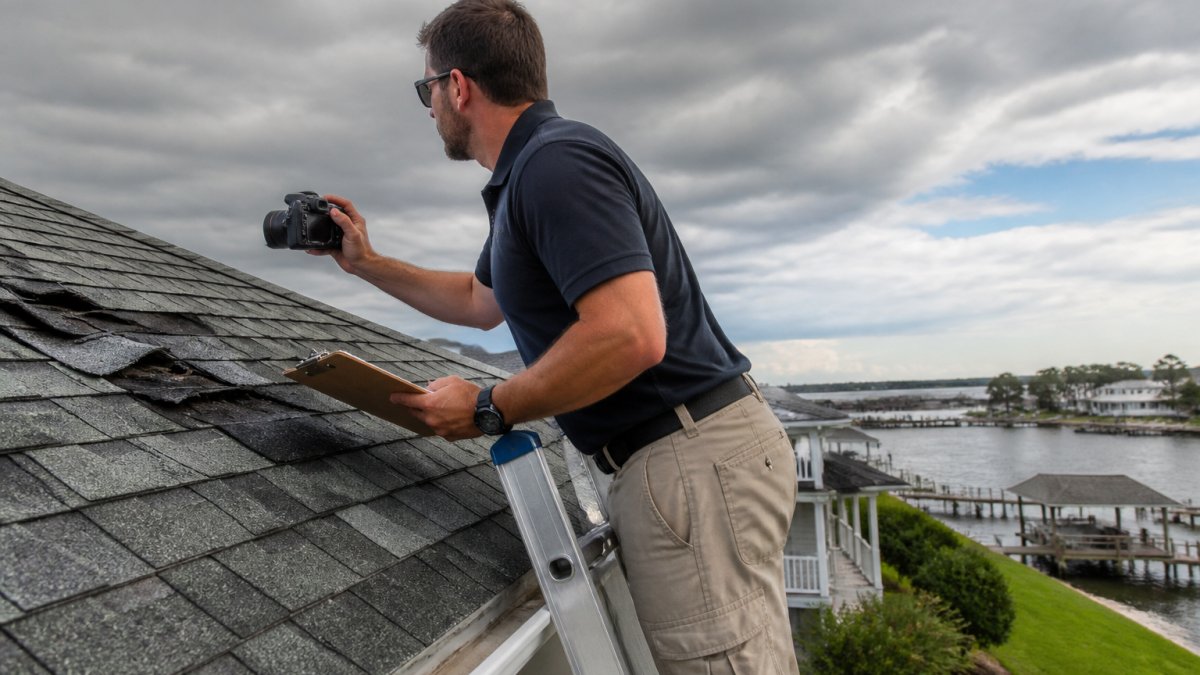
A contractor estimate carries real weight here. Insurers compare numbers, and a detailed report from a licensed roofer gives the adjuster something concrete to work from. That is why we document damage carefully on every inspection.
How to Dispute a Homeowners Insurance Claim That Comes Back Low
To dispute a homeowners insurance claim that comes back low, request the adjuster’s report, compare it line by line against your contractor’s estimate, and submit a written rebuttal with supporting photos and documentation.
The steps, in order:
- Request the full claim file and adjuster’s report.
- Compare it to your contractor’s written estimate.
- Document every item the insurer missed or undervalued.
- Submit a written dispute with photos and estimates attached.
- Ask about the insurer’s internal appeal or re-inspection process.
- Escalate to your state insurance department if talks stall.
Many disputes resolve at step four. If yours does not, a public adjuster or an independent appraisal can be worth the cost at that stage.
Red Flags to Watch Before You Sign With Any Adjuster
- No license or registration you can verify
- Pressure to sign on the spot
- A contract with no clear cancellation terms
- Promises of a specific settlement amount
- Fees that seem out of line with your state’s rules
Verify licensing through your state’s insurance department before signing anything. The Federal Emergency Management Agency also offers guidance on spotting disaster-related fraud, which is worth a read after any major storm.
The best time to bring in a public adjuster is early, before you accept a settlement. Once you cash the check, reopening a claim gets much harder.
Storm damage on your roof is stressful enough without guessing your way through a claim. Maven Roofing is a veteran-owned contractor serving Eastern North Carolina, and we offer free roof inspections with clear, no-pressure documentation you can use for your claim. We work with asphalt and GAF shingles, F-Wave synthetic shingles, standing-seam metal, and flat roofing systems, and we help homeowners coordinate with insurance adjusters when damage is found. Book your free roof inspection online and get a straight answer about your roof before you make any claim decisions.
Frequently Asked Questions
Is hiring a public adjuster worth it for a roof claim?
It depends on the size and complexity of your claim. For a straightforward shingle repair after a storm, the contingency fee a public adjuster charges can outweigh any gain. For a large or disputed roof claim, an adjuster who documents damage thoroughly and negotiates with your insurer may recover enough extra to justify the cost. Run the math on your own settlement before signing, and get a free roof inspection first so you know what damage actually exists.
Can I handle a roof insurance claim without a public adjuster?
Many homeowners do. You can file the claim, meet the insurance company’s adjuster on site, and submit your own photos and contractor estimates. The risk is incomplete documentation: missed soft-metal damage, overlooked decking rot, or a repair estimate that does not match code requirements. A roofing contractor can inspect and document the damage for you at no cost, which gives you a stronger file whether or not you later bring in a public adjuster.
What should I ask a public adjuster before signing an agreement?
Ask for their state license number and verify it, confirm the exact percentage fee and whether it applies to the gross or net settlement, and find out if they charge anything if no payment is recovered. Request references from similar roof claims and read the cancellation clause carefully. A legitimate adjuster will answer all of this in writing without pressure. If any term is vague or the contract is presented for same-day signature, walk away.
How can a roofing contractor help document storm damage for an insurance claim?
A contractor inspects the roof, photographs wind-lifted shingles, hail bruising, and damaged flashing, and notes conditions the insurance adjuster may miss from the ground. That documentation, paired with a written repair estimate, gives your insurer a clear picture of the covered loss. Maven Roofing provides free roof inspections across Eastern North Carolina and can walk you through what the damage means for your claim before you decide whether to bring in a public adjuster.