

Maven Resource Blog
Preventing Shingle Granule Loss: Coastal Roof Care Guide
Granule loss on coastal roofs can outpace what most owners expect. Learn how salt spray and storms wear shingles and the simple steps that slow it down.
Book a free roof inspection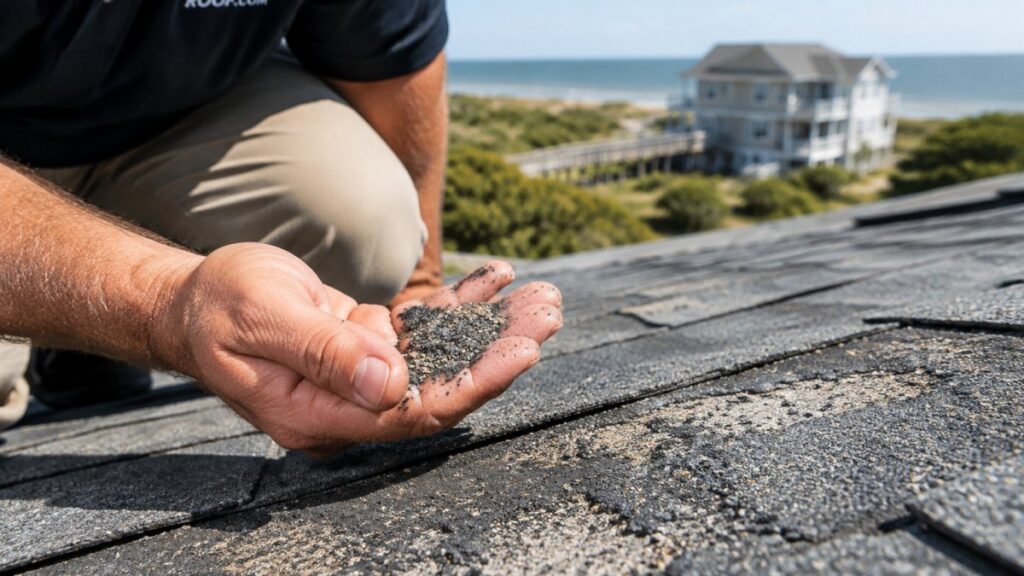
Last Updated: November 6, 2026
Quick Summary
To prevent granule loss on a coastal roof, keep the surface clean and clear of debris, trim overhanging branches, and inspect the roof and gutters in spring and fall. Salt spray, humidity and wind-driven rain wear granules away faster near the coast, so check after high winds and call a professional when you see bare patches or heavy grit in the gutters.
- Salt spray, humidity and wind-driven rain loosen granules and expose the asphalt underneath.
- Check the north and east slopes first, since they often take the hardest wind.
- Clear leaves and debris, because they hold moisture against shingles.
- Use a soft-bristle brush and a biodegradable cleaner, and avoid pressure washing.
- Schedule a free roof inspection when you see several warning signs at once.
Table of Contents
- Why Coastal Roofs Lose Shingle Granules Faster
- Signs of Excessive Shingle Granule Loss to Watch For
- Step-by-Step: How to Inspect Your Roof and Gutters for Granule Loss
- Step-by-Step: Gentle Maintenance That Protects Granules
- Roof Inspection After High Winds and Storms
- When Asphalt Shingle Roof Rejuvenation Makes Sense
- Booking Your Free Coastal Roof Inspection with Maven Roofing
- Frequently Asked Questions
Why Coastal Roofs Lose Shingle Granules Faster
Shingle granules are the small mineral particles pressed into the top layer of asphalt shingles. For more on why coastal roofs need extra attention, see why coastal roof maintenance matters. For a broader look at moisture and salt risks, read preventing water damage in coastal homes.
Coastal homes face a mix of conditions that work against shingles. Here is what drives the damage.
Salt spray, humidity and wind-driven rain
Salt spray settles on roofs and stays damp, which speeds up wear on the surface. Humidity keeps shingles moist for longer stretches, and wind-driven rain pushes water into spots that normally stay dry. Over time, these forces loosen granules and expose the asphalt underneath.
- Check the north and east slopes first, since they often take the hardest wind.
- Rinse salt buildup off gently when you can, rather than letting it sit.
- Watch for granules collecting at the lowest edges of the roof.
Normal aging versus accelerated wear
Some granule loss is normal as a shingle ages. The question is how much, and how fast. A roof that loses a light dusting of granules over many years is in typical shape. A roof that sheds granules quickly, or shows bare patches, is wearing out ahead of schedule. Coastal exposure is one of the most common reasons for that early wear.
Signs of Excessive Shingle Granule Loss to Watch For
Excessive granule loss rarely announces itself all at once. These are the signs that the protective layer is thinning.
- Granules in the gutters. A steady trickle of grit, especially after storms, points to active wear.
- Dark or bare patches. Areas where the shingle looks smooth or shows black asphalt are losing protection.
- Grit at the downspouts. Piles of granules at the base of downspouts signal the same problem.
If you see several of these at once, schedule a roof inspection. A quick check can tell you whether the wear is minor or the roof needs attention soon.
Use this quick reference to tell normal shedding from wear that needs attention.
| Sign | What it suggests | What to do |
|---|---|---|
| Granules in the gutters | Steady trickle points to active wear | Note amount and check after storms |
| Dark or bare patches | Protective layer is thinning | Schedule a roof inspection |
| Grit at the downspouts | Same wear as gutter granules | Compare with past photos |
| Soft or brittle shingles | Enough granules lost to weaken | Have a professional look soon |
Step-by-Step: How to Inspect Your Roof and Gutters for Granule Loss
A useful inspection is less about spotting granules and more about measuring how much, where, and how fast they are leaving. That distinction, ordinary shedding versus concentrated loss, is what tells you whether you are looking at a roof in normal middle age or one that needs repair. Here is a repeatable check you can run from the ground and from a safe ladder position.
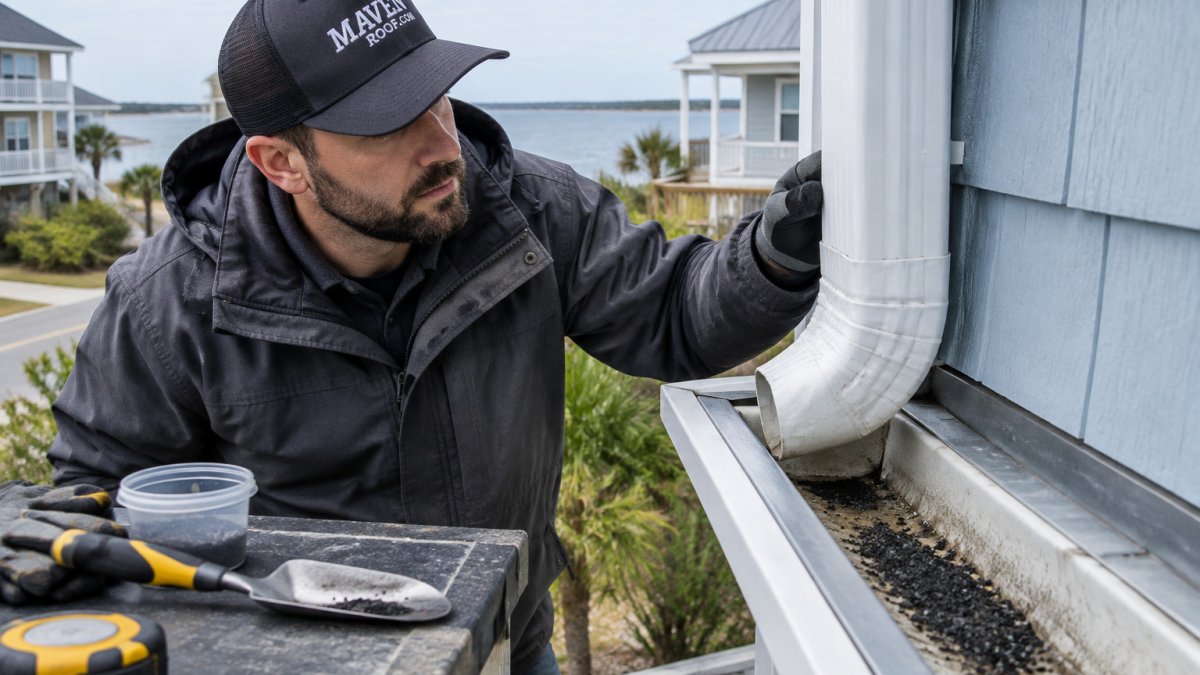
What you need
- Binoculars, so you can read each slope from the ground.
- A small clear jar or zip-top bag for a sample.
- A notebook or phone for dated photos and notes.
- Gloves, and a stable ladder placed on firm, level ground.
The inspection, step by step
- Walk the perimeter first. Look at the ground along the drip line and at the base of downspouts. A light scattering of grit after a storm is normal. Dense piles concentrated under one slope are not.
- Check the gutters and downspouts. Scoop a small sample of what has collected and note the color and texture. Grit that looks like coarse sand is typical shed; larger, sharper flakes can point to a shingle breaking down.
- Use binoculars on each slope. Work slope by slope and note bare, dark, or smooth patches where the asphalt is showing through. Pay particular attention to the north and east slopes, which often take the hardest wind and stay damp longest near the coast.
- Look at the shingle edges and tabs. Curling, lifting, or tabs that feel soft when you can safely reach them suggest the shingle has lost enough granules to weaken.
- Record location and severity. Note which slopes show the most loss, whether it is a light dusting or bare patches, and the date. Photos taken the same way each time let you compare later.
- Schedule a professional inspection. A free roof inspection from Maven Roofing can help confirm what the wear means for your roof’s remaining life and whether repair or replacement is the better path.
How to tell normal shedding from a real problem
A light, even dusting of granules across a roof that has aged for years is generally considered ordinary. Trouble looks different, bare patches in concentrated areas, granules streaming off after every rain, or loss that appears on a roof that is still young.
Watch out: a single heavy rain can wash a season’s worth of loose granules into the gutters and make the loss look worse than it is, compare against your last set of photos before you panic.
How often to inspect near the coast
Salt spray, humidity, and wind-driven rain speed up wear, so coastal roofs benefit from a more frequent look than the once-a-year habit common inland. A practical schedule is a full check in spring and fall, a quick gutter and ground check after any named storm or stretch of high wind, and a professional inspection whenever you see several warning signs at once. Those dated notes and photos can also help you identify early signs of shingle granule loss before coastal weather turns a small change into a larger concern.
Step-by-Step: Gentle Maintenance That Protects Granules
Routine care slows granule loss. The goal is to keep the shingles clean and clear of debris without damaging the surface.
- Clear debris from the roof and gutters. Leaves and twigs hold moisture against shingles.
- Trim overhanging branches. This reduces rubbing and keeps debris from landing on the roof.
- Keep the attic ventilated. Good airflow helps control heat that can age shingles faster.
- Clean the surface only when needed. Use the gentle methods described below.
How to clean moss from asphalt shingles safely
Moss holds moisture and can lift shingle edges. Remove it carefully to avoid knocking granules loose. Our safe moss removal steps walk through the process in depth.
Book Your Roof Inspection Online →
- Use a soft-bristle brush rather than a stiff one.
- Choose a biodegradable cleaner made for roofs.
- Avoid pressure washing, which can strip granules quickly.
- Work from the ground or a stable, safe position.
If moss covers large areas, or if the roof is steep, call a professional instead of trying to scrub it yourself.
Materials and products that hold up better near the coast
Material choice matters near the water. Corrosion-resistant metal flashing, quality underlayment and well-rated shingles all handle salt and moisture better. Ask your roofer which products are best suited to coastal exposure, and what warranty applies to them. Maven Roofing works with asphalt/GAF shingles, F-Wave synthetic shingles, standing-seam metal and flat roofing systems.
Roof Inspection After High Winds and Storms
Coastal storms are the fastest way to strip granules and loosen shingles, and the hours after one passes are when good documentation pays off. The goal is to check safely, record what you see, and avoid making damage worse before a professional can look at it.
Check safely, from the ground
- Stay off the roof after high wind or heavy rain. Lifted, cracked, or soft shingles can give way, and wet surfaces are slick.
- Walk the perimeter and look up with binoculars for missing, lifted, or creased shingles, and for new bare patches on the slopes.
- Check the gutters and downspouts for a fresh surge of granules, and look for shingle tabs or debris that have landed in the yard.
- Look inside the attic, if you can do so safely, for daylight, water stains, or damp insulation that suggest the roof deck has been compromised.
Document before you clean up
Take dated photos of everything you find, the slopes, the gutters, the ground below the drip line, and any interior staining, before you clear debris. A simple written log of the date, the storm, and what you observed is worth keeping with your maintenance records. This record helps if you file an insurance claim, and it helps a roofer understand what changed and when.
Safe cleanup
Clear leaves and debris from gutters and the ground only from a stable position, and never pressure-wash a storm-damaged roof, it can strip what granules remain and force water where it does not belong. If a branch is resting on the roof or a shingle is hanging loose, leave it for a professional rather than pulling on it yourself.
Insurance and adjuster coordination
If damage looks significant, contact your insurer and keep your photos and notes ready. Maven Roofing can document storm, wind, hail, and leak damage and coordinate with insurance adjusters when that is appropriate, so the scope of the damage is captured accurately. Coverage decisions belong to your insurer, but a clear, dated record and a professional assessment can make the process smoother.
When Asphalt Shingle Roof Rejuvenation Makes Sense
Roof rejuvenation can help a roof that is still structurally sound but showing surface wear, moss or algae. You can learn more about how the rejuvenation service works.
Rejuvenation is not a fix for every problem. If the shingles are cracked, curling, or badly worn through, replacement or repair may be the better choice. A professional inspection can tell you which option fits your roof.
Booking Your Free Coastal Roof Inspection with Maven Roofing
Granule loss is easier to manage when you catch it early. If you are seeing granules in your gutters, bare patches, or storm damage, Maven Roofing can help. We offer a free roof inspection for homeowners across Eastern North Carolina, and we will explain what we find in plain terms.
Book your free roof inspection online today, and we will help you decide on the next step for your coastal home.
Frequently Asked Questions
Why are my roof shingles losing granules?
Granules bond to the asphalt shingle with a coating that UV light, heat, wind-driven rain and salt spray gradually break down. On the Eastern North Carolina coast, sun exposure and humidity are steady, and storms can knock granules loose quickly. Some loss is normal as a shingle ages, but a steady stream of granules in your gutters or on the ground is worth checking. A roof inspection can tell you whether the wear is normal or accelerated, and what to do about it.
How can I clean moss or algae off my roof without damaging shingles?
Avoid pressure washing, which can strip granules and loosen shingles. Use a soft-bristle brush, a low-pressure rinse and a cleaner designed for roofs. Harsh scrubbing or high-pressure tools shorten shingle life, so if moss is widespread, have a professional assess the roof before cleaning it. Maven Roofing offers roof cleaning and roof rejuvenation services.
Does insurance cover granule loss?
Coverage depends on your policy and the cause of the damage. Normal aging is usually not covered, while sudden damage from a storm, wind or hail may be. Document the condition with dated photos, keep records of any inspections, and note when you first saw granules in your gutters. Maven Roofing can document visible damage and coordinate with your insurance adjuster when appropriate, but we cannot promise any coverage outcome.
When should I have my roof inspected after a storm?
Schedule an inspection after high winds, hail or heavy storms, even if the roof looks fine from the ground. Wind can lift shingles and loosen granules in ways that are hard to spot from below. Check gutters and downspouts for granule buildup, and look for lifted or missing shingles. A free inspection from Maven Roofing gives you a no-pressure assessment and a clear list of what needs attention.
