

Maven Resource Blog
7 Steps to Safely Remove Moss From Coastal Roofs
Learn how to remove moss from coastal roofs safely and protect your shingles from salt spray and humidity with seven practical steps.
Book a free roof inspection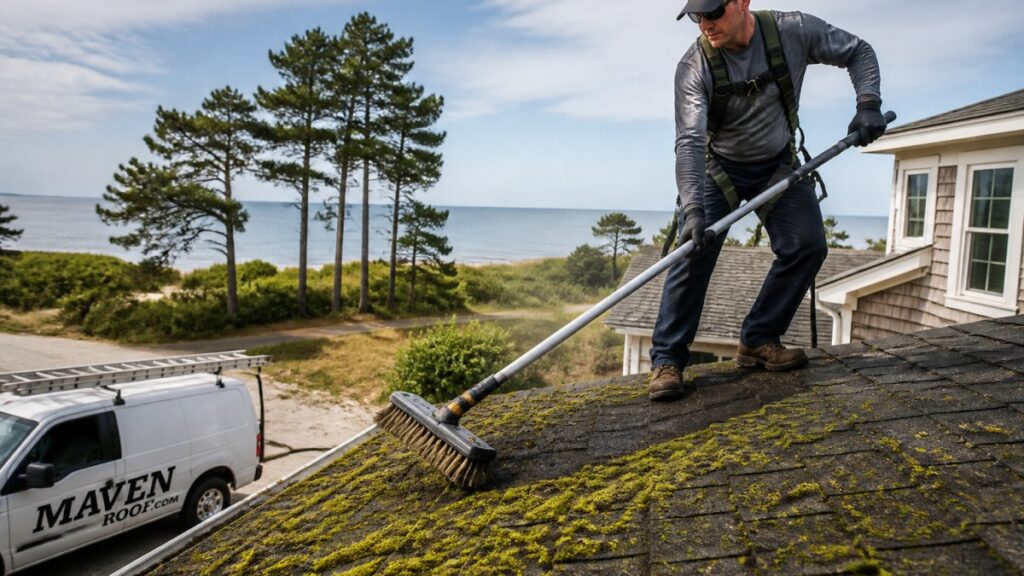
Last Updated: October 26, 2026
Quick Summary
To remove moss from a coastal roof, lift clumps by hand with a plastic scraper and soft brush, then apply a moss killer labeled for your roofing material. Work top-down with light pressure, skip the pressure washer, and protect runoff near gardens and storm drains.
- Moss needs shade, moisture, and a rough surface, and salt spray holds moisture on coastal roofs.
- Hire a pro if the roof is steep, tall, or shingles feel soft, brittle, or crumbly.
- Never use a pressure washer on asphalt shingles because it strips granules and forces water underneath.
- Zinc or copper strips along the ridge line can slow moss growth over time.
- Clear debris and gutters each season and trim tree limbs that shade the roof.
Table of Contents
- Why Moss Grows on Coastal Roofs and Why It Matters
- Signs of Moss Damage on Roof Shingles
- Step 1: Decide If You Can Clean It Yourself or Need a Pro
- Step 2: Gather Safe Roof Cleaning Solutions and Gear
- Step 3: Remove Moss by Hand Without Damaging Shingles
- Step 4: Treat the Roof With a Moss Killer and Protect Runoff
- Step 5: Adapt the Method to Your Roofing Material
- Step 6: Prevent Moss From Returning Through the Seasons
- Frequently Asked Questions
Why Moss Grows on Coastal Roofs and Why It Matters
Removing moss from coastal home roofs starts with understanding why it shows up in the first place. Moss is a shallow-rooted plant that spreads across shingles wherever moisture lingers, and coastal homes give it exactly what it wants.
Here in Eastern North Carolina, we see the same pattern on roof after roof. Moss holds water against the shingle surface long after rain stops. That trapped moisture is what shortens roof life.
Shade, Moisture, and Marine Humidity
North-facing slopes and tree-shaded sections stay damp the longest. Morning dew often dries by noon inland. Near the water, humid air can keep a roof surface damp well into the day.
Moss growth needs three things: shade, moisture, and a rough surface to grip. Aged asphalt shingles with worn granules check all three boxes.
Salt Spray and Wind-Driven Rain
Salt spray settles on coastal roofs and holds moisture in place. Wind-driven rain pushes water under shingle edges, where it sits and feeds growth. The NOAA coastal climate overview explains how persistent marine humidity shapes conditions along the coast.
That combination makes moss prevention harder here than inland. It also makes routine roof inspection more important.
Signs of Moss Damage on Roof Shingles
Look for green or gray-green clumps, dark streaks, and granules collecting in gutters. Those are the classic signs of moss damage on roof shingles, and they show up long before a leak does.
Roof algae looks different. It shows as dark streaking, usually on the north slope. Lichen appears as flat, crusty patches in gray, green, or white.
When Moss Is Cosmetic and When It Is Structural
A light green film on a few shingles is mostly cosmetic. Heavy clumps that lift shingle edges are not.
Watch for these warning signs:
- Moss clumps thick enough to hold a sponge’s worth of water
- Curling, lifting, or cracked shingles
- Granules washing into gutters and downspouts
Any of those point to roof damage that needs a professional look, not a weekend scrub.
Step 1: Decide If You Can Clean It Yourself or Need a Pro
The safe rule: if you cannot walk the roof confidently, or the pitch is steep, hire a professional roofer. Most one-story, low-slope roofs with light moss are a reasonable DIY job.
Most moss-removal guides tell you to “be careful” and move on. That is not a decision guide. Here is the practical version we use when a homeowner asks whether to climb up.
The Access Decision, Step by Step
Work through these in order. Stop at the first one that does not go your way.
- Height. Can you reach the work area from a stable ladder or a low slope without stepping near the edge? If the moss is only reachable by walking a two-story roof, that is a pro job.
- Pitch. Low-slope roofs are walkable for many homeowners. Steep pitches are not, even for experienced DIYers, especially when the surface is wet.
- Surface condition. Wet shingles, morning dew, and metal roofs are all slick. If the roof is damp, wait for a dry day rather than testing your footing.
- Shingle condition. Press gently on a shingle. If it feels soft, brittle, or crumbly, the roof is already compromised. Cleaning it by hand can do more damage than the moss.
- Growth extent. Light moss on one shaded slope is a weekend job. Heavy clumps across multiple slopes, or moss growing under shingle edges, means the roof needs a professional look first.
- Fall protection. If you are anywhere near an edge, you need proper fall protection, not just careful footing. A OSHA guide to fall protection spells out how serious roof falls are.
Slippery surface conditions and fall risk are not worth a DIY save. If any step above worries you, stop and call a professional. No amount of moss is worth a fall.
When the Answer Is Clearly “Call a Pro”
- The roof is steep, tall, or both.
- Moss is growing under shingle edges or lifting them.
- Shingles feel soft, or granules are washing into the gutters.
Those are not cleaning problems. They are inspection problems, and a free roof inspection is the right first move.
When DIY Is Reasonable
- One-story, low-slope roof.
- Light moss on a shaded slope, reachable from a ladder or the low edge.
- Shingles still firm and intact.
If you are anywhere on the fence, book a free inspection with Maven Roofing. We will tell you honestly whether it is a DIY job or one we should handle, and we serve homeowners and property managers across Eastern NC.
Step 2: Gather Safe Roof Cleaning Solutions and Gear
Safe roof cleaning solutions are simple and mild. You do not need harsh chemicals to kill moss on most shingle roofs.
Gather this gear first:
- Soft-bristle brush or stiff broom
- Plastic scraper (never metal)
- Garden hose with a spray nozzle
For treatment, many homeowners use a mild dish soap and water mix, or a commercial moss killer labeled for asphalt shingles. Always follow the label. Never mix bleach with other cleaners.
Step 3: Remove Moss by Hand Without Damaging Shingles
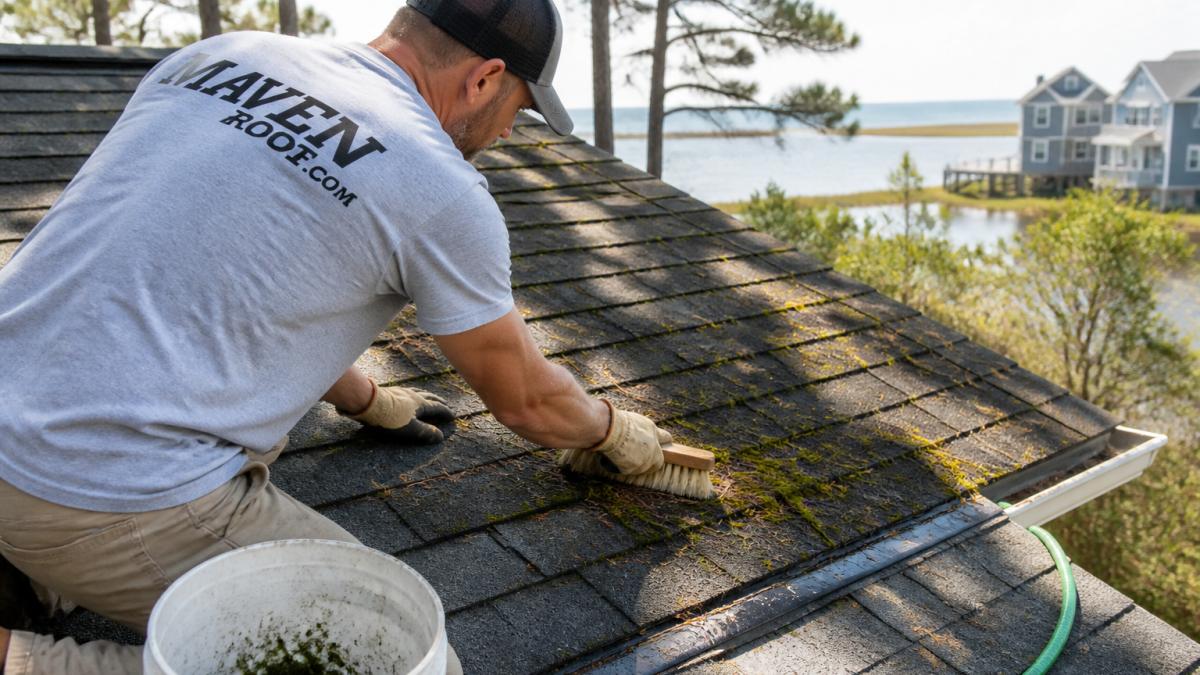
Work from the top down, and use light pressure. The goal is to lift moss off the roof surface, not to scrub the shingles bare.
Book Your Roof Inspection Online →
Follow this order:
- Wet the moss lightly to reduce dust and spores.
- Slide a plastic scraper under the clump and lift it away.
- Brush the remaining residue with a soft brush.
- Rinse the roof surface and clear the gutters.
Scrapers, Stiff Brushes, and Soft Brooms
Plastic scrapers lift clumps without gouging shingle granules. A soft broom or stiff brush finishes the job. Metal tools are a common mistake. They scar shingles and leave openings for water.
Why a Pressure Washer Should Stay Off the Roof
A pressure washer strips granules and can force water under shingles. Once the granules are gone, the shingle ages fast. Skip the pressure washer entirely on asphalt shingles.
Step 4: Treat the Roof With a Moss Killer and Protect Runoff
Apply a moss treatment after manual removal to kill spores the brush missed.
Runoff protection matters near the coast. Gardens, storm drains, and waterways sit close to many homes here.
Simple runoff precautions:
- Cover plants below the roofline with plastic sheeting
- Direct rinse water away from garden beds
- Avoid applying treatment before heavy rain
Zinc strips or copper strips along the ridge line can slow moss growth over time. They release a small amount of metal with each rain, which discourages growth on the roof surface below.
Step 5: Adapt the Method to Your Roofing Material
Different roofing systems need different handling, and coastal exposure adds a second variable: salt spray and wind-driven rain wear each material differently. Treat every roof surface on its own terms, and match the tool and the treatment to the material rather than using one method everywhere.
Asphalt and GAF Shingles
Asphalt shingles are the most common roof here, and the most forgiving for gentle hand removal. The mineral granule layer is what protects the asphalt from sun and salt, so the whole job is about keeping granules on the roof.
- Use a soft-bristle brush or a plastic scraper only. Metal tools gouge granules and leave openings for water.
- Keep pressure light. If you see bare black patches appear where moss was, you have already lost granules and should stop.
- Never use a pressure washer on asphalt shingles. It strips granules and forces water under the shingle edges.
On a coastal roof, granule loss from moss removal compounds the normal wear from salt and sun, so a roof that is already near the end of its service life may not be worth cleaning by hand. Knowing the average lifespan of asphalt shingles helps you judge whether moss has already shortened yours.
F-Wave Synthetic Shingles
F-Wave synthetic shingles handle gentle brushing well, but the surface is smoother than asphalt and can show abrasion marks. Use a soft brush only, avoid anything abrasive, and skip scrapers on the field of the shingle. Work from the top down so loosened moss does not stain the courses below. Because synthetic shingles do not absorb water the way asphalt does, moss tends to sit on the surface rather than root in, which usually makes hand removal faster.
Standing-Seam Metal
Standing-seam metal needs a soft brush and no scraping near the seams. The raised seams and the fasteners are where water gets in if the finish is scratched, so keep metal tools and stiff bristles away from them. Walk on the flat pan between seams, not on the seam itself, and wear non-slip shoes because metal stays slick after dew or rain.
Flat Roofs
Flat roofs hold moisture longer, so cleaning and drainage matter more. Moss and debris collect in low spots and around drains, and standing water is the real enemy. Clear the moss, then clear the drain and scupper so water can leave the roof. Avoid ponding water on the membrane while you work, and do not scrub seams or flashing.
A Material-by-Material Quick Reference
| Roofing material | Tool to use | Tool to avoid | Coastal watch-out |
|---|---|---|---|
| Asphalt / GAF shingles | Soft brush, plastic scraper | Metal scraper, pressure washer | Granule loss from salt and sun |
| F-Wave synthetic | Soft brush | Abrasive pads, scrapers on field | Surface abrasion marks |
| Standing-seam metal | Soft brush, low-pressure rinse | Metal tools near seams and fasteners | Slick surface, scratched finish |
| Flat roofing | Soft broom, drain clearing | Scrubbing seams and flashing | Ponding water and clogged drains |
When in doubt about your roofing material, stop and have it looked at. A free roof inspection confirms what is up there and whether the moss has already done damage before you put a brush to it.
If you are not sure which system you have, or the growth is heavy across more than one slope, Maven Roofing offers free roof inspections across Eastern NC and can tell you whether cleaning, repair, or rejuvenation is the right next step.
Step 6: Prevent Moss From Returning Through the Seasons
Prevention is a routine, not a one-time fix. Clear debris from the roof and gutters each season, and trim tree limbs that shade the roof.
Seasonal timing helps:
- Spring: clear winter debris and check for new growth
- Summer: inspect after storms and rinse the roof surface
- Fall: remove leaves before they trap moisture
Because coastal conditions drive growth year-round, ongoing maintenance matters more here.
When growth keeps returning, a professional roof inspection can catch damage early. Maven Roofing offers free roof inspections across Eastern NC, and our roof rejuvenation service treats moss and algae without a full replacement.
Frequently Asked Questions
What time of year is best to remove moss from a roof in Eastern North Carolina?
Late spring or early fall works best in our coastal climate. Moss is actively growing in the humid summer months, but the roof surface is less slippery and the weather is more predictable in spring and fall. Avoid the hottest part of summer for safety, and avoid the days right before a named storm. Cleaning before the fall rainy season gives shingles time to dry out and lets any treatment work before winter moisture sets in.
Does Dawn dish soap kill moss on the roof?
Dish soap does not kill moss. It can help a moss-killing product cling to the shingles, but on its own it mostly rinses away. Baking soda, citrus oil, and d-limonene products do kill moss, and zinc or copper strips prevent it from returning. Whatever you use, keep runoff away from gutters, gardens, and storm drains, and follow the label. A professional roofer can recommend a treatment matched to your shingle type.
Can moss damage asphalt shingles on coastal homes?
Yes. Moss holds moisture against the roof surface, and in a coastal climate with salt spray and high humidity that moisture stays longer. Over time it lifts shingle granules, works under edges, and can lead to rot at the deck. Small patches are often cosmetic, but spreading moss is a warning sign. A free roof inspection can tell you whether the moss has already caused damage that needs repair.
Should I use a pressure washer to remove moss from my roof?
No. A pressure washer strips shingle granules and can force water under flashing and into the deck. Manual removal with a scraper, stiff brush, or soft broom, followed by a moss treatment, is safer for asphalt, synthetic, and metal roofing. If the moss is heavy or the roof is steep, call roof cleaning services in Eastern NC rather than risk a fall or damage the roofing system.
Moss on a coastal roof will keep coming back if the conditions that feed it stay the same. Maven Roofing can assess your roof, clear the growth, and recommend repair or rejuvenation before small issues grow. We offer free inspections, roof cleaning, and roof rejuvenation for homeowners across Eastern North Carolina. Get started with Maven Roofing and book your free roof inspection online today.
