

Maven Resource Blog
Preventing Water Damage in Coastal Homes: 2026 Guide
Learn preventing water damage in coastal homes with roof inspections, drainage planning, and storm prep.
Book a free roof inspection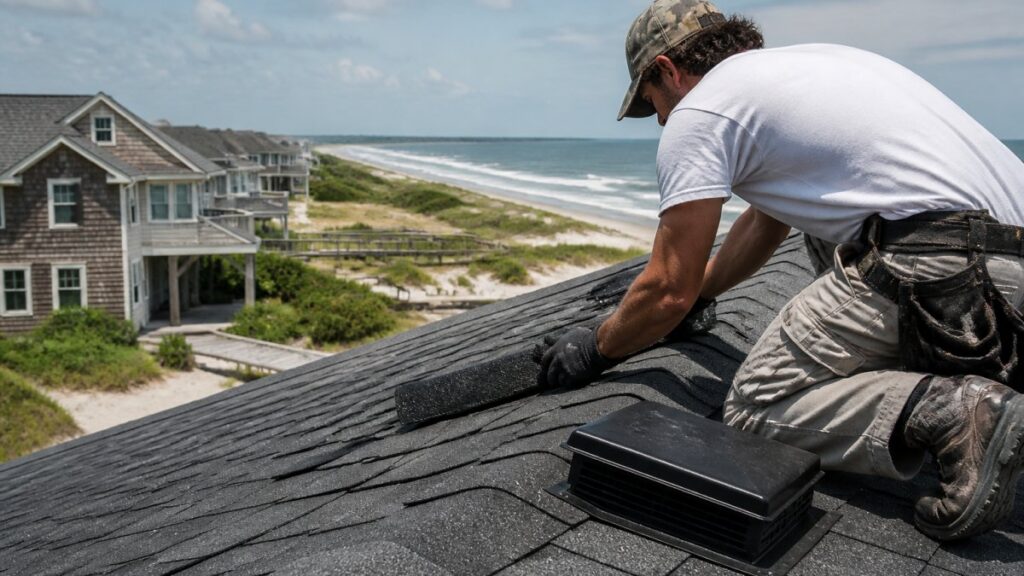
Table of Contents
- Why Coastal Homes Face Constant Water Damage Risk
- Your Coastal Home Water-Risk Assessment by Location and Elevation
- Roof Inspection Checklist for Coastal Properties
- Wind-Driven Rain Roof Protection Strategies
- Storm Damage Roof Inspection: What to Check After Every Storm
- Coastal Home Drainage: Gutters, Downspouts, and Grading
- Preventing Water Damage in Coastal Homes: Maintenance Schedule and Recovery
- Frequently Asked Questions
Last Updated: October 16, 2026
Why Coastal Homes Face Constant Water Damage Risk
Preventing water damage in coastal homes starts with understanding that the threat never takes a season off.
Water damage is the deterioration of a building’s structure and interior caused by uncontrolled moisture entering where it should not. In coastal settings, that moisture arrives through wind-driven rain, floodwater, salt-laden humidity, and ordinary plumbing failures inside the home.
This guide from Maven Roofing covers the full defensive playbook: risk assessment, roof and drainage maintenance, storm preparation, and recovery after intrusion.
Coastal water damage is rarely one dramatic event. It is usually years of small intrusions that finally show up as a stained ceiling or a soft wall.
Your Coastal Home Water-Risk Assessment by Location and Elevation
A coastal home water-risk assessment is a structured review of where your property sits, how high it sits, and which water sources can reach it. Most homeowners skip this step and jump straight to repairs.
Start with four questions:
- How close is the home to open water, and is it in a flood zone mapped by FEMA’s Flood Map Service Center?
- Is the structure elevated on stilts or pilings, or built on a slab?
- Which direction do prevailing storms approach from?
Homes on pilings or stilts face different risks than slab-on-grade homes. Elevated structures can still suffer wind-driven rain intrusion and salt buildup, while slab homes add groundwater and drainage concerns.
Roof Inspection Checklist for Coastal Properties
A roof inspection checklist for coastal properties should cover the same ground a standard inspection does, plus salt, wind, and fastener corrosion. Run this check twice a year and after every named storm.
- Shingle or tile surfaces: look for lifted, cracked, or missing pieces
- Flashing around chimneys, vents, and skylights: check for separation and sealant wear
- Fasteners and metal edge trim: look for rust and corrosion from salt air
What most guides miss is the attic check. A roof can look fine from the ground while moisture quietly stains the decking underneath. If you find active moisture or soft decking, that is a repair call, not a wait-and-see.
Wind-Driven Rain Roof Protection Strategies
Wind-driven rain roof protection focuses on the places where water gets pushed uphill and sideways: roof edges, valleys, penetrations, and the underlayment layers beneath the surface. Gravity alone does not explain coastal leaks, and that is why inland roof advice often fails here.
Three mechanisms drive most wind-driven rain intrusion:
- Capillary action at laps and edges. Water pushed against a shingle or tile lap can wick upward and inward, past the surface layer. This is why underlayment quality and correct lap direction matter as much as the visible roof.
- Pressure differentials. Wind blowing across a roof creates negative pressure on the leeward side, which can pull water into gaps that would never leak in a straight-down rain.
- Fastener and sealant fatigue. Salt air accelerates corrosion on fasteners and metal edge trim, and coastal sun degrades sealant faster than inland conditions. A seal that passed inspection in spring can fail by the first named storm.
What to actually do:
- Maintain sealants and protective coatings on a schedule, not on a hunch. Inspect flashing and penetrations before storm season and refresh sealant where it has cracked, pulled away, or turned chalky. Do not seal over wet or rotted decking, trapped moisture makes the eventual repair larger, and repeat sealant failure in the same spot usually means the problem is underneath it.
- Reinforce vulnerable edges and valleys. Wind gets under lifted shingles, tile edges, and metal trim. Secure or replace loose material before storm season rather than after. Valley debris dams push water sideways under the surface layer, so clear them as part of every gutter cleaning.
- Verify the underlayment and flashing details, not just the surface. A roof can look intact from the ground while water is entering at a step flashing or pipe boot. This is the detail most guides skip, and it is the one that decides whether a storm is a nuisance or a claim.
Wind-driven rain is a pressure problem, not just a gravity problem. Protect the laps, edges, and penetrations where pressure pushes water uphill, the surface material alone will not stop it.
If you are unsure whether your roof’s underlayment and flashing details are up to coastal wind-driven rain, that is a question for a qualified roofing professional who can get on the roof and document what is there.
Storm Damage Roof Inspection: What to Check After Every Storm
A storm damage roof inspection is a documented walkthrough after the weather clears, done before you file a claim or call a contractor. Documentation drives insurance outcomes.
Check these after every significant storm:
- Missing, creased, or displaced shingles
- Dented or bent metal on vents, gutters, and flashing
- Granule piles at downspout outlets
Photograph everything before anyone repairs it. Insurance adjusters work from evidence, and a repair that happens before the inspection can complicate a claim. If your roof is older and your insurer has raised concerns about its condition, a professional assessment can help you understand your options before you lose coverage.
Coastal Home Drainage: Gutters, Downspouts, and Grading
Coastal home drainage is the system that moves roof water away from the foundation, and it fails more often than the roof itself. Gutters, downspouts, and grading work as one chain. One weak link floods the foundation.
Book Your Free Roof Inspection Online →
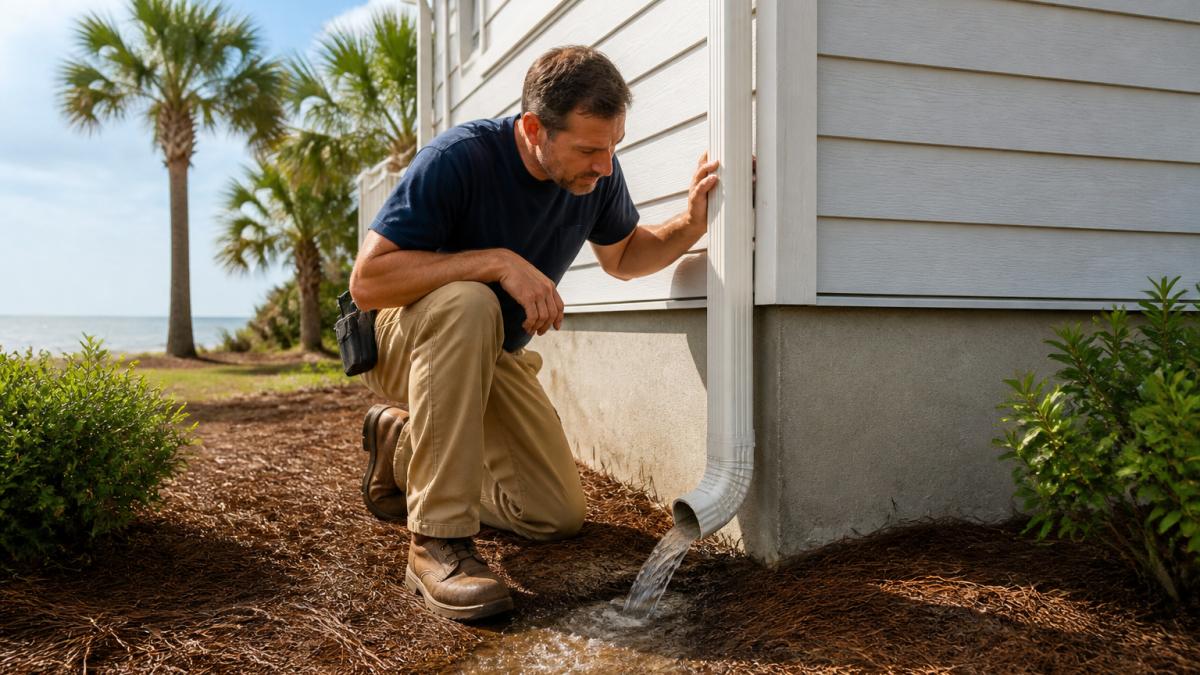
Clean gutters at least twice a year, and more often if trees and vegetation overhang the roof. Confirm every downspout discharges well away from the foundation and that the ground slopes away from the house rather than toward it.
A downspout that dumps water right at the foundation undoes every other drainage fix on the property. Add extensions or splash blocks and check them after storms.
Preventing Water Damage in Coastal Homes: Maintenance Schedule and Recovery
Preventing water damage in coastal homes comes down to a repeatable schedule, a storm-specific preparation routine, and a clear recovery plan for when water gets in anyway. Most guides stop at the schedule. The storm and recovery halves are where coastal homes are actually lost or saved.
The maintenance calendar
| Task | Frequency | Why It Matters |
|---|---|---|
| Roof and attic inspection | Twice a year | Catches leaks, salt corrosion, and damp decking early |
| Gutter and downspout cleaning | Twice a year, plus after storms | Prevents overflow at the foundation |
| Sealant and flashing check | Annually before storm season | Wind-driven rain finds failed seals first |
| Drainage and grading check | Annually | Keeps water moving away from the home |
| Post-storm inspection | After every named storm | Creates documentation for claims |
Pre-storm preparation
- Clear gutters, downspouts, and roof valleys so heavy rain has somewhere to go.
- Confirm downspout extensions and splash blocks are in place and discharging well away from the foundation.
- Move or secure anything outside that wind can turn into a projectile.
Storm surge, tidal flooding, and groundwater
These are three different threats, and they need different responses:
- Storm surge is water pushed ashore by wind and low pressure. It arrives fast, can be several feet deep, and is the leading cause of catastrophic coastal flooding.
- Tidal flooding is recurrent high-water events, sometimes on sunny days, that saturate low-lying ground and can back up through drains.
- Groundwater rises into crawl spaces and slabs from below, often without any visible surface flooding.
If your home is in a mapped flood zone, flood vents and elevation are the two structural measures most often discussed by floodplain managers. Flood vents let water pass through a foundation enclosure rather than press against it, and elevation raises the lowest floor above expected flood levels. Both are site-specific and typically require permits, so verify local requirements and consult a qualified professional before committing to either.
Recovery after water intrusion
If water does get inside, act within the first day:
- Shut off the water supply if a plumbing line is the source.
- Remove standing water and start fans and dehumidifiers immediately. Mold can begin growing on wet materials quickly, so drying fast matters more than drying perfectly (the EPA).
- Photograph and document everything before cleanup. Wide shots, close-ups, and a written list of affected items and areas.
- Check for hidden moisture. A moisture meter or a professional assessment finds dampness inside walls before it becomes visible damage.
- Keep receipts and records for any cleanup, drying, or repair work, and report the loss to your insurer promptly.
The EPA’s mold guidance outlines when a cleanup is a DIY job and when it needs a professional. For anything beyond a small, contained spill, a professional assessment is the safer call.
Do not begin permanent repairs before your insurer has inspected the damage. Document first, repair second.
Frequently Asked Questions
How can I prevent water damage in a coastal home?
Start with a roof inspection checklist that covers flashing, sealants, and shingles. Clean gutters and downspouts at least twice a year, and make sure coastal home drainage directs water at least 6 feet away from the foundation. Install flood vents if your home sits in a flood zone, and use smart shut-off valves on water supply lines. Schedule professional inspections before and after hurricane season to catch small issues before they become major water damage.
What parts of a coastal home are most vulnerable to water intrusion?
Roof penetrations like vents and chimneys, window and door frames, and the roof-to-wall intersection are the most common entry points. Wind-driven rain roof protection depends on intact flashing and sealants at these spots. Ground-level risks include foundation cracks, inadequate grading, and clogged gutters that overflow. Salt air accelerates corrosion on metal flashing, so these areas need more frequent checks than inland homes.
How often should I inspect a coastal home’s roof?
Inspect your roof at least twice a year, ideally in spring and fall, and always after any storm with high winds or heavy rain. The coastal environment speeds up wear from salt air, UV exposure, and moisture, so a storm damage roof inspection after every major weather event is critical. If you notice missing shingles, granules in gutters, or ceiling stains, call a professional immediately rather than waiting for the next scheduled check.
How can I protect a coastal roof from wind-driven rain?
Wind-driven rain roof protection starts with a watertight roof system. Ensure all flashing is properly sealed and secured, and use hurricane straps or clips if your home meets the age and code requirements. Install a secondary water barrier under the roofing material if your roof is being replaced. Keep trees trimmed back to reduce debris impact, and verify that ridge vents and soffit vents are rated for high-wind areas.
What should I do after a storm to check for water damage?
Wait until conditions are safe, then inspect your roof from the ground with binoculars for missing shingles, lifted flashing, or debris. Inside, check the attic and ceilings for stains, damp insulation, or musty odors. Test all water supply lines and appliance hoses for leaks. If you find any signs of water intrusion, document with photos and call a licensed roofer for a storm damage roof inspection before the damage spreads.
How can I reduce floodwater entering my home?
Install flood vents in foundation walls or crawl spaces to allow water to pass through rather than build up pressure. Elevate utilities like HVAC units, water heaters, and electrical panels above the base flood elevation if possible. Use flood barriers on doors and garage openings when a storm is forecast. Ensure your coastal home drainage system, including gutters and grading, moves rainwater away from the foundation quickly.
What are the early signs of a roof leak?
Watch for dark ceiling stains, peeling paint, or bubbling drywall. In the attic, look for damp insulation, water marks on rafters, or a musty smell. Missing or cracked shingles, rusted flashing, and granules collecting in gutters are exterior clues. After a storm damage roof inspection, small leaks often show up as increased energy bills or unexplained moisture. Address any sign immediately to prevent mold and structural damage.
How does salt air affect a coastal home’s roof?
Salt air corrodes metal fasteners, flashing, and gutters faster than inland conditions. It can also degrade sealants and cause shingles to become brittle over time. Regular washing with fresh water helps remove salt buildup, and using corrosion-resistant materials like stainless steel or aluminum flashing extends roof life. A roof inspection checklist for coastal homes should always include checking for rust and sealant failure.
Water intrusion on the coast is not a question of if but when, and the homeowners who stay ahead of it are the ones with a maintenance rhythm and a contractor they trust. Maven Roofing is a veteran-owned team serving Eastern North Carolina since 2015, with free roof inspections, coastal weather expertise, and roof rejuvenation services that remove dirt, moss, and algae to extend roof lifespan. Book your free roof inspection online and protect your home before the next storm season.