

Maven Resource Blog
Extending Roof Life With Rejuvenation: What to Expect
Learn how roof rejuvenation can extend your roof's life, which shingles qualify, and how it compares to replacement. Book a free inspection today.
Book a free roof inspection
Table of Contents
- Why Extending Roof Life With Rejuvenation Makes Sense
- What Roof Rejuvenation Is and How It Works
- Roof Rejuvenation for Asphalt Shingles: Which Roofs Qualify
- The Roof Rejuvenation Process, Step by Step
- Roof Rejuvenation Lifespan: Realistic Expectations
- Roof Rejuvenation vs Roof Replacement: How to Decide
- Maintenance That Keeps a Treated Roof Performing
- Conclusion
- Frequently Asked Questions
Last Updated: October 17, 2026
Why Extending Roof Life With Rejuvenation Makes Sense
Extending roof life with rejuvenation is a practical way to get more years out of asphalt shingles that still have structure left in them.
That gap is where rejuvenation earns its place.
Heat, sun, and salt air pull the oils out of asphalt shingles over time. The mat dries out. Granules loosen.
Here’s what most guides get wrong: they treat rejuvenation as a miracle cure. It isn’t.
Below, we’ll walk through what the treatment actually does, which roofs qualify, and how to judge whether it beats a full replacement for your home.
What Roof Rejuvenation Is and How It Works
Roof rejuvenation is a spray-applied treatment that restores flexibility to aging asphalt shingles and adds a protective membrane to the roof surface. The treatment soaks into dried shingle mat and slows the brittleness that leads to cracking.
The process works in three stages:
- Cleaning: we remove dirt, moss, and algae so the treatment can bond
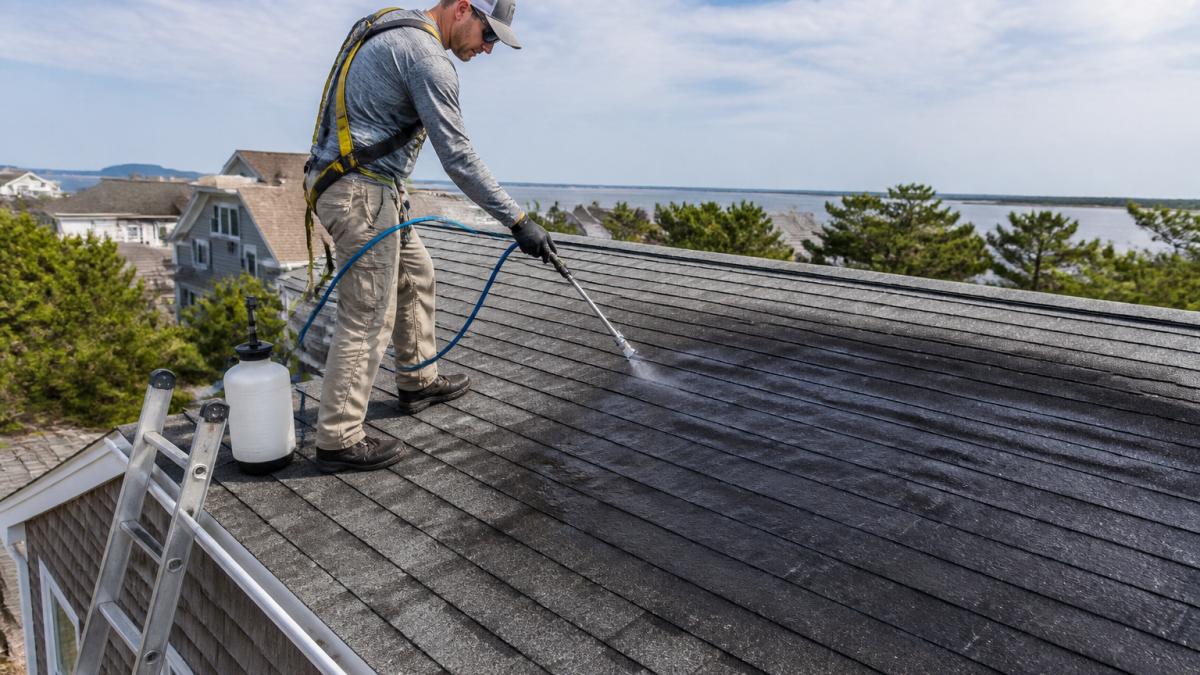
- Application: a specialized coating is sprayed evenly across the shingle field
- Curing: the coating settles into the shingle surface and forms a protective layer
Rejuvenation is not a patch. It does not fix leaks, replace missing shingles, or repair storm damage. It treats the whole surface of a roof that is otherwise sound.
Think of it like conditioning leather before it cracks. You can’t reverse a tear, but you can stop the drying that causes one.
Signs Your Shingles Are Aging Before Their Time
Most homeowners spot the symptoms before they understand the cause. Watch for:
- Granule loss: bald patches in gutters or dark spots on shingles
- Brittle shingles: edges that crack or snap instead of flexing
- Drying and curling: corners lifting away from the roof deck
Coastal exposure speeds all of this up. Sun, wind-driven salt, and heavy summer heat wear on shingles faster here than inland. If your roof faces south or west, it will show these signs first.
Roof Rejuvenation for Asphalt Shingles: Which Roofs Qualify
Not every roof is a candidate. Roof rejuvenation for asphalt shingles works best on roofs that are aging but still intact. The shingle mat has to have enough structure left to absorb the treatment.
Qualifying roofs generally share these traits:
- Asphalt or GAF shingle construction with no major structural damage
- No active leaks or soft spots in the deck
- Shingles that are drying and brittle but not crumbling
Roofs with large areas of missing granules, exposed mat, or widespread cracking usually need replacement instead. The same goes for roofs with rot, sagging, or repeated leak history.
Roof Age, Condition, and Inspection Requirements
Age alone doesn’t decide it. Condition does.
A 15-year-old roof kept clear of moss may qualify. A 12-year-old roof with hail bruising and lifted shingles may not. That’s why we never quote a treatment over the phone.
Every recommendation starts with a free roof inspection. We check shingle condition, granule loss, deck soundness, flashing, and attic ventilation. Ventilation matters more than most people realize. A hot, poorly vented attic cooks shingles from below and shortens roof life no matter what you apply on top.
Skipping the inspection is the most common and most expensive mistake. Applying rejuvenation to a roof with hidden soft spots traps moisture and hides a problem that needed repair. You pay twice.
The Roof Rejuvenation Process, Step by Step
Here is how the process runs from first call to final walkthrough:
- Free inspection and assessment. We document roof condition, photograph problem areas, and confirm the roof qualifies.
- Prep and cleaning. We clear debris, remove moss and algae, and treat the surface so the coating can bond.
- Repairs first. Any loose flashing, popped nails, or minor damage gets fixed before treatment.
- Treatment application. The rejuvenation coating is sprayed evenly across the shingle field.
- Cure and review. We walk the roof after curing, check coverage, and show you what changed.
Two conditions affect scheduling. The roof needs to be dry, and the forecast needs to stay clear through the cure window. We watch both before we commit to a day.
Roof Rejuvenation Lifespan: Realistic Expectations
Roof rejuvenation lifespan depends on roof age, sun exposure, ventilation, and how well the roof is maintained afterward. Published figures commonly point to a range of about 5 to 15 additional years of service, with the longer end reserved for roofs treated early and kept up.
That range is a planning figure, not a guarantee. Treat it the way you would treat a fuel-economy estimate: useful for comparison, sensitive to conditions, and never a promise.
Book Your Roof Inspection Online →
What Actually Drives Where You Land in That Range
- Roof condition at treatment: shingles that still flex hold the benefit longer than shingles already cracking at the edges.
- Sun and heat exposure: full-sun south and west slopes age faster than shaded slopes, so a single roof can perform unevenly.
- Attic ventilation: a hot, poorly vented attic cooks shingles from below and shortens the benefit no matter what is applied on top.
What Rejuvenation Cannot Do
This is the part most guides skip. Rejuvenation is a surface treatment, not a structural repair. It will not:
- Seal an active leak or close a failed flashing detail
- Restore granules that are already gone or cover exposed mat
- Fix soft decking, rot, or sagging
- Reverse hail bruising or wind-lifted shingles
If any of those conditions are present, the honest answer is repair or replacement, not treatment. Applying rejuvenation over a hidden problem traps moisture and hides damage that needed attention.
How to Measure Whether It Worked
Because results vary, the only reliable way to judge a treatment is to compare against a baseline. At treatment, ask for before-and-after photos and a written summary of roof condition. Then track a few simple indicators at each inspection:
- Granule loss: new bald patches or heavier grit in gutters signal continued wear.
- Shingle flexibility: edges that crack instead of flex show the surface is drying again.
- Leaks and stains: any new interior staining means the roof needs a closer look.
- Treatment condition: uneven coverage or areas where the coating has worn thin.
A common pattern is that treated roofs age more slowly but still age. Think of rejuvenation as buying time, not a reset, and set your expectations around maintenance, not miracles.
Ask for before-and-after photos and a written summary of roof condition at treatment. That record becomes your baseline, and it makes it easy to spot real change at your next inspection.
Roof Rejuvenation vs Roof Replacement: How to Decide
The choice comes down to how much life your shingles have left and what you are trying to accomplish. Rejuvenation preserves a roof that is aging but sound. Replacement is the right call when the roof has lost structural integrity or repair costs start stacking up.
A Scenario-Based Way to Think About It
Rather than a single rule, weigh your situation against these common patterns:
| Situation | Better Fit | Why |
|---|---|---|
| Shingles drying and brittle, no leaks | Rejuvenation | Restores flexibility, delays replacement |
| Widespread granule loss and exposed mat | Replacement | Surface too far gone to treat |
| One isolated leak, rest of roof sound | Roof repair | Fix the source, then reassess |
| Repeated leaks and soft deck spots | Replacement | Structural damage underneath |
| Roof near end of expected life, budget tight | Rejuvenation | Buys time while you plan |
| Roof flagged by an insurer or lender for age | Replacement (usually) | Treatment rarely changes that determination |
How to Frame the Cost Decision Without Guessing
We do not publish prices, and we will not quote a treatment over the phone, the honest number depends on roof size, condition, slope, and prep work. What we can give you is a framework for comparing options on equal footing:
- Cost per year of service: divide the cost of each option by the years you expect to get from it. A treatment that buys several years often compares favorably on this measure to a replacement spread over a longer horizon, but only when the roof qualifies.
- Repair costs already accumulating: if you are paying for patch after patch, add those up. Recurring repairs often tip the math toward replacement.
- Timeline pressure: if you plan to sell or refinance soon, an insurer’s or lender’s view of roof age may matter more than the treatment itself.
- Risk of doing nothing: an untreated, drying roof keeps losing granules and flexibility. Delay has a cost even when it is not on an invoice.
The Honest Limitations
Rejuvenation will not satisfy an insurer or lender who has already flagged the roof’s age. It will not fix structural damage, and it will not extend a roof indefinitely. If coverage or structural integrity is the concern, ask us directly and we will tell you what the inspection shows, not what you want to hear.
When to Get a Second Opinion
If a contractor recommends treatment without an inspection, or recommends replacement without documenting why, get another look. A free inspection should produce photos, a written condition summary, and a clear explanation of which option fits and why. That record is what lets you compare options fairly, and it is the same record you will want if you ever need to document the roof’s condition for insurance.
There is no universal right answer. The right call depends on condition, remaining life, and what you are trying to protect. An inspection turns that from a guess into a decision.
Maintenance That Keeps a Treated Roof Performing
A treatment protects the shingle surface. It does not clean your gutters or cool your attic.
Build a simple maintenance schedule:
- Twice a year: clear gutters and check drainage
- Twice a year: look for moss, algae, and debris on shaded slopes
- Annually: book a professional roof inspection
- After any major storm: get the roof checked for wind and hail damage
Power-washing is not on that list. High pressure strips granules and drives water under shingles. Gentle cleaning is the safer route on an asphalt roof.
Regular inspections catch small issues before they become major problems. That habit protects the roof whether it has been treated or not.
Conclusion
The hard part isn’t the treatment. It’s being honest about what your roof actually needs.
A roof that is drying out but still solid can gain years of service from rejuvenation.
Maven Roofing is veteran-owned and GAF Master Elite certified, and we’ve served Eastern North Carolina since 2015.
Book your free roof inspection online and find out where your roof actually stands.
Frequently Asked Questions
Can roof rejuvenation extend the life of asphalt shingles?
It can, when the shingles are still structurally sound. Rejuvenation treatments are designed to restore flexibility to shingles that have dried out and lost oils, which slows the cracking and granule loss that lead to failure. Roofs commonly cited as good candidates are those in the middle of their service life with surface-level aging rather than widespread damage. A free inspection is the only reliable way to confirm whether your asphalt shingles qualify, since the treatment will not rescue shingles that are already curled, broken, or leaking.
How long can roof rejuvenation extend a roof’s life?
Figures often point to roughly 5 to 15 additional years of service, though the real number depends on the roof’s age, condition, sun and salt exposure, and how well it is maintained afterward. A roof that is 10 years old with mild drying has more room to gain than one that is 22 years old and already brittle. Treat the range as a planning estimate, not a guarantee, and ask for a written assessment of your specific roof before committing.
How is roof rejuvenation different from roof cleaning?
Cleaning removes what sits on top of the roof, such as moss, algae streaks, dirt, and debris. Rejuvenation goes after the shingle itself by applying a treatment that helps restore flexibility to dried-out asphalt. The two often work together: cleaning first lets the treatment reach the shingle surface evenly, and removing moss stops it from holding moisture against the roof. If your roof is dark-streaked or mossy but the shingles still feel pliable, cleaning may be the starting point rather than replacement.
Can roof rejuvenation fix leaks or storm damage?
No. Rejuvenation is a preventive and life-extending treatment, not a repair. Active leaks, missing shingles, torn flashing, and wind or hail damage need actual repair work, and in some cases a replacement. If a storm has hit your home, the right first step is a free inspection so the damage can be documented properly, including for insurance purposes. Treating a damaged roof without repairing it first would only hide the problem.