

Maven Resource Blog
How to Find and Hire a Metal Roofer Near Me
Find a trusted metal roofer near you. Learn how to vet contractors, compare estimates, and hire the right professional for your roof project.
Book a free roof inspection
Table of Contents
- How to Choose a Roofing Contractor in Your Area
- What to Ask a Roofing Contractor Before Hiring
- Roofing Contractor Checklist: What to Verify Before Signing
- Metal Roofing Estimate Comparison: How to Evaluate Quotes
- Local Metal Roofing Services: Residential, Commercial, and Specialized Work
- Red Flags: Warning Signs of an Unreliable Metal Roofer
- Frequently Asked Questions
Last Updated: October 10, 2026
How to Choose a Roofing Contractor in Your Area
Finding the right metal roofer near me requires more than a quick Google search. The difference between hiring a contractor who delivers quality work and one who leaves you with headaches comes down to thorough vetting before you sign anything.
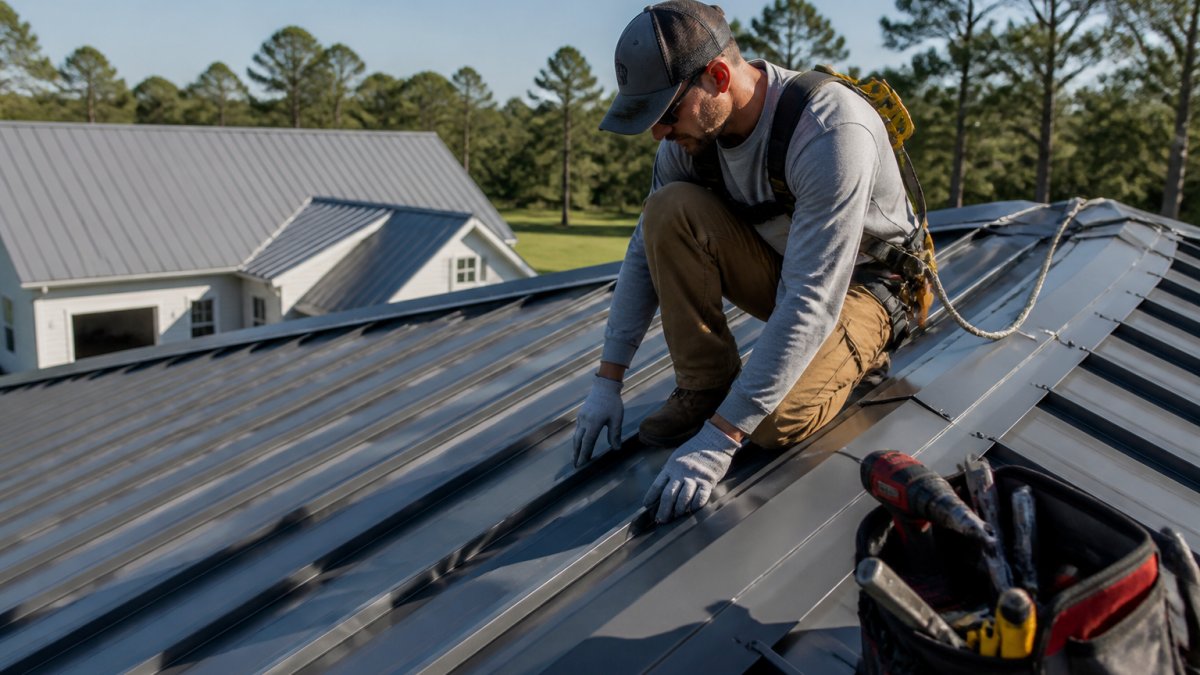
Homeowners often make costly mistakes by rushing the selection process. Your job is to separate professionals from the rest by understanding what separates a reliable metal roofer near me from someone who won’t stand behind their work.
Verify Licensing, Insurance, and Certifications
Before serious conversations with a contractor, confirm they’re legally operating. A licensed metal roofer near me carries proof of business registration with your state and liability insurance that protects your property if something goes wrong during the job.
Ask for their contractor’s license number and verify it with your state’s licensing board. Request proof of general liability insurance and workers’ compensation coverage.
Check References and Customer Reviews
A contractor’s past work tells you everything about their present reliability. Ask for at least three recent references from customers whose roofs they’ve installed or repaired. Call these references directly and ask: Was the work completed on time?
Online reviews on Google, the Better Business Bureau, and industry platforms add another data layer. Look for patterns in feedback rather than fixating on one negative review.
What to Ask a Roofing Contractor Before Hiring
The questions you ask separate informed decisions from expensive mistakes. A qualified metal roofer near me expects detailed questions and answers them thoroughly.
Experience with Metal Roofing and Local Weather
Not all roofers understand metal roofing systems equally. Metal roofing has specific installation requirements and fastening techniques that differ significantly from asphalt shingles. Ask how many metal roof installations and repairs the contractor has completed in the past five years.
Local weather conditions shape roofing decisions. In coastal areas, salt spray and hurricane-force winds demand expertise that differs from inland regions. A metal roofer near me should understand how these conditions affect material selection, installation angles, and long-term durability.
Warranty Coverage and Guarantees
Warranties protect your investment after the work is done. Ask the contractor what they guarantee on their labor and what the manufacturer guarantees on materials. A solid warranty typically covers workmanship for several years and material defects for longer periods. Understand what voids the warranty, many warranties exclude damage from improper maintenance or installation by other contractors.
Get the warranty details in writing. A professional metal roofer near me provides written warranty documentation before you sign the contract.
Roofing Contractor Checklist: What to Verify Before Signing
Before you commit to a contractor, work through this verification checklist:
| Item | Status | Notes |
|---|---|---|
| License verified with state board | ☐ | Record license number |
| Liability insurance current | ☐ | Request certificate of insurance |
| Workers’ compensation coverage active | ☐ | Verify coverage dates |
| References contacted (minimum 3) | ☐ | Document feedback |
| Online reviews reviewed | ☐ | Check BBB and Google ratings |
| Metal roofing experience confirmed | ☐ | Ask for specific project count |
| Local weather expertise verified | ☐ | Discuss coastal/storm experience |
| Warranty terms provided in writing | ☐ | Review labor and material coverage |
| Contract reviewed carefully | ☐ | Understand all terms before signing |
| Timeline and payment schedule clear | ☐ | Confirm project duration |
This checklist ensures you’ve covered essential verification steps.
Metal Roofing Estimate Comparison: How to Evaluate Quotes
Getting multiple quotes is standard practice, but comparing them properly requires understanding what drives cost differences. Three quotes that differ significantly often reflect different scopes of work, material choices, or labor efficiency, not necessarily quality differences.
Scope of Work and Materials Breakdown
A detailed estimate specifies exactly what the contractor will do and with what materials. The scope should specify whether they’re installing new metal roofing, replacing existing material, or repairing specific sections.
Ask each contractor to provide estimates using identical specifications. Request that all estimates specify:
- Metal gauge and panel type
- Underlayment type (synthetic versus felt)
- Flashing material and method
- Fastening system (stainless steel fasteners resist corrosion better than galvanized)
- Removal and disposal of old roofing material
- Roof deck inspection and repair
When material costs differ between quotes, ask why. A contractor recommending premium underlayment in a coastal environment is making a defensible choice; one cutting corners on fasteners is creating future leak risk.
Labor, Timeline, and Hidden Costs
Labor typically represents 40-60% of a metal roof installation cost. A contractor’s timeline and crew size affect labor efficiency. A professional metal roofer near me provides a clear timeline for project completion and explains how weather delays are handled.
Payment terms should be transparent. Many contractors require a deposit (typically 25-50%) to secure the project start date, with the balance due upon completion. Ask whether there are any additional costs beyond the estimate:
- Permit fees
- Disposal charges for old roofing material
- Unexpected repairs discovered during removal
- Flashing upgrades around chimneys, vents, or skylights
- Gutter adjustments or repairs
Spotting Legitimate Price Variation
If your three quotes range significantly for the same roof, the difference is real and worth understanding. Common reasons for variation include:
- Contractor overhead and profit margin: Established contractors with larger crews charge more than solo operators. Higher overhead often correlates with better project management and warranty backing.
- Material sourcing: A contractor with direct supplier relationships may negotiate better pricing.
- Crew experience: A crew specializing in metal roofing works faster and with fewer errors.
- Local labor costs: Urban areas have higher labor rates than rural areas.
- Warranty depth: A contractor offering a 10-year labor warranty costs more because they’re assuming more long-term liability.
If one quote is dramatically lower (30%+ below the others), ask why. Possible explanations include the contractor is new and building a portfolio, cutting material quality, underestimating labor, or planning to rush the job.
Questions to Ask About Each Estimate
Before you decide, ask each contractor:
- “What’s included in your labor cost, and what’s extra?”
- “If we discover rotted decking during removal, how do you handle that, is it included or billed separately?”
- “What’s your payment schedule, and when do you need final payment?”
- “Why did you choose this gauge and material for our roof?”
- “Can you break down your labor cost per square foot?”
A contractor who answers these questions clearly is more trustworthy than one who deflects.
Local Metal Roofing Services: Residential, Commercial, and Specialized Work
Metal roofing contractors often specialize in different project types. Understanding which services a metal roofer near me offers helps you find the right fit for your specific needs.
Book Your Free Roof Inspection Online →
Residential Metal Roof Installation and Replacement
Residential metal roof installation requires precision around penetrations (vents, chimneys, skylights), valleys, and transitions.
Residential metal roofing material choices include:
- Standing seam panels: Vertical ribs with concealed fasteners; premium option, typically 24-26 gauge; lifespan 40-70 years.
- Metal shingles: Mimic traditional shingle appearance; 24-26 gauge; lifespan 30-50 years.
- Corrugated or ribbed panels: Lower cost, exposed fasteners; 26-29 gauge; lifespan 20-40 years.
When replacing an aging roof, the contractor should assess the existing structure and address any damage. Metal roof replacement often reveals hidden issues, rotted decking, inadequate ventilation, or improper flashing, that weren’t visible before.
Ask a residential contractor how many metal roof installations they’ve completed on homes similar to yours.
Metal Roof Repair and Roof Rejuvenation
Not every roof problem requires replacement. Localized leaks, damaged panels, loose or corroded fasteners, and flashing failures can often be repaired cost-effectively. A metal roofer near me should diagnose the actual problem rather than immediately recommending full replacement. Common residential metal roof repairs include:
- Fastener replacement: Fasteners loosen over time, especially in high-wind areas. Replacing fasteners and resealing prevents leaks.
- Flashing repair or replacement: Flashing around penetrations is the most common leak source.
- Panel replacement: A single damaged panel can be replaced without affecting the rest of the roof.
- Sealant reapplication: Metal roofs with exposed fasteners need periodic sealant reapplication (typically every 5-10 years).
Roof rejuvenation services address cosmetic and performance issues without full replacement. Coastal properties often accumulate moss, algae, and dirt that affect appearance and water drainage. Professional cleaning and coating treatments can extend roof life and improve water shedding.
When evaluating a repair contractor, ask:
- “Have you diagnosed the leak source, and how?”
- “Can you repair this, or does it require full replacement?”
- “What’s your warranty on this repair?”
Commercial and Industrial Metal Roofing
Commercial and industrial metal roofing demands different expertise than residential work. Larger roof areas, complex drainage systems, building code compliance, and structural load requirements create additional complexity. A contractor experienced in commercial metal roofing understands these requirements and manages projects at scale.
Commercial metal roofing materials include:
- Standing seam systems: Industry standard for commercial; typically 24-gauge aluminum or steel; lifespan 40-70 years.
- Metal shingle systems: Less common in commercial but used for aesthetic reasons.
- Architectural metal panels: Custom profiles for high-end commercial buildings; premium cost; 20-50 year lifespan.
Industrial facilities often have specialized needs, chemical resistance, thermal performance, or integration with HVAC systems. A contractor experienced in your specific building type understands these requirements.
When evaluating a commercial contractor, ask:
- “How many commercial metal roof projects have you completed in the past three years?”
- “Do you have experience with our building type and industry?”
- “How do you handle roof penetrations and equipment integration?”
- “What’s your project management process for large-scale work?”
Choosing the Right Contractor for Your Project Type
A contractor who excels at residential metal roof installation may lack experience with commercial systems. Before hiring, verify that the contractor has specific, recent experience with your project type. Ask for references from similar projects, not just “metal roofing” in general.
Red Flags: Warning Signs of an Unreliable Metal Roofer
Certain contractor behaviors signal problems before you hire them. Watch for these warning signs when evaluating a metal roofer near me:
Pressure to decide immediately. A contractor who pushes you to sign today or claims they can only hold the price for 24 hours is using high-pressure sales tactics. Legitimate contractors understand that roof decisions deserve careful consideration.
Vague estimates. An estimate that says “roof repair, $X” without detailing what’s included is a recipe for disputes.
No written warranty. A contractor who won’t put warranty terms in writing isn’t standing behind their work.
Lack of references. A contractor unwilling to provide references is hiding something. Professionals are proud of their work.
Finding a qualified metal roofer near me takes time, but it’s time well spent.
At Maven Roofing, we believe homeowners deserve transparency and professionalism from the contractors they hire. We stand behind our work. The Better Business Bureau provides guidance on contractor selection best practices.
Frequently Asked Questions
How do I find a qualified metal roofer near me?
Start by asking neighbors and local contractors for referrals, then verify licensing through your state’s contractor board. Check online reviews on Google and the Better Business Bureau, and request references from recent metal roofing projects. A qualified metal roofer should carry liability insurance, workers’ compensation, and certifications from metal roofing manufacturers. Always get at least three estimates before deciding.
What should I ask a metal roofing contractor before hiring?
Ask about their experience with metal roofing specifically, how long they’ve been in business, and whether they have references from similar projects. Inquire about warranty coverage on materials and labor, timeline for completion, and how they handle permits and inspections. Ask if they’re bonded and insured, what happens if weather delays the project, and whether they offer a free inspection or estimate. Request a detailed written quote that breaks down all costs.
How can I compare metal roofing estimates from different contractors?
Request detailed written estimates that specify the metal roofing system type, gauge thickness, labor costs, materials, timeline, and warranty terms. Ensure all quotes are for the same scope of work so you’re comparing apples to apples. Watch for unusually low bids, which may indicate rushed work or corner-cutting. Compare the contractor’s experience, customer reviews, and warranty alongside price. Don’t choose solely on cost; reliability and quality matter more for a long-term investment.
What credentials should a metal roofer have?
A reputable metal roofer should hold a valid contractor’s license in your state, carry general liability insurance and workers’ compensation coverage, and be bonded. Look for manufacturer certifications from metal roofing suppliers, which show specialized training. Check that they’re in good standing with the Better Business Bureau and have no unresolved complaints. Ask for proof of insurance and verify their license status directly with your state’s licensing board before hiring.