

Maven Resource Blog
Metal vs Asphalt Shingles for NC Homes: Which Wins?
Compare metal vs asphalt shingles for NC homes by lifespan, wind resistance, and upfront cost in coastal conditions. Get a free roof inspection from Maven.
Book a free roof inspection
Last Updated: November 21, 2026
Quick Summary
Metal vs asphalt shingles for NC homes comes down to how long you plan to own the house. Metal typically costs more upfront and can last longer, while asphalt generally costs less to install and is straightforward to repair. Neither material wins outright; the right choice matches your roof’s condition, budget, and how long you intend to stay.
- Metal roofing generally costs more per square installed than asphalt shingles, which are typically the lower-cost entry point.
- Metal roofs last 40 to 70 years, while asphalt shingles last 20 to 30 years.
- Coastal salt air, blowing sand, sun, and humidity can shorten the service life of both metal and asphalt roofs.
- Metal roof wind resistance depends heavily on attachment, edge details, and flashing rather than the panel itself.
- Asphalt shingles are generally straightforward to repair since individual shingles can be replaced.
Table of Contents
- Metal vs Asphalt Shingles for NC Homes: The Short Answer
- Metal Roof vs Asphalt Shingles Cost: Upfront Price and Lifecycle Value
- Metal Roof Lifespan in North Carolina: What Coastal Conditions Do to Service Life
- Metal Roof Wind Resistance and Storm Performance on the Coast
- Metal Roof Types and Material Distinctions That Change the Decision
- Heat, Humidity, Ventilation, and Attic Performance
- Maintenance, Repairs, and What a Roof Inspection in Hampstead NC Should Cover
- Insurance, Warranties, and Storm Claims: What to Check Before You Sign
- Frequently Asked Questions
Metal vs Asphalt Shingles for NC Homes: The Short Answer
Metal vs asphalt shingles for NC homes comes down to one question: how long do you plan to own the house? Metal typically costs more upfront and can last longer. Asphalt generally costs less to install and is straightforward to repair. For most Hampstead homeowners weighing a full replacement, the honest answer is that neither material wins outright.
At Maven Roofing, we take a repair-first approach: the best roof is often the one you already have. Material choice only matters once repair and rejuvenation are off the table.
Here is the short version before the details:
| Question | Metal Roofing | Asphalt Shingles |
|---|---|---|
| Upfront cost | Higher | Lower |
| Service life | 40 to 70 years | 20 to 30 years |
| Wind and storm performance | Strong, depends on attachment | Good, varies by product |
| Repairability | Harder, needs matching panels | Straightforward |
| Best for | Long-term owners | Budget-conscious replacements |
Below, we break down cost, lifespan, storm performance, and the coastal details that change the math.
Metal Roof vs Asphalt Shingles Cost: Upfront Price and Lifecycle Value
The metal roof vs asphalt shingles cost gap is real, and it starts at installation. Metal roofing generally costs more per square installed than asphalt shingles, because the material costs more and installation can require more specialized fastening and detailing. Asphalt shingles are typically the lower-cost entry point for many homes.
But upfront price is only half the story. Lifecycle cost divides the installed cost by the years of service you get. A roof that lasts twice as long can cost more per square and still come out ahead over a long ownership window.
What Drives the Installed Cost of Each System
Several variables move the number more than the material label does:
- Roof slope and complexity. Steep roofs, multiple valleys, dormers, and complex hips slow the crew and raise labor on both materials. Metal panels need longer, straighter runs to perform well, so a chopped-up roof plan can push metal costs up faster than asphalt.
- Decking condition. Soft or damaged roof decking has to be replaced before either system goes on. Decking damaged by moisture has to be repaired before either material goes on, and that repair is typically the same regardless of which material you choose.
- Underlayment and flashing. These are where leaks start, and skimping here is a false saving on any material. Metal systems often use a high-temperature underlayment and more elaborate flashing at walls, chimneys, and valleys.
- Ventilation corrections. A roof that can’t breathe will fail early no matter what covers it. Ridge vent, soffit intake, and any needed corrections are part of a real bid.
- Tear-off and disposal. Removing the old roof and hauling it off adds cost and is often required. Some asphalt re-roofs can go over an existing layer where local code allows, but metal almost always requires a full tear-off to inspect and fasten to the deck properly.
- Fasteners and trim. On metal, the screws, clips, ridge cap, and edge metal are a meaningful part of the material cost, and corrosion-resistant fasteners cost more than standard ones. On asphalt, the starter strip, hip and ridge cap, and drip edge add up too.
Reading Estimates Apples to Apples
A common mistake is comparing two quotes by the bottom line alone. One may include new underlayment, ice-and-water protection, and flashing replacement. Another may reuse what’s there. Ask each contractor to list materials, ventilation work, flashing, underlayment, tear-off, decking repairs, and warranty terms line by line.
A useful habit is to ask each bidder to separate labor from material and to state the manufacturer and product line by name.
Pricing depends on your roof’s size, pitch, and condition, so we recommend a site visit for a quote. Contact Maven Roofing through our website for current pricing. If you want a straight read on what your roof actually needs, schedule a free roof inspection.
Metal Roof Lifespan in North Carolina: What Coastal Conditions Do to Service Life
Metal roof lifespan in North Carolina runs longer than asphalt on paper, but the coast shortens both. Salt air, blowing sand, intense sun, and humidity all work on a roof year-round.
Heat is the quiet killer. Attic temperatures climb fast under a dark roof in July, and that heat ages shingles from underneath. Metal with a reflective finish can reflect more heat, which may ease the load on a cooling system.
If you want to see how service life plays out across the state, our guide on how long a roof lasts in North Carolina breaks down realistic timelines by material and region.
Metal Roof Wind Resistance and Storm Performance on the Coast
Metal roof wind resistance depends heavily on attachment. A standing-seam metal roof attached with concealed fasteners and rated for high winds can perform well in storm conditions. The weak point is rarely the panel. It’s the attachment, the edge details, and the flashing. A metal roof installed to the manufacturer’s specs and local wind requirements performs; one installed short of them does not.
Asphalt shingles handle wind well when they’re new and properly nailed in the right pattern. Older shingles, or shingles installed with too few fasteners, lift and tear in a blow.
Wind Ratings, Attachment, and What Local Code Actually Requires
Wind performance is not a marketing claim, it’s a tested rating. Roof coverings and their attachment methods are tested and classified for wind resistance, and the rating depends on the product, the fastening pattern, and the deck.
Coastal areas often face specific wind requirements that vary by location, exposure, and structure. That means the same product can be acceptable on one home and require a different attachment or underlayment detail on another. Every roof in Hampstead can have different requirements, and your contractor should evaluate yours specifically.
What to Verify in a Storm-Ready Bid
Before you sign, ask these questions of any contractor, metal or asphalt:
- What wind rating does the proposed product carry, and how is it achieved on my roof?
- Are the fasteners and edge metal rated for coastal exposure?
- Does the bid include new underlayment and flashing, or reuse what’s there?
- Will the contractor pull the permit, and will the work be inspected?
- What does the workmanship warranty cover, and for how long?
Watch out: after any named storm, missing shingles, lifted panels, and damaged pipe boots should be checked before the next rain. Small openings let water into the deck and insulation, and that damage grows quietly.
If you’re weighing metal against asphalt and want a straight answer on how each would perform on your specific roof, schedule a free roof inspection and we’ll walk the roof with you.
Metal Roof Types and Material Distinctions That Change the Decision
“Metal roof” is not one product, and the differences decide how a roof performs on the coast. The two main categories are standing-seam metal, with concealed fasteners and cleaner lines, and exposed-fastener panels, where screws sit on the surface.
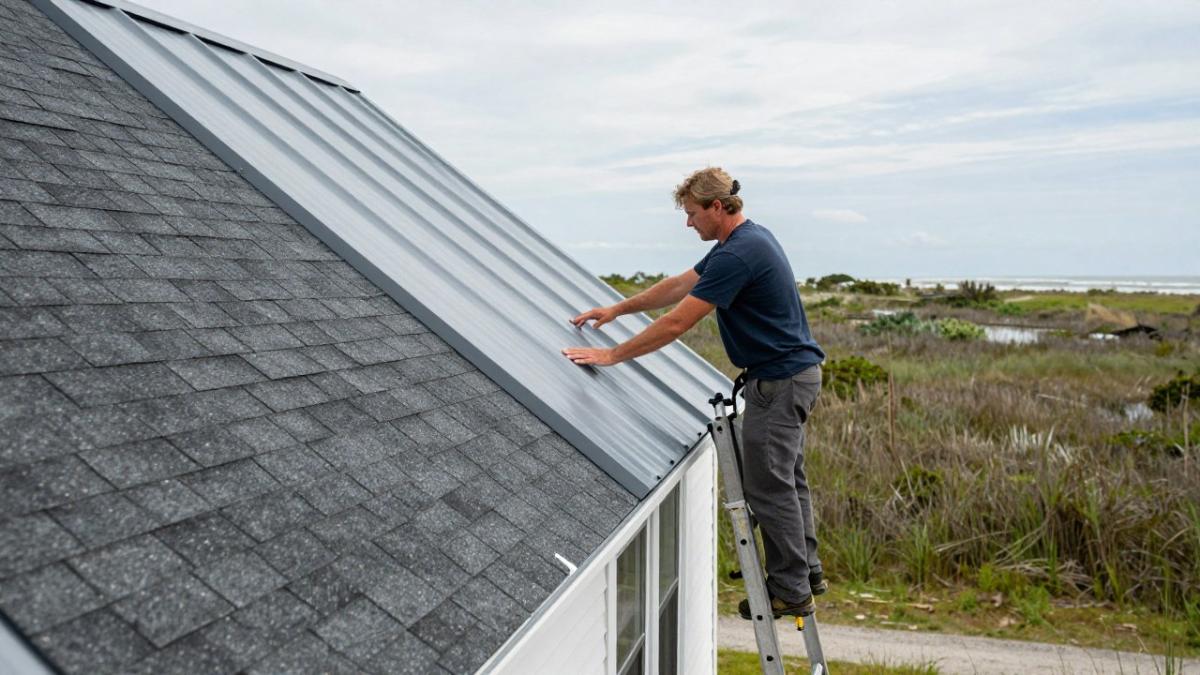
Material matters too. Steel with a quality finish and corrosion-resistant fasteners suits coastal homes. Aluminum resists salt well. Cheaper metals and mismatched fasteners invite corrosion at every penetration. Roof slope also steers the choice: some panel profiles need a minimum pitch to shed water properly.
If you’re leaning toward metal, our overview of the best roofing material for coastal North Carolina puts metal next to the other options. And when it’s time to hire, our guide on how to find and hire a metal roofer near me covers what to verify before you sign.
Heat, Humidity, Ventilation, and Attic Performance
Ventilation decides how well either roof performs. A roof is a system: decking, underlayment, flashing, and ventilation all work together. Poor attic ventilation traps heat and moisture, and that combination shortens shingle life, warps decking, and can push moisture into the house. Metal with a reflective finish eases cooling costs, but only if the attic can breathe. Asphalt can perform well too when the intake and exhaust vents are balanced.
A common mistake is spending on a premium roof while leaving the ventilation untouched. We check attic ventilation on every inspection because it changes how long the new roof lasts.
Maintenance, Repairs, and What a Roof Inspection in Hampstead NC Should Cover
A roof inspection in Hampstead NC should cover more than a glance from the driveway.
Maintenance needs differ by material. Asphalt shingles are generally straightforward to repair, since individual shingles can be replaced. Metal repairs can be more involved because panels typically need to be matched and seams resealed correctly.
Our article on why coastal homes need roof inspections explains what the salt air and storm cycle do to a roof over time. When you’re ready, you can schedule a free roof inspection and get a straight answer on repair versus replacement.
Insurance, Warranties, and Storm Claims: What to Check Before You Sign
Warranty coverage and insurance are where material choices meet paperwork. Know the difference between a manufacturer’s material warranty and a contractor’s workmanship warranty.
On storm claims, documentation matters. Photos of the damage, a clear scope of work, and coordination with your adjuster make a claim smoother. Our guide on roof repair insurance tips walks through getting a claim right before you sign anything.
At Maven Roofing, we’re a GAF Master Elite and TAMKO Diamond contractor, and we’re veteran-owned.
The real decision isn’t metal versus asphalt in the abstract. It’s whether your current roof can be repaired or rejuvenated, and if not, which material fits your budget and how long you plan to stay.
Frequently Asked Questions
Do insurance companies prefer metal or shingle roofs?
Insurers weigh condition, age, and wind performance more than material alone. A metal roof in good condition with documented wind ratings can be easier to insure in coastal zones, while an aging asphalt roof may draw scrutiny or a coverage condition. What matters most is documented condition and installation quality. Ask your insurer how each material is rated in your area, and keep inspection records. Maven Roofing provides free inspections that document roof condition for these conversations.
What is the biggest problem with metal roofs?
The most common issues are installation quality and material choice for the setting. Exposed-fastener panels rely on washers that can fail over time, and lower-grade metals can corrode faster in salt-air environments. Noise and denting from hail are also concerns with some profiles. A properly installed standing-seam system with the right fasteners and underlayment avoids most of these problems. The metal vs asphalt shingles decision often comes down to whether the installer gets the details right.
Which roofing material is better for coastal North Carolina homes?
Both work when specified for the coast. Asphalt shingles cost less upfront and are straightforward to repair, but heat, humidity, and salt exposure shorten their service life compared with inland installations. Metal, particularly standing-seam with corrosion-resistant coatings, handles wind uplift and salt air well and can last much longer. The right choice depends on your budget, how long you plan to stay, and the roof’s slope and structure. An inspection in Hampstead or nearby communities clarifies which fits your home.
How can I tell whether my Hampstead roof needs repair or replacement?
Age alone does not decide it. Look for missing or lifted shingles, granule loss, failing pipe boots and flashing, ceiling stains, and sagging decking. Many of these are targeted repair items that can extend a roof’s life, and roof rejuvenation may help aging but structurally sound asphalt shingles. A professional roof inspection in Hampstead NC checks decking, flashing, ventilation, and shingle condition before anyone recommends replacement. Maven Roofing takes a repair-first approach and offers free inspections.
