

Maven Resource Blog
Affordable Roofers Near Me: How to Vet Local Contractors
Find affordable roofers near me without cutting corners. Learn how to vet local contractors, compare quotes, and spot real signs of roof damage.
Book a free roof inspection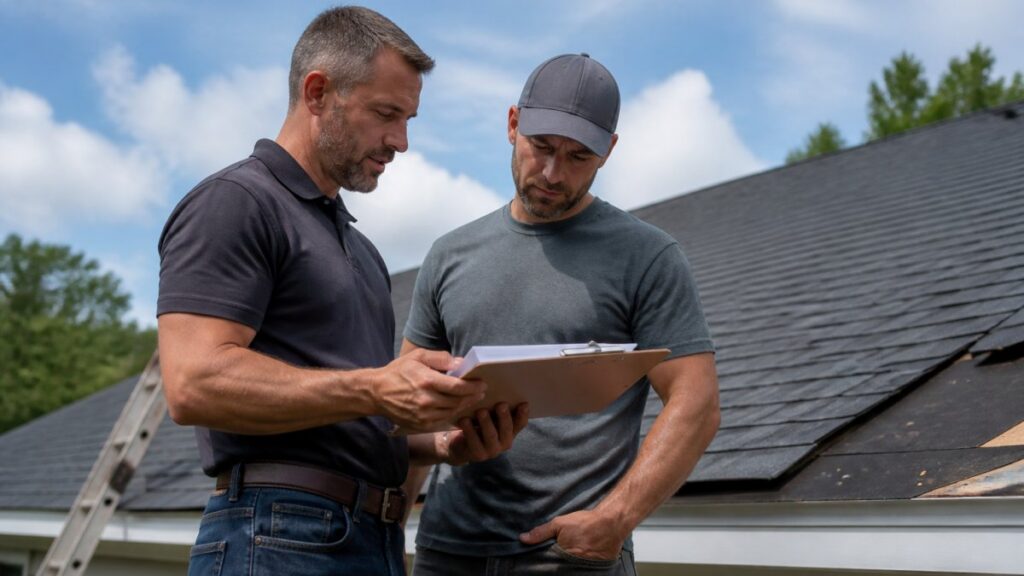
Table of Contents
- What Affordable Roofers Near Me Should Actually Cost
- Signs of Roof Damage That Mean You Need a Contractor Now
- Roofing Contractor Interview Questions That Expose the Real Pros
- Roof Replacement Financing Options for Homeowners on a Budget
- How to Compare Local Roofing Estimates Line by Line
- When a Repair Beats a Replacement: Maintenance That Extends Roof Longevity
- Frequently Asked Questions
Last Updated: September 29, 2026
What Affordable Roofers Near Me Should Actually Cost
Finding affordable roofers near me starts with understanding what “affordable” really means: not the lowest number on a page, but the best long-term value for a roof that must survive coastal wind, salt air, and summer storms.
- Material choice drives the largest share of the total
- Labor and disposal usually scale with roof complexity, not just square footage
- Emergency work costs more than planned work, every time
The most common mistake homeowners make is signing a contract before the contractor has been on the roof. A quote given from the driveway is a guess, and guesses turn into change orders.
Why the Lowest Quote Is Rarely the Cheapest Option
A low bid usually means something was left out: underlayment, flashing, ventilation, disposal fees, or insurance and workers’ compensation coverage for the crew. When a contractor skips those items, the homeowner absorbs the risk, an injured worker on your property with no coverage can become your exposure, and reused flashing means the leak returns in two years.
Signs of Roof Damage That Mean You Need a Contractor Now
Call a professional when you see active leaking, missing shingles, or granules collecting in gutters. These signal that the roof’s protective layer is failing and water is already reaching the deck.
Watch for these warning signs:
- Dark stains on ceilings or interior walls
- Curling, cracking, or missing shingles
- Granules washing out of downspouts
- Sagging rooflines or soft spots
- Daylight visible through attic boards
- Rust or corrosion on flashing and vents
Storm and Hail Damage: What to Document Before You Call Anyone
Document everything before anyone touches the roof. Once a contractor or adjuster walks it, the original condition is gone.
Take dated photos of:
- Every slope of the roof from ground level
- Dents on gutters, downspouts, and vents
- Hail marks on decks and vehicles
- Interior stains and any active drips
- Fallen shingles or debris in the yard
Photograph your roof from the same four corners every time you inspect it. Comparing images year over year shows wear patterns that a single snapshot cannot reveal.
Roofing Contractor Interview Questions That Expose the Real Pros
Ask every candidate the same six questions and write down the answers. Consistency is what makes comparison possible.
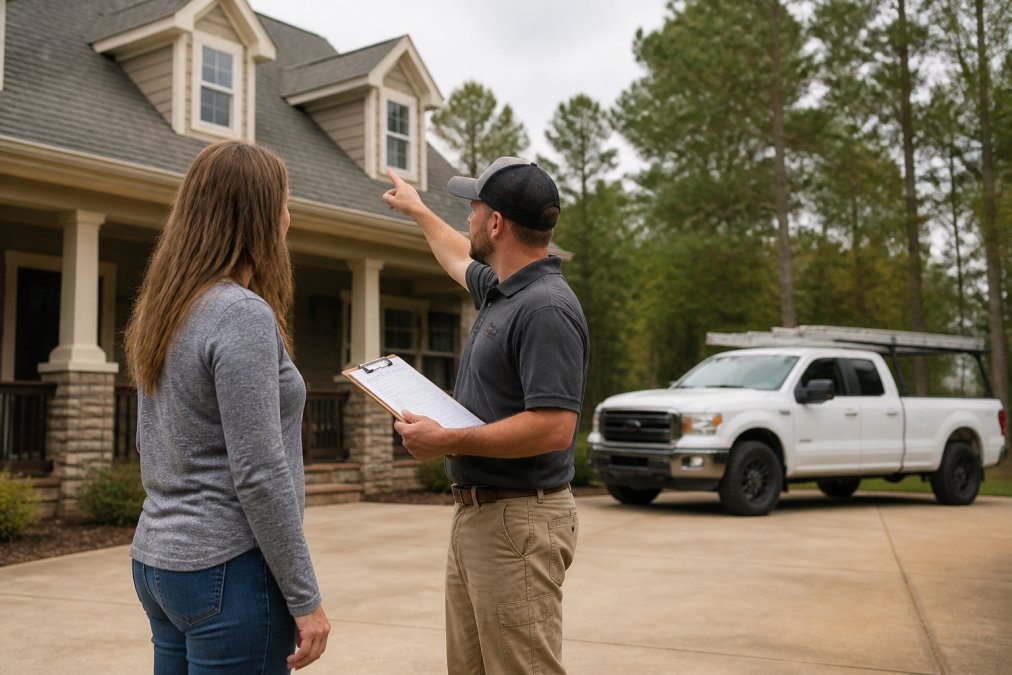
- Are you licensed and insured in this state, and can I see the certificates?
- Who is the manufacturer-certified installer on this crew?
- How long have you worked in this region, and can you share local references?
- What is excluded from this estimate?
- What does your workmanship warranty cover, and for how long?
- Who handles the insurance claim paperwork if this is storm damage?
Licensing, Insurance, and Credentials You Can Verify Yourself
Verify credentials through the state licensing board and the manufacturer’s contractor directory, not a business card. Ask for a certificate of insurance and call the insurer to confirm it is current; general liability and workers’ compensation are separate policies, and you want both. A factory-certified installer can often register an extended material warranty in your name, which a non-certified crew cannot.
Roof Replacement Financing Options for Homeowners on a Budget
Most homeowners do not have the full project cost in savings, and financing exists for exactly this reason. What separates a good financing decision from a bad one is understanding how each option works, who holds the debt, how interest accrues, and what happens if you pay it off early.
| Option | Who Holds the Debt | Typical Term Length | Interest Behavior | Best Fit |
|---|---|---|---|---|
| Contractor installment plan | Usually a third-party lender the contractor partners with | Short to medium | Promotional periods often defer interest rather than forgive it | Homeowners who want one point of contact |
| Home equity loan | Your mortgage lender, secured against your home | Long | Fixed rate, simple interest | Homeowners with equity and a stable income |
| Home equity line of credit | Your mortgage lender, secured against your home | Revolving | Variable rate tied to a published index | Homeowners who want to draw only what they need |
| Manufacturer-backed consumer program | A national consumer lender | Medium | Rates vary by credit tier | Homeowners buying a specific certified system |
| Credit union home improvement loan | The credit union | Short to medium | Often lower fixed rates for members | Members with an existing relationship |
The Three Numbers to Compare, Not One
Monthly payment is the number lenders lead with, and the least useful on its own. Compare these three:
- Annual percentage rate (APR). This folds in the interest rate plus most fees, so it is the closest thing to an apples-to-apples cost of borrowing.
- Total amount repaid. Multiply the payment by the number of payments. A longer term lowers the payment and raises this figure, sometimes by a wide margin.
- Prepayment terms. Some loans charge a penalty for paying off early. If you expect a tax refund, a bonus, or an insurance payout, a prepayment penalty can erase the benefit of paying ahead.
Secured vs. Unsecured: The Trade-Off Nobody Explains
Home equity loans and lines of credit are secured against your house, which is why their rates tend to be lower, the lender has collateral. It also means the roof is no longer the only thing at risk if you fall behind. Unsecured options like contractor installment plans and manufacturer programs carry higher rates but do not put a lien on your home.
Questions to Ask Before You Sign Anything
- Is the rate fixed or variable, and if variable, what index does it track?
- Is there a prepayment penalty, and how is it calculated?
- What happens to the rate when any promotional period ends?
- Does the contractor receive a markup or rebate from the lender for steering you to a particular product?
- Will the lender pay the contractor directly, or will you be responsible for paying the contractor and getting reimbursed?
Financing changes the monthly cost, not the project cost. Compare APR, total amount repaid, and prepayment terms across every option before choosing a term.
Consumer Financial Protection Bureau, shopping for a home improvement loan
When Paying Cash or Delaying Makes More Sense
Financing is not always the answer. If the damage is isolated and a repair will hold, delaying a full replacement while you save can beat borrowing. If the roof is actively leaking, delaying usually costs more in interior damage than the interest on a loan. The decision hinges on whether the roof is failing now or aging toward failure, exactly what a proper inspection tells you.
How to Compare Local Roofing Estimates Line by Line
Put every estimate side by side and compare the same line items. Apples-to-apples comparison is the only way to see the real difference.
Book Your Free Roof Inspection Online →
| Line Item | What to Check | Why It Matters |
|---|---|---|
| Tear-off and disposal | Number of layers removed, dumpster included | Hidden disposal fees inflate the final bill |
| Underlayment | Type and brand specified | Cheaper felt fails faster in coastal humidity |
| Flashing | New or reused | Reused flashing is a leading cause of leaks |
| Ventilation | Ridge and soffit included | Poor ventilation shortens roof longevity |
| Warranty | Material and workmanship terms | Two separate warranties, two separate durations |
| Payment schedule | Deposit size and milestones | Large upfront cash payments reduce your use |
When a Repair Beats a Replacement: Maintenance That Extends Roof Longevity
A repair beats a replacement when the damage is isolated and the roof still has years of service left; a single failed flashing or a few lifted shingles rarely justify a full tear-off. Replacement makes more sense when the roof is near the end of its expected life, when damage covers multiple slopes, or when the deck itself is compromised.
DIY vs. Professional: A Realistic Cost-Benefit Breakdown
Not every task on a roof is equally risky. The dividing line is not difficulty, it is whether a mistake creates a water path into the structure.
Tasks where DIY is usually reasonable:
- Clearing gutters and downspouts of debris
- Trimming overhanging branches that abrade shingles
- Removing moss and algae with a soft brush and a garden hose
- Visual inspection from the ground with binoculars
- Photographing and documenting conditions after a storm
Tasks where DIY usually costs more than it saves:
- Replacing flashing around chimneys, vents, or valleys
- Re-sealing pipe boots and step flashing
- Replacing individual shingles on a steep or multi-story roof
- Any work that requires walking the roof surface
- Anything involving the deck, underlayment, or ventilation
The Safety Math Nobody Wants to Do
Roof work is one of the more dangerous trades for a reason: falls from height are the leading cause of serious injury in residential construction, and a homeowner without fall protection, proper footwear, and roof anchors takes on risk no repair savings can offset. If the task requires being on the roof surface, hire it out.
A Seasonal Maintenance Checklist That Actually Extends Roof Life
Routine maintenance is what buys extra years of service. A simple checklist keeps small issues from becoming major problems:
- Inspect the attic after every major storm for new stains or daylight
- Clear gutters and downspouts each season, and after heavy leaf fall
- Trim overhanging branches away from the roof surface
- Check flashing around chimneys, vents, and skylights annually
- Remove moss and algae before it lifts the shingle edges
- Look for granules collecting at downspout outlets after rain
- Schedule a professional assessment every two to three years
What a Professional Inspection Actually Catches
A trained roofer looks for things a homeowner cannot see from the ground: soft spots in the deck, deteriorated underlayment, inadequate intake or exhaust ventilation, and flashing sealed over rather than replaced. Ventilation is the most commonly overlooked item, a roof that cannot breathe traps heat and moisture, shortening shingle life regardless of shingle quality.
When to Stop Repairing and Start Planning Replacement
If you are repairing the same area more than once every couple of years, you are not saving money, you are paying in installments for a replacement you will eventually need anyway. When repairs start exceeding the cost of a replacement spread over the roof’s remaining expected life, replacement is the cheaper path. A professional roofer can tell you which situation you are in after a proper inspection.
Frequently Asked Questions
How do you get a new roof if you can’t afford it?
Start by getting free estimates from several local contractors so you know the real scope of work. Ask each one about roof replacement financing options, which often include monthly payment plans, unsecured home improvement loans, or manufacturer-backed programs. Some contractors also offer repair-first or rejuvenation services that cost far less than a full tear-off. If storm damage is involved, a roofing consultation can help you document the loss and file an insurance claim, which may cover most of the replacement cost.
How can I tell if a roofing quote is reasonable?
Compare at least three written estimates that break down materials, labor, tear-off, disposal, and warranty terms separately. A quote that is dramatically lower than the rest usually means thinner materials, skipped underlayment, or no permit. Use a free online roofing calculator to sanity-check the square-foot math, then ask each contractor to explain any line item that looks out of step. Reasonable quotes are detailed, itemized, and consistent with the others in scope, not just in total.
What should I look for when hiring a local roofing contractor?
Verify three things before you sign anything: a current state license, general liability and workers’ compensation insurance, and a physical local address. Ask for the license number and insurance certificate, then confirm them directly with the issuing body. Read recent customer reviews and check for a workmanship warranty in writing. A professional roofer will hand over all of this without hesitation, provide free estimates, and never demand a large deposit before work begins.
What is the 25% rule for roofing?
The 25% rule is a common guideline for deciding between repair and replacement. If roughly a quarter or more of your roof’s surface is damaged, or the roof is in its final quarter of expected lifespan, replacement usually costs less over time than repeated repairs. The math changes with roof longevity, material type, and how much storm damage is present. Get a professional roofing inspection so the decision is based on your actual roof, not a rule of thumb.
How do I verify a roofing contractor’s credentials?
Ask for the contractor’s license number, insurance certificate, and manufacturer certifications, then verify each one independently. Call the state licensing board to confirm the license is active and in good standing. Contact the insurance carrier to confirm coverage is current. Check manufacturer websites to confirm any certification claims. Finally, look up the business with your state’s consumer protection office and read customer reviews on multiple platforms before you commit to a roofing project.
Roofing decisions are stressful because the stakes are high and the quotes are hard to read. Maven Roofing removes that guesswork with free roof inspections, itemized estimates, and a veteran-owned team that has served Eastern North Carolina since 2015. We specialize in coastal weather protection, offer roof rejuvenation alongside full replacements, and stand behind every assessment we write. Book your free roof inspection online and get a clear answer on what your roof actually needs.