

Maven Resource Blog
Extending Asphalt Shingle Roof Life: A Practical Guide
Learn how to extend asphalt shingle roof life with seasonal maintenance, safe inspection steps, and when to call Maven Roofing for a free inspection.
Book a free roof inspection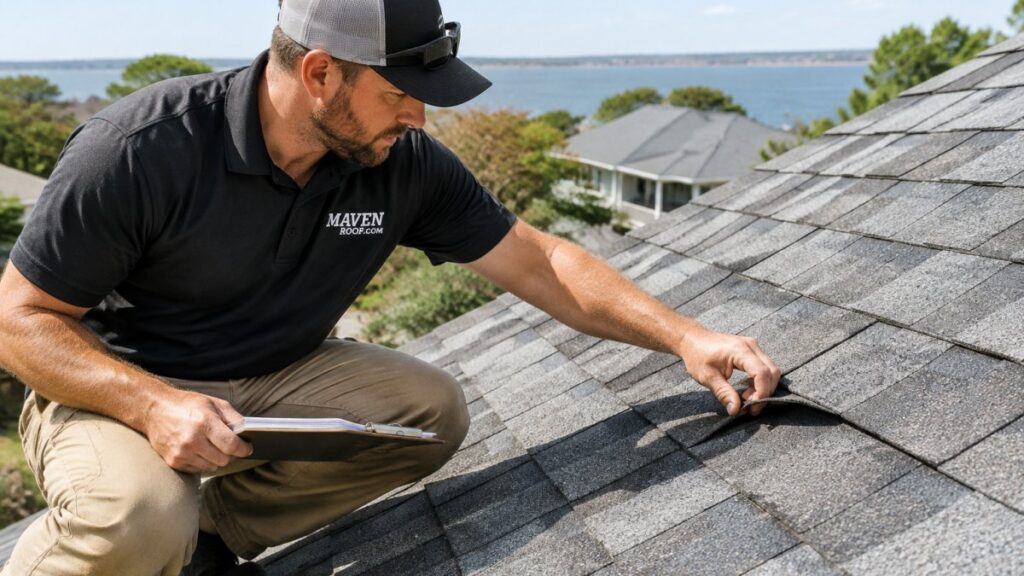
Last Updated: November 8, 2026
Quick Summary
An asphalt shingle roof lasts longest when it gets regular seasonal checks and problems are fixed early. Sun, wind, moisture and debris cause most of the wear, and in Eastern North Carolina salt spray and storm season add to it. Catching lifted shingles, clogged gutters and attic moisture early keeps small problems from becoming leaks.
- Clear gutters and downspouts each season and confirm water drains away from the foundation.
- Trim branches so they do not rub shingles or drop debris into valleys and gutters.
- Look for missing, cracked, lifted or curling shingles, especially at ridges, edges and valleys.
- Confirm attic ventilation is not blocked by insulation pushed against the eaves.
- After any named storm or hail event, do a ground-level walkaround before assuming the roof is fine.
Table of Contents
- Why Asphalt Shingle Roofs Wear Out and What You Can Control
- Asphalt Shingle Roof Maintenance: A Seasonal Calendar
- How to Do a Safe DIY Asphalt Shingle Roof Inspection
- Protecting Shingles from Moss, Algae, and Coastal Salt Spray
- Roof Rejuvenation for Asphalt Shingles: What It Can and Cannot Do
- How Long an Asphalt Shingle Roof Lasts and When Repair Beats Replacement
- Scheduling Your Free Roof Inspection with Maven Roofing
- Frequently Asked Questions
Why Asphalt Shingle Roofs Wear Out and What You Can Control
Asphalt shingle roofs wear out from sun, rain, wind, and time. Some of that is out of your hands. A lot of it is not. Roofs that get regular attention tend to last longer, and small problems stay small when someone catches them early.
Here is what usually does the damage:
- Sun exposure dries out the asphalt and slowly breaks down the surface.
- Wind lifts and loosens shingles, especially at the edges and corners.
- Moisture gets under shingles and rots the deck when flashing or sealant fails.
- Debris like leaves, moss, and branches holds water against the surface.
- Salt spray near the coast speeds up wear on metal parts and granules.
You cannot control the weather. You can control how quickly you find and fix problems. That is the core of extending roof life.
Asphalt Shingle Roof Maintenance: A Seasonal Calendar
A simple calendar keeps maintenance from slipping, but a calendar built for a mild national climate misses what actually wears roofs out here. Eastern North Carolina throws a specific mix at asphalt shingles: strong summer sun and heat, humid air that feeds algae and moss, salt spray within a few miles of the coast, and a storm season that can drop wind-driven rain and hail on short notice. The calendar below is built around those pressures.
| Season | What to Check | Why It Matters Here |
|---|---|---|
| Late winter / early spring | Gutters, downspouts, granule piles at downspout outlets, moss or algae on north-facing slopes | Winter rain and debris load the drainage system; granule piles are an early aging signal |
| Late spring | Attic ventilation, insulation clearance at the eaves, shingle curl and blistering | Heat buildup is hardest on shingles now, and poor ventilation shortens shingle life |
| Early summer | Overhanging branches, loose or lifted shingles at ridges, edges, and valleys, flashing at chimneys and vents | Storm season is ahead; wind grabs the same edges every year |
| Late summer / early fall | Post-storm walkaround, sealant at penetrations, debris on the roof surface | Peak storm window; small lifts become leaks |
| Fall | Leaves in gutters and valleys, flashing, attic moisture, ceiling stains | Clogs and trapped moisture cause problems that show up in winter |
| Winter | Attic moisture, condensation, sagging areas, interior stains after storms | Cold, wet weather reveals leaks that were slow to show |
Each season, work through a short list rather than trying to do everything at once:
- Clear gutters and downspouts and confirm water drains away from the foundation, not back toward the house.
- Trim branches so they do not rub the shingles or drop debris into valleys and gutters.
- Look for missing, cracked, lifted, or curling shingles, especially at ridges, edges, and valleys where wind does the most damage.
- Confirm attic ventilation is clear and not blocked by insulation pushed up against the eaves.
- Note any new stains on ceilings or walls, and photograph them so you can tell whether they are spreading.
- After any named storm or hail event, do a ground-level walkaround before you assume the roof came through clean.
Keeping a simple log, with dates and photos, helps you spot changes over time and gives you a record if you ever need to file an insurance claim. A small stain left unchecked from fall into spring can allow the decking to soften in between.
Watch out: a calendar is not a substitute for eyes on the roof after a storm. Wind and hail damage is often invisible from the ground, and a shingle that looks fine from the yard can be bruised or unsealed at the tab. If a storm has passed through, have the roof looked at rather than waiting for the next scheduled check.
How to Do a Safe DIY Asphalt Shingle Roof Inspection
You can do a lot of inspection from the ground. Safety comes first.

- Use binoculars from the yard. Look at the ridge, edges, and valleys for lifted or missing shingles.
- Check the gutters. Granules in the gutters mean the shingles are aging.
- Walk the perimeter. Look for sagging, dark streaks, or debris buildup.
- Go into the attic on a dry day. Look for water stains, damp insulation, and daylight coming through the deck.
- Stay off the roof if it is wet, steep, or high. Falls cause serious injuries every year (the CDC).
If you do not feel steady on a ladder, skip the roof entirely. A free inspection from a professional is the safer choice.
Signs That Call for a Professional
Call a roofer when you see any of these:
- Shingles that are cracked, curled, or missing in patches
- Water stains on ceilings or walls
- Soft spots or sagging on the roof deck
- Heavy granule loss in the gutters
- Damage after a storm, including wind or hail
Protecting Shingles from Moss, Algae, and Coastal Salt Spray
Moss and algae hold moisture against shingles, which speeds up decay. Salt spray near the coast adds more wear. Clean the roof carefully. Power washing at high pressure can strip granules and shorten the roof’s life.
For a step-by-step guide to removing algae streaks safely, read our Remove Algae From Roof Shingles: A Step-by-Step Guide. It covers what to use and what to avoid.
Coastal homes need extra attention to granule loss, since salt and wind wear the surface faster. Our Preventing Shingle Granule Loss: Coastal Roof Care Guide explains how salt spray and wear cause granule loss and what you can do about it.
Roof Rejuvenation for Asphalt Shingles: What It Can and Cannot Do
Roof rejuvenation is a cleaning process meant to help an aging roof that still has good structural integrity. It can remove dirt, moss, and algae. It does not fix broken shingles, rotted decking, or active leaks. Results depend on the roof’s condition, so ask for an honest assessment before you commit.
If you are weighing this option against a new roof, our guide on Roof Rejuvenation Vs Roof Replacement lays out the differences side by side.
How Long an Asphalt Shingle Roof Lasts and When Repair Beats Replacement
Asphalt shingle lifespan depends on the product, installation quality, climate, and maintenance. Shingle manufacturers publish expected service lives for their products, and those figures generally assume proper installation and ventilation. In Eastern North Carolina, heavy sun, humid air, salt spray near the coast, and repeated storm exposure can push a roof toward the shorter end of that range. That is why the decision to repair or replace should rest on the roof’s actual condition, not on a single age number.
The useful question is not “how old is the roof” but “how much of the roof is failing, and is the structure underneath still sound.” Here is how to read the common signals:
- Granule loss. Some granule loss is normal aging. Widespread loss, bare patches, and shingles that shed granules into gutters after every rain point to a surface near the end of its life. Isolated loss on a few shingles is usually a repair.
- Curling and clawing. Shingles that curl at the edges or lift in the middle across most of a slope are usually past repair. A handful of curled shingles, especially near a ridge or vent, can often be replaced.
- Deck condition. Soft spots, sagging, or a spongy feel underfoot mean the decking or underlayment is compromised. Patching shingles over a soft deck does not fix the problem.
- Leak pattern. One leak traced to a failed flashing or a single damaged shingle is a repair. Leaks in multiple places, or leaks that return after repair, point to a roof that is failing as a system.
- Repair frequency. If you are calling for repairs every season, the accumulated cost and disruption usually favor replacement.
Repair often makes sense when damage is limited to a few shingles or one area, the deck and underlayment are sound, and the roof is still within its expected service life. Replacement usually makes sense when damage is widespread or repeated, the deck is soft or rotted, shingles are curling or losing granules across most of the roof, or repairs keep adding up.
A roof can look acceptable from the yard yet show widespread granule loss and lifted tabs once someone is actually on it. That is why a professional inspection matters before you commit either way: it separates cosmetic wear from structural failure and tells you which slopes are actually in trouble. If you are stuck between the two, our guide on Should I Repair Or Replace My Roof walks through the decision step by step, and a free roof inspection gives you a straight answer about where your roof stands.
Scheduling Your Free Roof Inspection with Maven Roofing
A professional inspection gives you a clear picture of your roof’s condition without any pressure to buy. You can meet the team that will be looking at your roof before you book. We look at the roof and tell you what we see and what we recommend. Our free roof inspection is the easiest way to start, and our team is happy to answer your questions before you decide anything.
Catching small problems early is the best way to protect your roof and your home. Book your free roof inspection today and get a straight answer about where your roof stands.
Frequently Asked Questions
How can I extend the lifespan of my asphalt shingle roof?
The most effective steps are routine inspections, clearing gutters and debris, trimming overhanging branches, keeping attic ventilation working, and repairing missing or curling shingles promptly. In coastal Eastern North Carolina, rinsing salt spray and removing moss or algae also helps. A free inspection from Maven Roofing can identify which of these steps your roof needs most.
How often should an asphalt shingle roof be inspected?
Most homeowners benefit from a visual check twice a year, in spring and fall, plus a look after any major storm. A professional inspection is worth scheduling at least once a year on coastal properties, where wind, salt spray, and humidity speed up wear. Maven Roofing offers free roof inspections, so you can book one without a commitment.
Does roof rejuvenation actually work on asphalt shingles?
Rejuvenation can remove dirt, moss, and algae from shingles that are still in reasonable condition, but it does not repair cracks, replace missing shingles, or fix structural problems. Results vary with the age and condition of the roof. Maven Roofing evaluates whether rejuvenation is appropriate for your specific roof and will tell you if it is not the right choice.
Can roof cleaning damage asphalt shingles?
It can, if the wrong method is used. High-pressure washing can strip granules and shorten shingle life, and walking on a wet roof risks slips and damage. Gentle, low-pressure cleaning is safer. Maven Roofing offers roof cleaning and can explain the approach that suits your roof.
