

Maven Resource Blog
Can Old Roofs Keep Insurance? What Homeowners Should Know
Can old roofs keep insurance?
Book a free roof inspection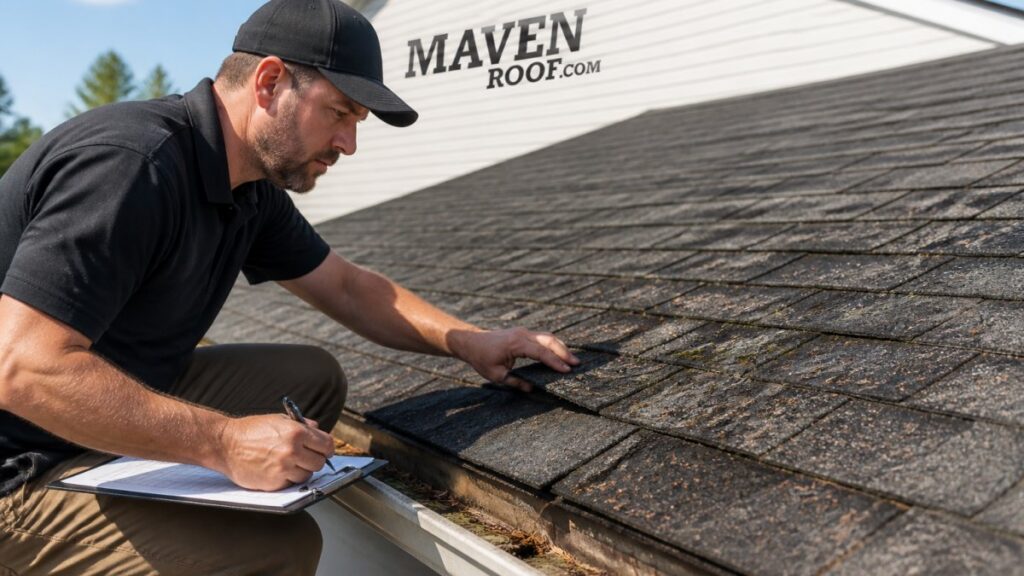
Table of Contents
- Can Old Roofs Keep Insurance? The Short Answer
- How Roof Age Affects Homeowners Insurance for an Old Roof
- Roof Condition vs. Roof Age: What Underwriters Actually Evaluate
- Your Insurance Roof Inspection Checklist
- Roof Condition Documentation for Insurance: Building Your File
- When a Storm Damage Roof Insurance Claim Enters the Picture
- Actual Cash Value vs. Replacement Cost on an Aging Roof
- Repair, Rejuvenate, or Replace: A Decision Framework
- Frequently Asked Questions
Last Updated: October 21, 2026
Can Old Roofs Keep Insurance? The Short Answer
Yes, an old roof can usually keep homeowners insurance, but age alone rarely decides it.
The tricky part: insurers can decline to renew a policy or exclude roof coverage when a roof shows real wear. So the question “can old roofs keep insurance” is really two questions.
Below, we’ll show you exactly what underwriters look for, how to document your roof, and when repair, rejuvenation, or replacement makes the most sense.
How Roof Age Affects Homeowners Insurance for an Old Roof
Age matters, but not the way most people assume. Insurers use roof age as a starting filter, then dig into condition. An older roof that has been maintained can stay insurable. A younger roof with neglect and storm damage can get flagged.
Why Insurers Care About Roof Age
A roof is the home’s first line of defense against wind, rain, and hail. When it fails, claims get expensive fast. Underwriters view an aging roof as a higher risk of water intrusion, interior damage, and sudden loss. That risk feeds directly into premiums and underwriting decisions.
Age Thresholds and Renewal Decisions
Many carriers start asking harder questions as a roof approaches the 15-to-20-year range. Some may require an inspection, raise the deductible, or move the roof to actual cash value. Exact rules vary by carrier and policy, so read your renewal paperwork closely. A nonrenewal notice is not the same as a cancellation, and both usually come with notice periods your policy spells out.
Ignoring a renewal questionnaire about roof age is a common mistake. A blank or inaccurate answer can lead to a denied claim later, even if the roof was fine. Answer honestly and attach your documentation.
Roof Condition vs. Roof Age: What Underwriters Actually Evaluate
Condition beats age in almost every underwriting review. An inspector looks at the shingles, the roof decking, flashing, and signs of leaks. They check for missing granules, curling shingles, moss, and soft spots.
Here’s the distinction that matters most: sudden and accidental damage is generally covered, while gradual deterioration and lack of maintenance usually are not. That single line explains most denied claims on older roofs.
Photograph your roof after every major storm, before you call anyone. Dated photos help separate fresh storm damage from old wear when you file a storm damage roof insurance claim.
Your Insurance Roof Inspection Checklist
An insurance roof inspection is a documented review of your roof’s condition, age, and remaining useful life. It protects the insurer and gives you a paper trail. The useful version is a checklist you can actually work through, before the inspector arrives, during the walk, and after the report lands.
Before the Inspector Arrives
- Receipts for past roof repairs and maintenance records
- The original install date or contractor paperwork
- Photos of the roof after recent storms
- Any prior inspection reports
- A list of known issues, like a slow leak or moss growth
- Permit records for the original install or any re-roof, if your county keeps them searchable online
- Your current policy declarations page, so you know what the insurer is actually asking about
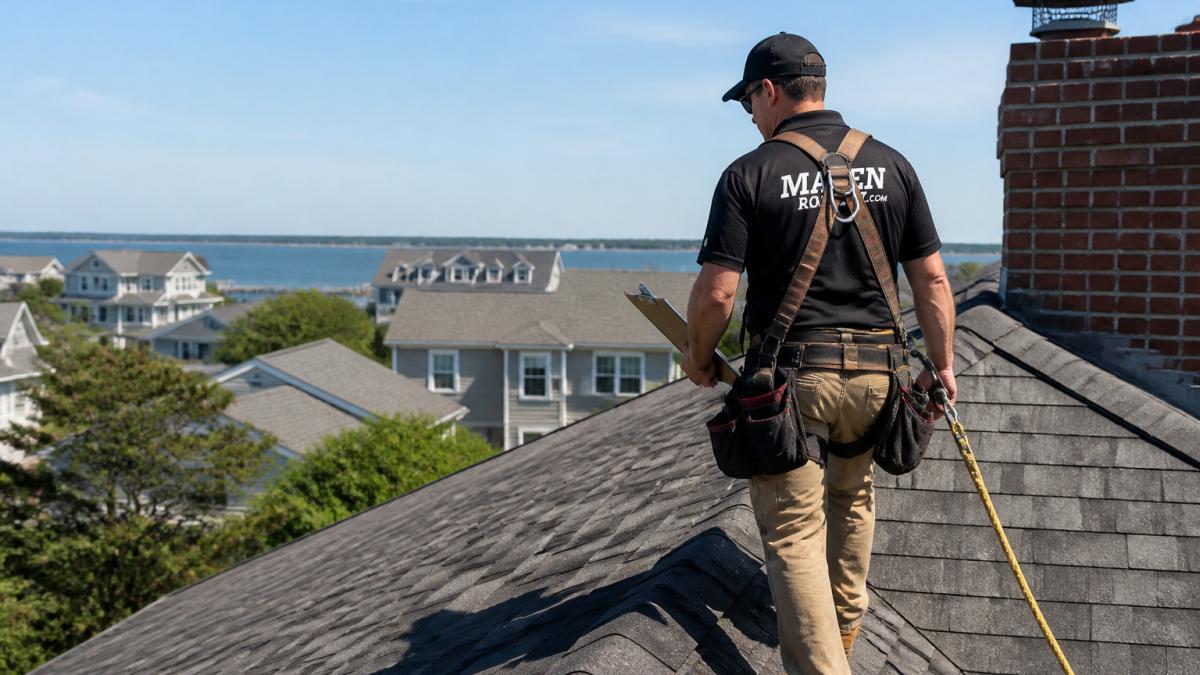
A licensed roofing contractor can walk the roof with you first and flag problems before the insurer does. That advance look often prevents surprises.
What a Useful Inspection Report Should Contain
Ask for a written report, not just a verbal summary. A report that holds up with an underwriter typically includes:
- Roof age and estimated remaining useful life, stated as a range rather than a single number
- Material identification, asphalt shingle, synthetic shingle, standing-seam metal, or flat roofing system, since different systems age on different timelines
- Slope-by-slope condition notes, including the north-facing and shaded sections that wear differently
- Photo documentation of every slope, plus close-ups of flashing, valleys, penetrations, and any prior repair areas
- Findings separated into three buckets: normal wear, maintenance items, and storm or sudden damage
- A clear recommendation, monitor, repair, rejuvenate, or replace, with the reasoning behind it
Underwriters and adjusters care less about whether the roof is old and more about whether the problem is gradual deterioration (typically excluded) or a sudden event (typically covered). A report that blurs the two invites a denial.
Photo Standards That Actually Help
Dated photos are only useful if they show context. Shoot wide shots that include the roofline and a recognizable feature, then close-ups of the specific issue. Keep the date stamp on. Store them in one folder organized by date so you can produce a timeline if the insurer asks.
Photograph your roof after every major storm, before you call anyone. A dated photo taken the morning after an event is far more persuasive than one taken three weeks later, after a contractor has already been on the roof.
After the Report
Send the report to your agent before renewal, not after a nonrenewal notice. If the report recommends maintenance, do it and keep the receipt, proof of follow-through is one of the strongest signals an underwriter can see. If it recommends replacement, you now have a documented basis for a conversation with your carrier instead of a guess.
If you’re not sure where your roof stands, book a free inspection and we’ll walk it with you before your insurer does.
Roof Condition Documentation for Insurance: Building Your File
Documentation is your strongest tool when an insurer questions an older roof. Build a simple file and keep it current. Include dated photos of all roof slopes, receipts for repairs, and any professional inspection report. Note the roofing materials and the approximate install year.
If you’ve had maintenance done, keep those records too. Proof of repairs signals a maintained roof, which underwriters like. A clear file can turn a tense renewal into a routine one.
Book Your Roof Inspection Online →
When a Storm Damage Roof Insurance Claim Enters the Picture
Storm damage changes the conversation. Wind damage, hail damage, and roof leaks from a single event are typically covered losses, even on an older roof. The key is separating that event from pre-existing wear. File promptly, document everything, and get a professional assessment.
We help homeowners document damage and coordinate with adjusters so the claim reflects what actually happened. If you’re unsure whether damage is storm-related or age-related, a free roof inspection is the fastest way to find out.
Actual Cash Value vs. Replacement Cost on an Aging Roof
This is where older roofs take their biggest hit. Replacement cost pays to replace the roof with new materials of similar kind and quality. Actual cash value pays replacement cost minus depreciation, so you get less as the roof ages.
The practical question is narrower: which method applies to your roof, and how do you confirm it before you need it?
How Depreciation Actually Works on a Roof
Depreciation is not a single number pulled from a chart. It reflects the roof’s age against its expected service life, adjusted for condition. A roof halfway through its expected life generally carries more depreciation than one near the start, and a well-maintained roof can be treated more favorably than a neglected one of the same age. The exact formula is set by the carrier, which is why the policy language matters more than any rule of thumb.
Policy Language to Read Before You Bind
Pull your declarations page and the coverage forms, then look for these specific items:
- Settlement basis for the roof, replacement cost, actual cash value, or a roof-specific endorsement that changes the default
- Roof-specific exclusions, language excluding coverage for wear, deterioration, or failure to maintain
- Deductibles, including any separate wind or hail deductible, which is often stated as a percentage of the dwelling limit rather than a flat amount
- Depreciation schedule or age-based caps, some policies reduce roof payouts once the roof passes a stated age
- Matching obligations, whether the carrier will pay to match undamaged shingles or only repair the damaged section
If any of those are unclear, ask your agent to point to the exact page and clause. A verbal “you’re covered for replacement cost” is not the same as the policy saying so.
Comparing Coverage Terms Side by Side
| Coverage Type | How It Pays | What to Verify in the Policy |
|---|---|---|
| Replacement cost | Full cost to replace, no depreciation | That the roof is not carved out by an age-based endorsement |
| Actual cash value | Replacement cost minus depreciation | The depreciation method and whether it is recoverable after repair |
| Repair-only coverage | Pays for specific repairs | The scope limit and whether matching is included |
The Recoverable Depreciation Question
Some policies pay actual cash value first, then release the withheld depreciation once the work is completed and invoiced. That holdback can be substantial on an older roof, and it changes your out-of-pocket timing even when the total settlement is the same. Ask your agent directly whether depreciation is recoverable and what documentation triggers the release.
Before you bind or renew, confirm three things in writing: the roof’s settlement basis, any roof-specific exclusion, and whether depreciation is recoverable. Those three answers decide what an older roof actually pays out.
If your insurer is asking questions about roof condition, a free inspection gives you the documentation to answer them, and a clear read on whether repair, rejuvenation, or replacement is the better path for your coverage.
Repair, Rejuvenate, or Replace: A Decision Framework
Use condition, not just age, to decide. If the roof has years of useful life left and the issue is moss, algae, or surface wear, cleaning or rejuvenation can extend it.
- Repair when damage is isolated and the decking is sound.
- Rejuvenate when the shingles are structurally fine but worn or algae-stained.
- Replace when failures are widespread or the roof is past its service life.
A free inspection gives you a clear recommendation with no pressure. We’ll tell you what we’d do on our own home.
An aging roof doesn’t have to mean losing coverage. Homeowners who keep their insurance often document condition, address problems early, and know their policy terms.
Frequently Asked Questions
Will insurance cover a roof over 20 years old?
It can, but the policy terms matter more than the number. Many insurers treat 15 to 20 years as a review point, and some will only keep coverage on an older roof if an inspection confirms it still has remaining useful life. Others may shift the roof to actual cash value, which pays depreciated value instead of full replacement cost. The practical step is to ask your carrier in writing what roof age rules apply to your policy, then get a professional inspection so you have current condition documentation for insurance on file before renewal season.
Is a 15-year-old roof insurable?
In most cases yes. A 15-year-old asphalt shingle roof is often still within its expected service life, and insurers usually focus on condition: granule loss, curling, active leaks, and maintenance history. Problems tend to appear when the roof shows wear and tear or lack of maintenance at the same time as its age. If your carrier requests a roof inspection, a report from a licensed roofing contractor showing sound shingles and a documented maintenance record gives the underwriter concrete evidence to work with.
Can an insurer cancel or decline coverage because of an old roof?
Yes, nonrenewal or denied coverage is possible when a roof is aging and shows damage or neglect. Insurers distinguish sudden and accidental damage from gradual deterioration, and a worn roof often falls into the second category, which policies commonly exclude. If you receive a notice, read it carefully and respond with proof of repairs or a recent inspection report. In many states, carriers must give written notice before canceling or nonrenewing a homeowners policy, so check the deadlines that apply to you and act before they pass.
What should I do if my insurer requests a roof inspection?
Schedule the inspection promptly and treat it as a chance to document condition rather than a threat. Walk the roof with the inspector if possible, point out recent repairs, and ask for a written report you can submit to your carrier. Before the visit, gather maintenance records, receipts for past roof work, and any prior inspection reports. If the report flags issues, get a repair estimate from a licensed roofing contractor and complete the work before the insurer’s deadline. Book a free roof inspection early so you are not scrambling when a renewal notice arrives.