

Maven Resource Blog
What Is the 25% Rule for Roofing?
Learn what the 25% rule for roofing means, how it affects insurance claims, and whether your roof qualifies for repair or replacement.
Book a free roof inspection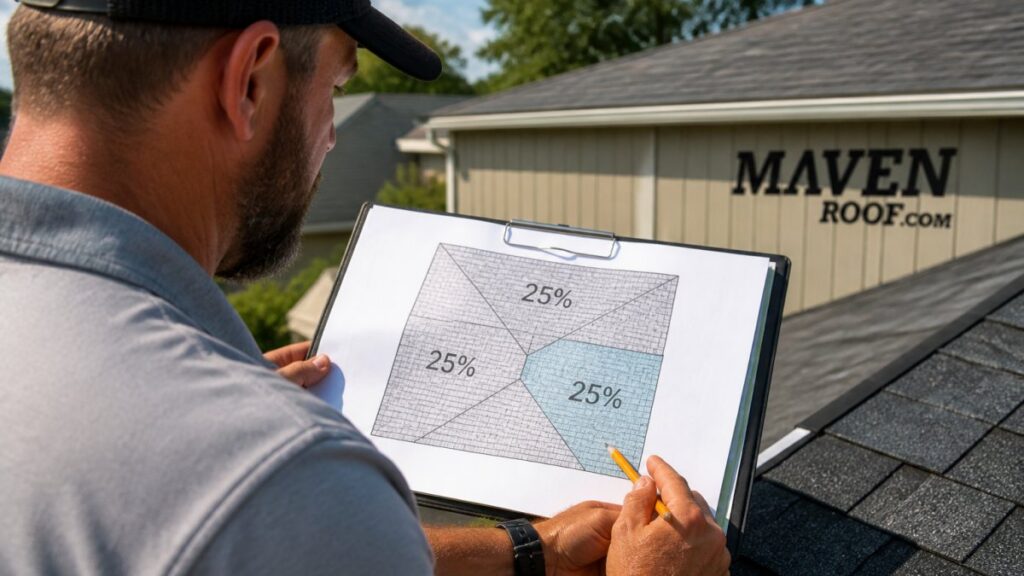
Table of Contents
- Understanding the 25% Rule for Roofing
- How Roof Age and Condition Affect Insurance Coverage
- Roof Insurance Claim Rules and Damage Assessment
- How to Document Roof Damage for Insurance
- Storm Damage Roof Inspection: What Adjusters Look For
- Roof Repair Versus Replacement After Storm Damage
- Next Steps: Protecting Your Roof and Your Coverage
- Frequently Asked Questions
Last Updated: October 21, 2026
Understanding the 25% Rule for Roofing
What is the 25% rule for roofing? It’s a key threshold that determines whether your roof qualifies for insurance coverage or repair versus replacement.
Here’s the core concept: if damage covers more than 25% of the total roof area, most insurers classify it as major damage, which triggers different coverage rules and may require full replacement rather than repair.
Your roof’s age and condition both matter. A 10-year-old roof with 25% damage might qualify for a repair; a 20-year-old roof with the same damage might face denial or require replacement at your own cost.
Document the exact extent of any roof damage with photos and measurements before contacting your insurance company. This creates a clear record if there’s a dispute about whether damage exceeds the 25% threshold.
How Roof Age and Condition Affect Insurance Coverage
Roof age is one of the first things an underwriter looks at, but age alone rarely decides the outcome. What matters is how age combines with condition, material, and your policy terms.
Why insurers treat roof age as a risk signal
A roof is a wear item: asphalt shingles lose granules, sealant strips weaken, and flashing seals degrade with every freeze-thaw cycle and summer storm. An older roof has a shorter remaining useful life, so many carriers shift to stricter requirements as it passes certain age markers.
The age thresholds you are most likely to encounter
Most carriers do not publish a single national cutoff. A common pattern is:
- Under roughly 10 years old: little or no roof-specific scrutiny; standard replacement-cost coverage is typical.
- Around 10 to 15 years old: the insurer may ask for an inspection, photos, or a roof certification before binding or renewing.
- Around 15 to 20 years old: many carriers require a professional inspection and may move the roof to actual cash value settlement, raise the roof deductible, or apply a roof-specific exclusion.
These are patterns, not rules. Carriers vary widely, and the same roof can be treated differently by two insurers. Ask your agent directly what this company’s roof age threshold is and what documentation will satisfy it.
Condition can override age
A well-maintained 18-year-old roof with an inspection report showing intact shingles, sound flashing, and no active leaks can sometimes stay on a standard policy. A neglected 12-year-old roof with missing shingles, granule loss, moss, or unrepaired leaks is a much harder renewal. Insurers look for:
- Missing, cracked, lifted, or curling shingles
- Granule loss and exposed mat
- Rusted or separated flashing
If any of these are present, the insurer may argue that future damage stems from neglect rather than a covered event, one of the most common reasons a roof claim is reduced or denied.
Policy terms that change with roof age
Age affects not just eligibility but how a claim pays. Watch for these terms:
- Replacement cost versus actual cash value. Replacement cost pays to replace with new materials of like kind and quality. Actual cash value pays replacement cost minus depreciation, which on an older roof can be a large gap. Many carriers apply actual cash value to roofs past a certain age.
- Roof-specific deductible. Some policies carry a separate deductible for roof claims, often stated as a percentage of the dwelling limit rather than a flat dollar amount.
- Cosmetic damage exclusions. Some policies exclude damage that is cosmetic only, such as certain hail dents that do not affect function.
How to verify your own situation
Before your next renewal, pull your policy declarations and read the roof-related endorsements. Ask your agent three questions in writing: whether the roof settles at replacement cost or actual cash value, whether there is a separate roof deductible, and what inspection or documentation the carrier requires at your roof’s current age.
Roof age is a risk signal, not an automatic denial. The outcome depends on condition, material, and the specific policy terms. Knowing your carrier’s threshold and your settlement basis before renewal is the single most useful step you can take.
If you are unsure how your roof’s age and condition will be viewed, a free inspection from Maven Roofing gives you a documented condition report you can share with your insurer.
Roof Insurance Claim Rules and Damage Assessment
When you file a roof damage claim, the insurer sends an adjuster to determine three things: the cause of the damage, the extent of the damage, and whether your policy covers it.
Most homeowners policies cover sudden and accidental damage from storms, wind, hail, and falling objects, but not gradual deterioration, lack of maintenance, or wear and tear.
Understanding what is the 25% rule for roofing helps during this assessment. If the adjuster determines that damage covers less than 25% of your roof, they may approve a repair claim.
If you disagree with the adjuster’s assessment, you have the right to request a second opinion or hire your own roofing contractor to document the damage. This is especially important if the adjuster’s estimate seems low or if they’re using the roof’s age to deny a legitimate claim.
How to Document Roof Damage for Insurance
Most claim disputes aren’t about whether damage exists; they’re about whether the documentation proves it, when it happened, and whether it’s covered. A complete package establishes pre-storm condition, ties damage to a specific event, and gives the adjuster enough detail to write a scope without guesswork.
The documentation package insurers respond to
Build one folder, digital or physical, with these items:
- Pre-loss condition record. Photos of the roof from the ground and, if safe, from the roof surface, taken before any storm season. Include wide shots and close-ups of each slope.
- Storm event record. Date, time, and type of event; weather reports or radar captures; and any news coverage of the storm in your area.
- Damage photos. Ground-level wide shots showing the damaged slope in context, mid-range shots showing the pattern across several shingles, and close-ups with a reference object such as a ruler or coin for scale. Photograph all four slopes, not just the obviously damaged one.
- Interior evidence. Photos of ceiling stains, attic decking, insulation, and any active drips, with dates noted.
- Temporary repair records. Receipts, photos, and notes from any tarping or emergency repair, including who did the work and when.
- Maintenance history. Installation date, contractor name, product and color, permits, invoices for prior repairs, cleaning and inspection records, and any prior claim documentation.
- Contractor inspection report. A written report from a licensed roofing contractor with measurements, photos, and a damage assessment. This is the item adjusters weigh most heavily because it translates visible damage into a scope of work.
What the adjuster is actually measuring
The adjuster’s report typically includes a damage percentage by slope, a test square count, and a cause determination. Because the 25% threshold is applied against total roof area, the adjuster needs the roof’s size and the extent of damage on each slope, which is why wide shots and measurements matter as much as close-ups.
Comparing policy terms before you file
Before filing, read the policy sections that determine how a claim pays:
- Settlement basis. Replacement cost versus actual cash value. On an older roof, actual cash value can reduce the payout substantially after depreciation.
- Roof deductible. A separate roof deductible, often a percentage of the dwelling limit, applies before the claim pays.
- Exclusions. Wear and tear, maintenance, and gradual deterioration are typically excluded. Cosmetic damage and matching exclusions may also apply.
Knowing these terms before you file helps you set realistic expectations and avoid surprises at settlement.
If you disagree with the adjuster
You have the right to request a reinspection, submit your contractor’s report as a counter-document, and ask for a written explanation of how the damage percentage was calculated.
Do not make permanent repairs before the adjuster inspects, unless the work is necessary to prevent further damage. Temporary repairs to protect the interior are appropriate, but document them thoroughly and keep receipts.
If you are preparing a claim or facing a renewal inspection, Maven Roofing provides free inspections and written condition reports you can share with your insurer. We work directly with adjusters to document damage accurately and help you understand what your policy is likely to cover.
Storm Damage Roof Inspection: What Adjusters Look For
When an adjuster inspects your roof after storm damage, they follow a specific process to determine what happened and what’s covered.
Book Your Roof Inspection Online →
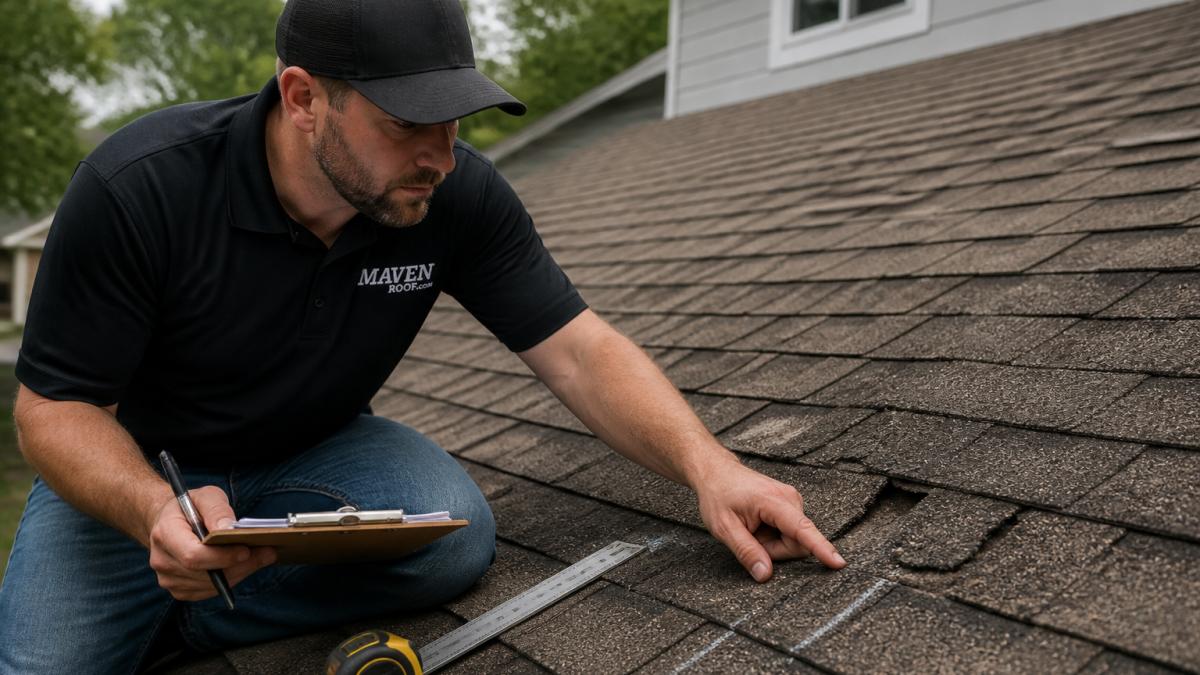
The adjuster will examine:
Shingle condition and damage patterns. They look for missing, cracked, or lifted shingles and areas where granules have been stripped away. Hail damage appears as indentations or bruises; wind damage shows as torn, lifted, or missing shingles. The pattern tells the adjuster what type of storm caused it.
Flashing and seams. Metal flashing around chimneys, vents, and valleys is especially vulnerable to storm damage.
Gutters and downspouts. Dents, separation, or debris in gutters can indicate the force and direction of the storm.
The adjuster typically provides a written report with photos, measurements, and an estimate.
Roof Repair Versus Replacement After Storm Damage
After a storm damages your roof, you face a critical decision: repair the damaged area or replace the entire roof.
Choose repair when:
- Damage is limited to a small area (under 25% of the roof)
- Your roof is relatively young (under 15 years old)
- The rest of your roof is in good condition
A repair is faster, less disruptive, and costs less than replacement.
Consider replacement when:
- Damage exceeds 25% of the roof area
- Your roof is approaching or past 15-20 years old
- Multiple areas show signs of aging or wear
Replacement is more expensive upfront but protects you long-term.
Some homeowners face a situation where insurance won’t cover repair due to the roof’s age, but they can’t afford full replacement.
The decision between repair and replacement isn’t just about damage, it’s about your roof’s remaining lifespan and your insurance company’s requirements. An older roof with significant damage often makes replacement the smarter choice, even if repair seems cheaper initially.
Next Steps: Protecting Your Roof and Your Coverage
Your roof is one of your home’s most important assets.
Start with a professional inspection. Many insurers require one before renewing a policy on an older roof.
If your inspection reveals damage or aging, address it promptly.
Keep records of all work done on your roof. Save receipts, photos, and contractor reports.
Finally, review your policy annually.
Book your free roof inspection today.
Frequently Asked Questions
What is the 25% rule for roofing?
The 25% rule is an insurance industry guideline that determines whether a roof should be repaired or replaced. If damage covers more than 25% of the roof’s surface area, most insurers require full replacement rather than repair. This rule protects insurers from patching roofs that are near the end of their useful life. The exact threshold can vary by insurer and policy, so reviewing your specific coverage is important.
Does the 25% rule apply to roof insurance claims?
Yes, the 25% rule often applies to roof insurance claims, particularly for storm damage. When you file a claim for wind, hail, or other covered damage, the adjuster will assess the percentage of the roof affected. If damage exceeds 25%, your policy may require replacement instead of repair. However, some policies use different thresholds or exclude certain types of damage, so your actual coverage depends on your policy terms and your insurer’s specific guidelines.
How do I know if my roof qualifies for replacement versus repair after storm damage?
After storm damage, a professional roof inspection determines whether repair or replacement is appropriate. Adjusters measure the damage extent, assess remaining shingle life, and review your policy’s specific coverage terms. If damage exceeds your policy’s threshold (often 25%), replacement is typically required. If your roof is older or already showing wear, even localized damage may lead to a replacement recommendation. A free inspection from a licensed contractor can clarify your options before you file a claim.
Will insurance cover a roof that is 20 years old?
Coverage for older roofs depends on your insurer, your policy, and the roof’s condition. Many insurers begin restricting coverage or increasing premiums on roofs over 15-20 years old. Some may deny claims for wear-and-tear damage on aging roofs, even if the damage appears storm-related. Others require inspections to confirm the roof is still in acceptable condition. If your roof is approaching or exceeding 20 years, contact your insurer about coverage limits and consider a professional inspection to document its condition.
Understanding the 25% rule empowers you to make informed decisions about your roof and insurance coverage. Your roof’s age and condition matter, but so does your preparation and documentation. Take action before a storm forces the issue, and you’ll be in a much stronger position to maintain coverage and protect your investment. Maven Roofing is ready to help you navigate these decisions with straightforward advice and professional service.