

Maven Resource Blog
Average Lifespan of Asphalt Shingles: What to Expect
Asphalt shingles typically last 15–30 years depending on type, climate, and maintenance. Learn what affects roof longevity and when replacement is needed.
Book a free roof inspection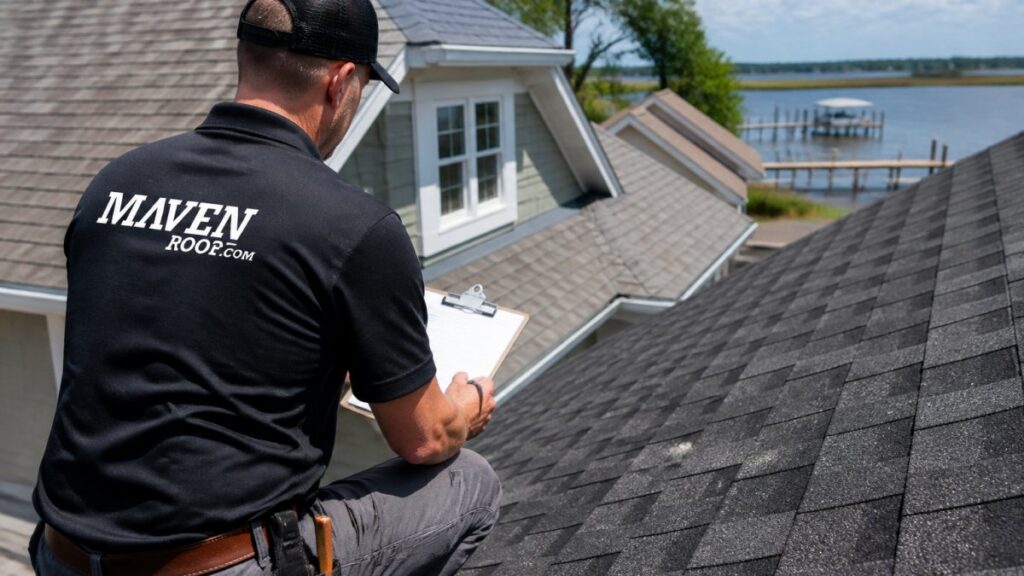
Last Updated: October 23, 2026
Quick Summary
The asphalt shingles lifespan typically ranges from 15 to 25 years, depending on shingle type, climate, installation quality, and maintenance. Three-tab shingles generally last 15 to 20 years, while architectural shingles often reach 20 to 25 years or longer.
- Architectural shingles outlast three-tab shingles by 5 to 10 years due to their weight, thickness, and better wind resistance.
- Manufacturer ratings like 30-year or 50-year shingles refer to warranty terms, not actual lifespan in the field.
- Coastal areas like Eastern North Carolina experience faster shingle aging from salt spray, UV exposure, and storm damage.
- Poor ventilation, inadequate flashing, and neglected maintenance can cut years off your roof’s service life.
- Budget for roof replacement around year 20 to 25 for architectural shingles and year 15 to 20 for three-tab shingles.
Table of Contents
- Average Lifespan of Asphalt Shingles: The Real Timeline
- How Long Do Architectural Shingles Last Compared to Three-Tab
- Key Factors That Affect Asphalt Roof Longevity
- Signs Asphalt Shingles Need Replacing
- Roof Inspection After a Storm: What to Look For
- Asphalt Shingle Roof Repair or Replacement: How to Decide
- Warranty vs. Real-World Service Life
- Frequently Asked Questions
Average Lifespan of Asphalt Shingles: The Real Timeline
Understanding the asphalt shingles lifespan is key, it typically ranges from 15 to 25 years, though many homeowners expect them to last longer. At Maven Roofing, we’ve inspected thousands of roofs across Eastern North Carolina and found that the actual service life depends heavily on shingle type, local climate, installation quality, and maintenance. Understanding what you’re really getting when you buy asphalt shingles helps you plan for replacement and avoid costly surprises down the road.
Three-Tab vs. Architectural Shingles
Three-tab shingles are the basic, budget-friendly option. They typically last 15 to 20 years. These shingles are thinner and lighter, with a simple flat appearance.
Architectural shingles (also called laminated or dimensional shingles) are thicker and more durable. They often last 20 to 25 years or longer.
The difference is real. Architectural shingles hold up better to coastal weather, salt spray, and temperature swings common in our region.
What Rated Lifespan Actually Means
Shingle manufacturers print ratings like “30-year shingles” or “50-year shingles” on the packaging. This number does NOT mean your roof will last that long.
Here’s what matters: a “30-year rating” usually refers to the manufacturer’s warranty period, not the actual lifespan.
The gap between rated lifespan and real-world performance exists because manufacturers test shingles in controlled labs. Your roof faces constant sun, wind, rain, salt air, and temperature swings.
How Long Do Architectural Shingles Last Compared to Three-Tab
Architectural shingles typically outlast three-tab shingles by 5 to 10 years. A three-tab roof might need replacement at 18 years, while an architectural roof on the same house could last 25 to 28 years.
The reasons are straightforward:
- Weight and thickness: Architectural shingles weigh more and have multiple layers. This density protects the base material from UV rays and weather penetration.
- Better wind resistance: The interlocking design and heavier construction help architectural shingles stay in place during storms. Three-tab shingles lift and tear more easily in high winds.
- Granule retention: Architectural shingles hold their protective granule coating longer, which slows UV degradation.
In Eastern North Carolina, where hurricanes and coastal storms are common, architectural shingles make sense for most homeowners. The extra years of protection often justify the upfront investment. Learn more about how long different roofing materials last to compare your options.
Architectural shingles typically outlast three-tab shingles by several years due to their construction and durability features.
| Shingle Type | Typical Lifespan | Key Advantage |
|---|---|---|
| Three-Tab | 15 to 20 years | Budget-friendly upfront cost |
| Architectural | 20 to 25 years or longer | Better wind resistance and granule retention |
Key Factors That Affect Asphalt Roof Longevity
Several factors work together to determine how long your asphalt shingles actually last. Understanding these helps you protect your investment.
Climate and Weather Exposure
Your roof’s location matters enormously. Learn how Eastern NC’s specific climate impacts asphalt shingle durability. Coastal areas face salt spray, high humidity, and intense UV exposure.
Extreme heat accelerates granule loss and makes shingles brittle. Frequent freeze-thaw cycles in colder regions crack and lift shingles.
Roofs facing south get more sun exposure and age faster than north-facing roofs on the same house.
Installation Quality and Roof Ventilation
Poor installation cuts years off your roof’s life. Shingles nailed too high or too low won’t seal properly. Misaligned shingles allow water underneath.
Ventilation is equally critical. A poorly ventilated attic traps heat and moisture.
When we inspect roofs, we always check ventilation and flashing. These details separate roofs that last 20+ years from those that fail at 12 years.
Maintenance and Regular Care
Neglected roofs fail faster. Debris, moss, and algae trap moisture against shingles. Branches rubbing shingles wear through the protective granule layer. Clogged gutters cause water to back up under shingles.
Regular maintenance includes:
- Clearing gutters and downspouts twice yearly
- Removing debris and branches from the roof
- Addressing moss and algae growth early
Roof rejuvenation services can extend the life of aging shingles by removing dirt, moss, and algae that accelerate wear. Many homeowners in our area find this approach delays replacement.
Signs Asphalt Shingles Need Replacing
Most roofing articles give you a list of symptoms. What they rarely give you is a way to tell whether a symptom means “fix this one thing” or “this roof is finished.” That distinction is what actually protects your home and your budget. Below are the warning signs, what each one tells you about the shingle’s condition, and how to judge whether you are looking at an isolated problem or the end of the roof’s useful life.
Book Your Roof Inspection Online →
The Warning Signs and What They Mean
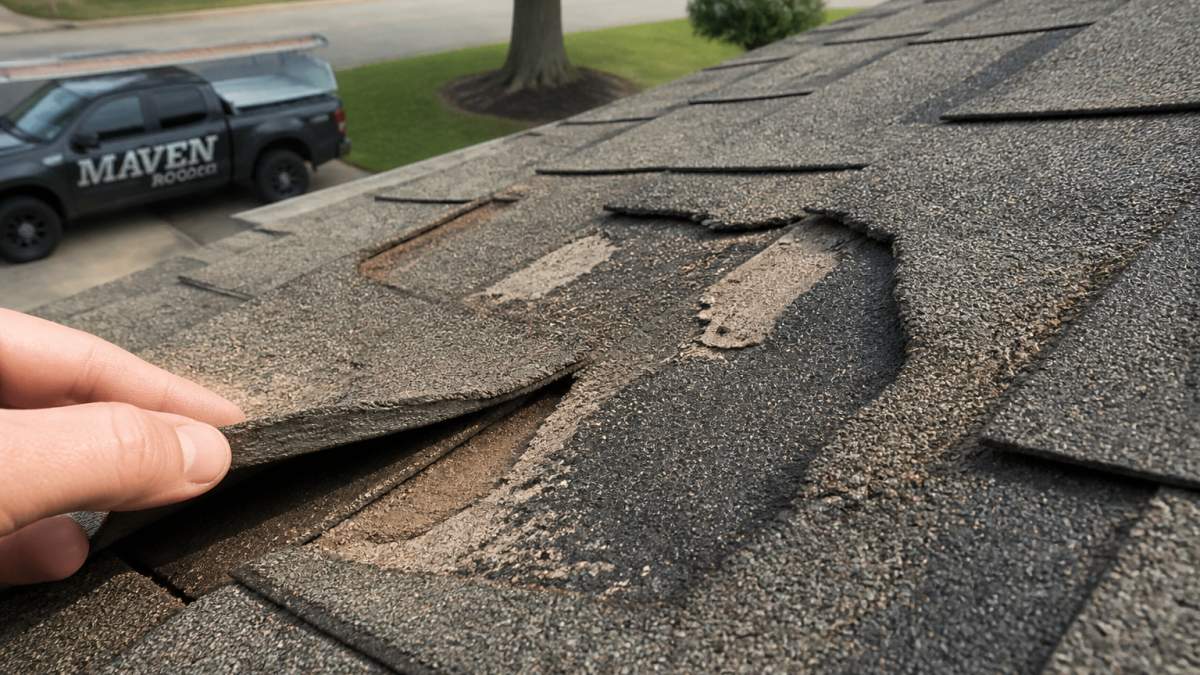
- Granule loss: Bald patches where the protective granule coating has worn away, or granules collecting in gutters and at downspout outlets. Granules are the shingle’s sunscreen. Heavy, widespread loss means the asphalt underneath is exposed and aging fast. A little loss on a new roof is normal; widespread loss on an older roof is a strong signal.
- Curling or cupping: Edges that curl upward or centers that cup downward. This exposes the underside and lets water in. A few curled shingles near a valley or chimney may be a localized repair; curling across multiple slopes usually means the shingle mat is drying out throughout.
- Cracking or splitting: Visible cracks across shingles or along seams. Cracks widen with temperature swings and are a sign of a brittle, aged mat.
How to Tell an Isolated Problem from a Failing Roof
The key question is not “is there damage?” but “how much of the roof shows it?” A practical way to judge:
- One area, one cause: Damage confined to a small area, such as around a chimney, a vent, or a single valley, and traceable to one cause (a failed flashing, a lifted shingle) is usually a repair.
- Multiple slopes, multiple symptoms: When you see granule loss, curling, and missing shingles across more than one roof plane, the shingles are aging as a system. Patching one spot just moves the problem.
- Age plus condition: A 12-year-old roof with one damaged area is a repair candidate. A 22-year-old roof with the same damage is usually a replacement candidate, because the rest of the roof is close behind.
A Simple Self-Check You Can Do from the Ground
You do not need to climb on the roof. From the ground or a ladder at the eaves, look for:
- Shingle tabs that are not lying flat or that stand up at the edges.
- Dark patches or streaks that suggest granule loss or algae.
- Granules collecting in gutters or at the base of downspouts.
- Sagging along the roofline or at the ridge.
- Lifted or damaged flashing around chimneys and vents.
- Stains on ceilings or walls inside the home after rain.
If you see several of these together, the roof warrants a professional look. If you see one, it still may be worth a quick check, because small issues are cheaper to fix now.
When to Call a Professional
Some conditions are safe to monitor; others should be looked at promptly. Call for an inspection if you notice any of the following:
- Active leaks or water stains inside the home
- Sagging or a spongy roof deck
- Missing shingles after a storm
A professional inspection can confirm whether you are looking at a repair, a maintenance item, or a roof that has reached the end of its useful life. Book a free roof inspection and we will give you a straight assessment of your roof’s condition and remaining life, with no pressure to replace anything that does not need replacing.
Roof Inspection After a Storm: What to Look For
After heavy wind, hail, or a hurricane, inspect your roof for damage. You don’t need to climb on it, look from the ground or a ladder at the eaves.
Check for:
- Missing or lifted shingles: Look for gaps or shingles that stand up at the edges.
- Dents or impact marks: Hail leaves small indentations. Multiple dents mean hail damage.
- Exposed nails or fasteners: If nails are visible, the shingles have lifted.
Storm damage often qualifies for insurance claims. Document everything with photos and note the date and weather event. If you suspect damage, call for a free roof inspection before making any decisions.
Asphalt Shingle Roof Repair or Replacement: How to Decide
The choice between repair and replacement depends on age, extent of damage, and cost.
Repair makes sense if:
- Your roof is under 15 years old
- Damage is localized (a few shingles, one flashing area, or a small leak)
- The cost of repair is less than 30% of replacement cost
- The rest of the roof is in good condition
Replacement is the better choice if:
- Your roof is 20+ years old
- Damage is widespread across multiple areas
- Repairs would be temporary fixes on a failing roof
- The roof shows signs of multiple problems (leaks, granule loss, curling shingles)
Get guidance on whether your specific situation calls for repair or replacement so you can make the right call for your home.
A roof nearing the end of its life that suffers storm damage often tips the scales toward replacement. Repairing an old roof extends the problem temporarily but doesn’t solve the underlying wear.
Warranty vs. Real-World Service Life
Manufacturer warranties and real-world performance are two different things. Understanding the difference protects you.
A typical asphalt shingle warranty covers:
- Defects in materials and workmanship for 20 to 30 years
- Granule loss beyond normal wear
- Buckling or curling from manufacturing defects
What warranties do NOT cover:
- Normal wear from weather exposure
- Damage from poor installation or ventilation
- Damage from lack of maintenance
- Wind or hail damage (unless you have a specific rider)
Most roofs fail from weather exposure and aging, not manufacturing defects. So a 30-year warranty doesn’t mean your roof will last 30 years.
Real-world service life is what matters for your planning.
The average lifespan of asphalt shingles in Eastern North Carolina ranges from 15 to 25 years depending on shingle type and conditions.
Frequently Asked Questions
How long do asphalt shingles typically last?
Most asphalt shingles last between 15 and 30 years, depending on shingle type and local conditions. Three-tab shingles generally last 15-20 years, while architectural (laminated) shingles often reach 20-30 years. Coastal properties and areas with extreme weather may see shorter lifespans due to UV exposure, salt spray, and temperature fluctuations. A professional roof inspection can assess your roof’s remaining useful life.
What factors affect how long an asphalt shingle roof lasts?
Installation quality, attic ventilation, climate, weather exposure, and maintenance all play major roles. Poor ventilation traps heat and moisture, accelerating deterioration. Regular inspections and cleaning remove debris and prevent moss or algae buildup. Hail, wind, and salt spray in coastal areas reduce lifespan significantly. A roof installed correctly by experienced professionals will outperform one with poor workmanship, even with the same shingles.
Should I repair or replace my asphalt shingle roof?
If your roof is under 15 years old and damage is isolated (a few missing shingles, minor leaks), repair is usually the right choice. Once your roof reaches 20+ years or shows widespread wear, curling, granule loss, multiple leaks, replacement becomes more cost-effective. A free roof inspection can help determine whether your roof has enough remaining useful life to justify repair or if replacement is the better long-term investment.
How often should I inspect my asphalt shingle roof?
Inspect your roof at least twice yearly: spring and fall. After storms with high winds or hail, inspect immediately for damage. Look for missing shingles, granule loss, flashing issues, and signs of leaks inside your attic. In coastal areas with salt spray and intense UV exposure, more frequent inspections help catch deterioration early. A professional roof inspection after major weather events protects your insurance coverage and identifies problems before they worsen.
