

Maven Resource Blog
How Long Does a Roof Last in NC? 2026 Homeowner Guide
Roof last in nc: Discover how long a roof lasts in NC, from asphalt shingles to metal. Learn signs you need a new roof and maintenance tips. Book a free.
Book a free roof inspection
Table of Contents
- How Long Does a Roof Last in NC? Lifespan by Material
- How Coastal Climate and Humidity Shorten Roof Life
- Signs You Need a New Roof: What Eastern NC Homeowners Should Watch For
- When to Repair vs Replace a Roof
- Roof Maintenance Tips for Humid Climates
- How Installation Quality and Ventilation Affect Roof Longevity
- Warranty and Insurance Implications of an Aging Roof
- Frequently Asked Questions
Last Updated: September 23, 2026
How Long Does a Roof Last in NC? Lifespan by Material
The honest answer to how long does a roof last in NC depends on what sits over your head. Asphalt shingles usually run 15 to 25 years here. Metal, slate, and tile push far past that.
This guide from Maven Roofing breaks down real-world lifespans for Eastern North Carolina homes. We’ve worked coastal roofs since 2015, and the pattern is clear: material sets the ceiling, but climate and installation decide how close you get to it.
Below, we’ll show you what each material actually delivers, the warning signs that matter, and how to stretch the years you have left.
Asphalt Shingles: 3-Tab vs. Architectural
Asphalt shingles are the most common roof in the region, and the two types age very differently.
3-tab shingles are the budget option. They’re thin, flat, and typically last 15 to 20 years in this climate. Architectural shingles are thicker and heavier. Most homeowners get 20 to 30 years from them.
The gap comes down to construction. Architectural shingles carry more asphalt and a heavier mat, so they resist wind uplift and UV exposure better. On an exposed coastal lot, that difference shows up fast.
A common mistake is judging shingles by the warranty alone. A 30-year label means little if the attic cooks at 140 degrees every August.
Metal Roofing, Slate, and Tile
Metal roofing is the durability leader for coastal homes. Standing seam metal routinely lasts 40 to 70 years, and it sheds salt spray and rain with ease.
Slate and tile can exceed 50 years, sometimes reaching a century. Both handle UV exposure and thermal expansion well. The catch is weight: many homes need structural reinforcement before installation.
Here’s the short version:
| Material | Typical Lifespan | Best For | Main Weakness |
|---|---|---|---|
| 3-tab shingles | 15-20 years | Tight budgets | Wind and granule loss |
| Architectural shingles | 20-30 years | Most homes | Heat and moisture |
| Metal roofing | 40-70 years | Coastal exposure | Higher upfront cost |
| Slate and tile | 50+ years | Long-term owners | Heavy weight |
For most Eastern NC homeowners, architectural shingles hit the best balance of cost and service life. Coastal property owners who plan to stay put should look hard at metal.
How Coastal Climate and Humidity Shorten Roof Life
Humidity is the quiet thief. The damp air along the coast works on a roof every single day, not just during storms. But the state’s climate is not one thing, a roof near the ocean and a roof in the mountains face two different enemies, and they fail on different timelines.
Coastal Exposure: Salt, Humidity, and Wind-Driven Rain
Salt spray is abrasive and corrosive. It attacks the metal first, flashing, fasteners, drip edge, and any exposed nail heads. Once those corrode, water finds the seams. Humidity keeps underlayment and decking damp for longer after every rain, so organic growth gets a foothold and never fully dries out.
Wind-driven rain is the other coastal factor. On an exposed lot, rain is pushed sideways and upward into places gravity-fed water never reaches, under ridge caps, behind step flashing, around vent boots.
Mountain and Piedmont Exposure: Freeze-Thaw and Ice Damming
Inland and higher-elevation areas, the enemy is temperature swing. Freeze-thaw cycles are the sneaky one. Water seeps into small cracks, freezes, expands, and pries them wider. Repeat that a few hundred times across a winter and you have real damage, cracked sealant, lifted shingle tabs, and opened seams.
What This Means for Your Roof
The combination is what shortens a roof’s life, and the mix changes by location:
| Setting | Dominant Stressors | Typical Effect on Lifespan |
|---|---|---|
| Coastal, exposed | Salt spray, humidity, wind-driven rain | Shortens lifespan most; flashing and fasteners fail first |
| Coastal, sheltered | Humidity, UV, occasional wind | Moderate shortening; algae and granule loss common |
| Piedmont, inland | UV, thermal expansion, summer heat | Mild shortening; heat and attic temperature drive wear |
| Mountain, higher elevation | Freeze-thaw, ice damming, snow load | Moderate to significant; ice damming is the top risk |
Skipping a roof inspection after a freeze-thaw winter is a costly gamble. Small cracks that look harmless in spring become leaks by the next heavy rain, and by then the decking is often wet.
Signs You Need a New Roof: What Eastern NC Homeowners Should Watch For
Knowing the signs you need a new roof saves you from emergency calls during hurricane season. Most failing roofs announce themselves months in advance.
Book Your Free Roof Inspection Online →
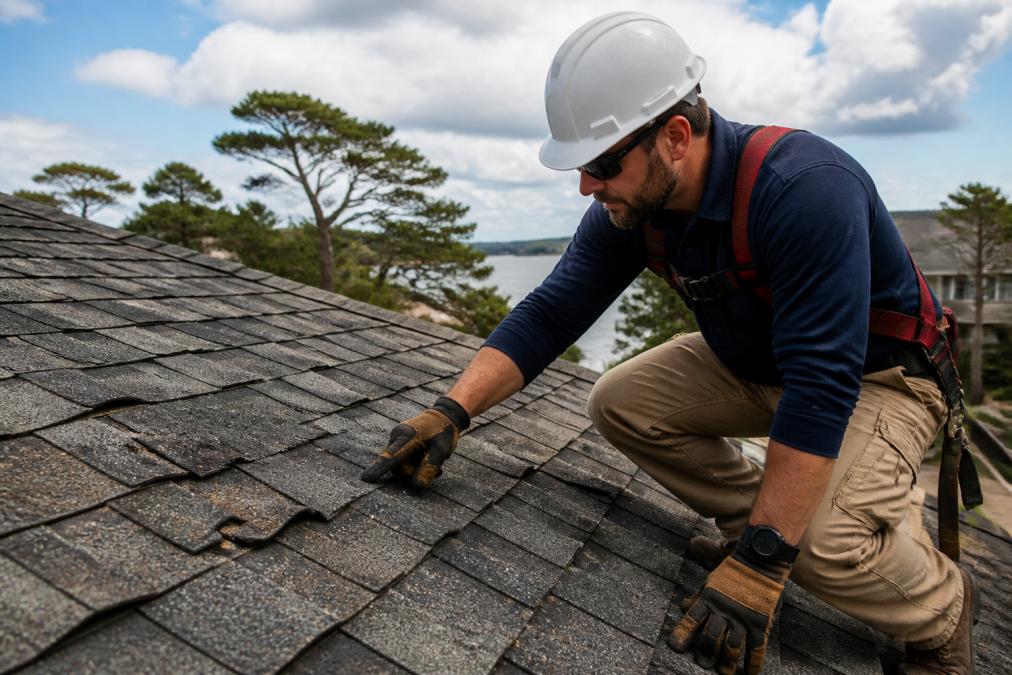
Watch for these signals:
- Curling shingles at the edges or corners
- Granule loss collecting in gutters and at downspouts
- Dark streaks from algae and moss growth
- Cracked or rusted flashing around chimneys and vents
- Water stains on attic rafters or ceiling
- Daylight showing through roof boards
When to Repair vs Replace a Roof
The repair-or-replace call comes down to three factors: age, damage spread, and cost balance.
Here’s a simple way to decide:
| Situation | Better Choice |
|---|---|
| Under 15 years, one damaged area | Repair |
| 15-20 years, scattered wear | Get an inspection first |
| Over 20 years, multiple problem areas | Replace |
| Storm damage with intact decking | Repair |
| Repeated leaks after prior fixes | Replace |
Roof Maintenance Tips for Humid Climates
Good roof maintenance tips for humid climates come down to three habits: keep it clean, keep it dry, and catch problems early.
Start with these steps:
- Clear leaves and debris from valleys and gutters each season
- Trim tree branches back at least 3 feet from the roof
- Rinse off moss and algae before they root into shingles
- Check flashing and sealant every spring
- Schedule a professional roof inspection once a year
- Watch attic ventilation and insulation levels
Roof rejuvenation can strip away moss, algae, and built-up grime and add years to a roof that’s still structurally sound. It’s a smart middle path for homeowners who aren’t ready for a full roof replacement.
How Installation Quality and Ventilation Affect Roof Longevity
Installation quality matters as much as material choice. A premium shingle installed poorly will fail long before a budget shingle installed correctly.
The details that matter most:
- Proper underlayment and ice-and-water shield placement
- Correct nail depth and pattern
- Sealed flashing at every penetration
- Balanced intake and exhaust ventilation
- Adequate attic insulation to control heat
Warranty and Insurance Implications of an Aging Roof
An aging roof affects two things homeowners rarely think about until it’s too late: your roof warranty and your insurance coverage. Both are decided long before you file a claim, and both are driven by the same thing, documentation.
How Manufacturer Warranties Actually Work
Most manufacturer warranties have two layers. The first covers material defects, a shingle that fails because of a manufacturing problem. The second, often called a workmanship or installation warranty, covers failures caused by how the roof was put on. The material layer is usually prorated, meaning the payout declines as the roof ages, and it typically requires proof of proper installation and routine maintenance.
How Insurers Assess an Aging Roof
Insurance is the bigger worry, and the mechanism is straightforward. Carriers price risk, and an old roof is a higher risk of a water-damage claim. Many carriers require a roof under a certain age or in sound condition to keep coverage. Once a roof passes roughly the 20-year mark, some companies send a notice, raise the deductible, move the roof to actual cash value instead of replacement cost, or refuse renewal outright.
What You Can Do About It
You have more control here than most homeowners realize:
- Get a documented inspection before the insurer asks. A written report with photos showing your roof’s condition is far stronger than a verbal assurance.
- Keep a maintenance log. Dates, what was done, who did it. This supports both warranty and insurance positions.
- Ask your agent how your policy treats the roof. Replacement cost versus actual cash value, and any age threshold, should be a known quantity, not a surprise.
- Address small issues early. A repaired flashing detail is a maintenance record; a leak that rots the deck is a claim.
- Understand your deductible structure. Some policies carry a separate, higher wind or hurricane deductible that applies to roof claims.
Your roof’s age affects both your warranty and your insurance. A yearly inspection creates a paper trail that protects your coverage and catches small issues before they become claims.
At Maven Roofing, our free inspections give you a clear picture of where your roof stands and what your options are.
Frequently Asked Questions
What are the most common signs that a roof has reached the end of its life?
Watch for curling shingles, widespread granule loss in gutters, cracked or missing flashing, and daylight showing through attic boards. In Eastern NC’s humid climate, moss and algae streaks also signal trapped moisture. If your roof is over 20 years old and you notice multiple issues at once, schedule a professional roof inspection before small problems become structural damage.
How does coastal weather impact the longevity of asphalt shingles?
Salt spray, high winds, and intense UV exposure accelerate wear on asphalt shingles along the coast. Freeze-thaw cycles and thermal expansion stress shingles seasonally. A roof that might last 25 years inland often reaches the end of its service life closer to 15 or 18 years near the coast. Regular maintenance and timely repairs help offset this climate-specific wear.
Does roof ventilation affect how long a roof lasts?
Yes. Poor attic ventilation traps heat and moisture, which degrades underlayment and causes shingles to age faster from the inside out. Proper intake and exhaust ventilation keeps the attic closer to outdoor temperatures, reduces moisture damage, and supports structural integrity. If your attic feels excessively hot in summer, have a roofer check whether your ventilation meets current standards.
How can regular maintenance extend the life of my roof?
Clearing debris, trimming overhanging branches, and scheduling annual roof inspections prevent small issues from becoming major problems. In humid climates, treating moss and algae early protects shingle surfaces. Addressing flashing and sealant failures promptly also helps. Homeowner maintenance combined with professional checkups can add years to your roof’s service life and protect your warranty.