

Maven Resource Blog
Roofing Contractor Hidden Fee Warning: What to Check
Spot roofing contractor hidden fees before you sign. Learn contract red flags, change order rules, and how to fight back when a roofer raises the price.
Book a free roof inspection
Table of Contents
- Why Hidden Fees Show Up After You Sign
- How Low Bids Turn Into High Invoices
- Roofing Contract Red Flags to Catch Before You Sign
- Questions to Ask Roofing Contractors Before Hiring
- The Roofing Project Change Order Process, Explained
- What to Do If a Roofing Contractor Increases the Price
- When Insurance Claims Get Manipulated
- Conclusion
- Frequently Asked Questions
Last Updated: October 2, 2026
Why Hidden Fees Show Up After You Sign
A roofing contractor hidden fee warning matters most in the weeks after signing. Most surprise charges appear once work has started and the homeowner feels locked in, and that timing is not an accident.
How Low Bids Turn Into High Invoices
The lowest bid often becomes the most expensive job. Contractors who underbid know they cannot finish at that number and plan to make it up later.
Here is how the math usually works:
- Missing line items. The bid skips tear-off, disposal, or permit fees, then bills them as extras.
- Vague scope of work. Loose wording lets the contractor call normal work “additional.”
- Verbal promises. Nothing said at the kitchen table makes it into the written agreement.
- Pressure to start fast. Urgency stops you from comparing the bid to others.
Roofing Contract Red Flags to Catch Before You Sign
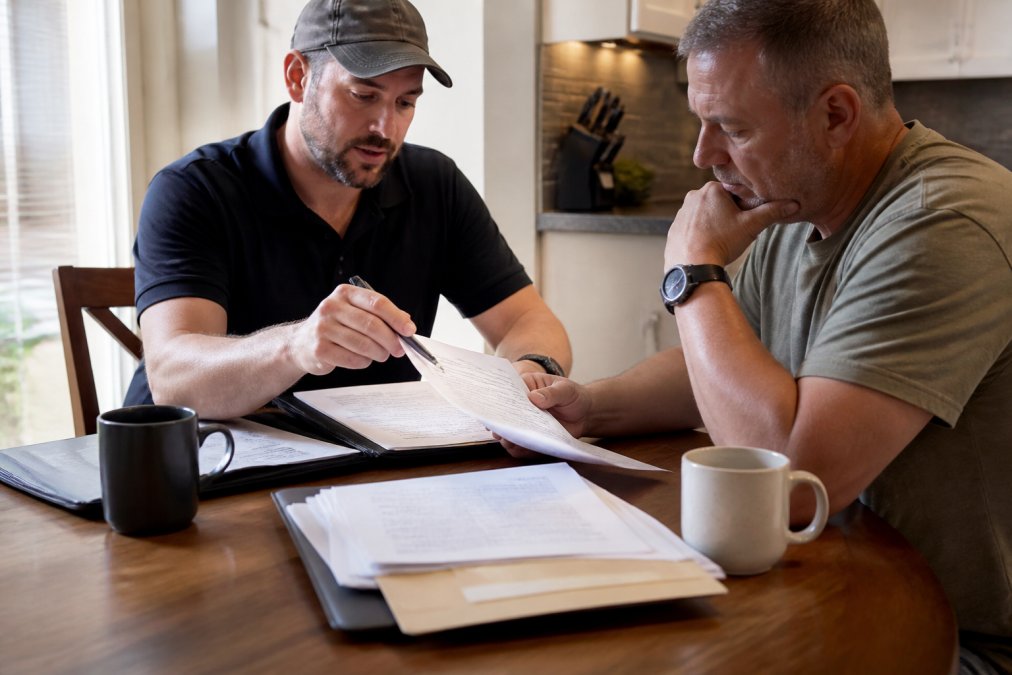
The clearest roofing contract red flags show up in the paperwork, not on the roof. Read the contract twice before signing.
Watch for these:
- No written scope. If the work is not spelled out, it is not protected.
- Large upfront payment demands. A big project deposit before any work starts puts your money at risk.
- No license or insurance numbers. You cannot check credentials that are not listed.
- Cash-only requests. No paper trail means no recourse.
- Pressure to sign today. High-pressure sales tactics are a warning, not a courtesy.
Vague Scope of Work and Missing Line Items
A vague scope is the most common way hidden fees hide in plain sight. When the contract does not name materials, quantities, or labor, the contractor can charge for anything.
Ask for a written scope of work that includes:
- Materials by brand and type
- Square footage and layers to remove
- Permit requirements and who pulls them
- Project timeline and cleanup
- Workmanship warranty terms
Upfront Payment Demands and Verbal Promises
Large upfront payment demands are a red flag, especially paired with verbal agreements. A handshake is not a contract.
- A modest project deposit at signing
- A payment when materials are delivered
- A payment at a set milestone
- The final invoice only after your inspection
Questions to Ask Roofing Contractors Before Hiring
The right questions to ask roofing contractors before hiring expose hidden fees before they happen. Ask in person and write down the answers.
- Is your license active, and what is the number?
- Can I see proof of liability insurance?
- Will you use subcontractors, and are they insured?
- What is excluded from this bid?
- How do you handle change orders?
- What does the workmanship warranty cover?
- Who pulls the permit?
Ask for the license and insurance numbers, then check them yourself through your state’s licensing board. A real contractor expects this and will hand them over without hesitation.
The Roofing Project Change Order Process, Explained
The roofing project change order process is where most price disputes are won or lost, the most exploited loophole in residential roofing contracts. A change order is a written amendment that adds, removes, or redefines work after the original agreement is signed. Used honestly, it protects both sides. Used as a weapon, it becomes legal cover for a hidden fee.
What a Fair Change Order Actually Contains
A change order you can trust has five elements; missing any one is your signal to stop:
- A specific description of the added work. “Replace 4 sheets of 7/16-inch OSB decking on the north slope”, not “decking repairs as needed.”
- A stated reason tied to something you can verify. Photos of the damaged area, a code citation, or an inspection note. Ask to see the deck yourself before signing.
- Line-item material and labor charges. The same breakdown you should have received in the original bid.
- A revised completion timeline. Added work moves the finish date. If the date does not change, ask why.
- Your signature and date, plus the contractor’s. Verbal change orders are unenforceable in most disputes.
The Clause to Read Before You Sign the Original Contract
Look for language billing change orders at the contractor’s “standard rates,” “prevailing rates,” or “time and materials.” Any of those means the price is set after you are committed. Ask the contractor to attach a written rate schedule to the original contract, per-sheet decking, per-square tear-off, disposal, so any change order is priced against a number you already agreed to.
Never sign a blank or open-ended change order, and never sign one on a phone screen in your driveway while the crew waits. Ask for it in writing, take it inside, and read it against the original scope. A legitimate contractor will not pressure you on a change order, they will expect you to review it.
Photograph the deck, the underlayment, and any damaged area before the crew covers it. If a change order appears later, you have your own record of what was actually there.
When a Change Order Is Really a Hidden Fee
Three patterns separate a real change order from a repackaged bid item:
- Work that was always in scope. If the original contract said “remove and replace damaged decking” and the change order bills decking replacement, that is double-billing, not a change.
- A change order issued after the work is done. Legitimate change orders are signed before the added work begins. One handed to you at final invoice is a demand, not an amendment.
- A pattern of small change orders. One is normal. Five on a single-family roof suggests the original bid was deliberately low.
What to Do If a Roofing Contractor Increases the Price
If a roofing contractor increases the price after signing, stop and check the contract before paying anything. A price increase not tied to a signed change order is generally not enforceable, and most homeowners have more leverage than they realize.
Step 1: Freeze the Payment
Pay only what the written agreement requires, on the schedule it sets. Do not pay the new amount “under protest” to get the crew off your roof, in most disputes, a payment is treated as acceptance of the charge unless you documented your objection in writing before or at the time of payment.
Book Your Free Roof Inspection Online →
Step 2: Build the Paper Trail
Before you call anyone, assemble the file:
- The original signed contract and every addendum
- The original itemized estimate
- Every change order, signed or unsigned
- All texts, emails, and voicemails about the price
- Photos of the work in progress
- Your payment records, canceled checks, card statements, receipts
This file is what every later step depends on. A dispute with no paper trail is a he-said-she-said. A dispute with a clean file usually resolves at the demand-letter stage.
Step 3: Send a Written Demand Letter
A demand letter is not a lawsuit. It is a dated, written statement of your position that creates a record and often ends the dispute on its own. Keep it short and factual:
- State the contract date and the agreed scope.
- State the amount billed versus the amount agreed.
- State that the increase was not authorized by a signed change order.
- Request an itemized invoice for the disputed charges.
- Give a deadline to respond, ten business days is common.
- Send it by certified mail with return receipt, and keep a copy.
Step 4: File Complaints With the Right Regulators
Where you file depends on what the contractor did:
- State licensing board. If the contractor holds a state roofing license, the licensing board can investigate and discipline. This is often the fastest lever, because a license is the contractor’s livelihood.
- State consumer protection office or attorney general. Most states have a consumer complaint process for home improvement contracts. Some states have specific home improvement contractor statutes with their own remedies.
- Local building department. If permits were pulled improperly or not at all, the building department has jurisdiction.
- Better Business Bureau. Not a regulator, but a public complaint that contractors often respond to quickly.
File with more than one. Regulators do not coordinate, and a contractor facing a licensing complaint and a consumer complaint at once tends to settle.
Step 5: Small Claims Court
For disputes under your state’s small claims limit, you can file without a lawyer. The process is designed for exactly this case: a written contract, a documented breach, and a clear dollar figure. Bring your file, demand letter, and certified mail receipt. Many small claims courts also offer mediation before a hearing, which resolves a large share of these cases.
Step 6: Know Your Contract Breach Options
A price increase that violates the signed agreement is a breach of contract. Your remedies generally include:
- Specific performance, a court order requiring the contractor to finish at the agreed price.
- Damages, the difference between what you were charged and what you agreed to pay, plus costs to complete the job if the contractor walked.
- Rescission, canceling the contract and unwinding payments, available in some states within a short window after signing.
A price increase without a signed change order is a dispute, not a bill. Freeze payment, build the file, send a demand letter, and use the licensing board. Most hidden-fee cases end at step three, but only if you start at step one.
When Insurance Claims Get Manipulated
Insurance claim manipulation is the hidden risk most homeowners never see coming. Some contractors inflate damage claims or push unnecessary work to boost the payout, and you carry the risk.
Watch for:
- A contractor who offers to “handle everything” with your insurer
- Pressure to sign over your claim rights
- Claims for damage you cannot see
- Promises to waive your deductible
Never sign over your insurance rights to a contractor. You own the claim. A trusted roofer documents the damage and lets you decide.
Conclusion
Hidden fees thrive on vague contracts and rushed decisions. The fix is simple: get every line item, promise, and change in writing before you sign. That single habit blocks most surprise charges.
Frequently Asked Questions
What are the most common hidden fees in a roofing contract?
The usual suspects are charges for dumpster rental, permit filing, decking replacement, and disposal of old materials that were never listed as separate line items. Others include fuel surcharges, emergency or weekend labor rates, and fees tied to change orders you did not approve in writing. A legitimate itemized estimate names material costs, labor fees, permit requirements, and disposal upfront. If a bid shows one lump sum with no breakdown, ask for the itemization before signing anything.
Is it legal for a roofing contractor to increase the price after signing?
Only when your written agreement allows it and the increase reflects work you approved, typically through a signed change order. A contractor cannot simply raise the price because material costs moved or the job ran long. If the increase is not tied to a documented change in scope of work, you may have grounds to dispute it under your state’s consumer protection laws. Keep every signed document, text, and email, because they become your evidence if the dispute escalates.
How can I tell if a roofing estimate is intentionally low-balled?
Compare the scope of work line by line, not just the bottom number. A low-ball bid often skips tear-off, underlayment, flashing, or permit costs, then adds them later as change orders. Ask each contractor whether the quote includes permits, disposal, and decking repair, and get the answer in writing. If one bid sits far below the others with no explanation, treat it as underbidding until proven otherwise. Bid comparison across at least three itemized estimates is the fastest way to spot it.
How do I verify a roofing contractor’s credentials before hiring?
Start with license verification through your state’s licensing board, then ask for a certificate of liability insurance and workers’ compensation coverage. Confirm the policy is active by calling the insurer directly. Ask whether the crew is in-house or a subcontractor, since that affects who is responsible for workmanship. Request the written workmanship warranty and read what it actually covers. A contractor who hesitates on any of these requests is a red flag worth taking seriously.