

Maven Resource Blog
How to Hire a Veteran-Owned Roofing Contractor
Learn how to find, vet, and hire a veteran-owned roofing contractor. Verify credentials, compare estimates, and protect your investment.
Book a free roof inspection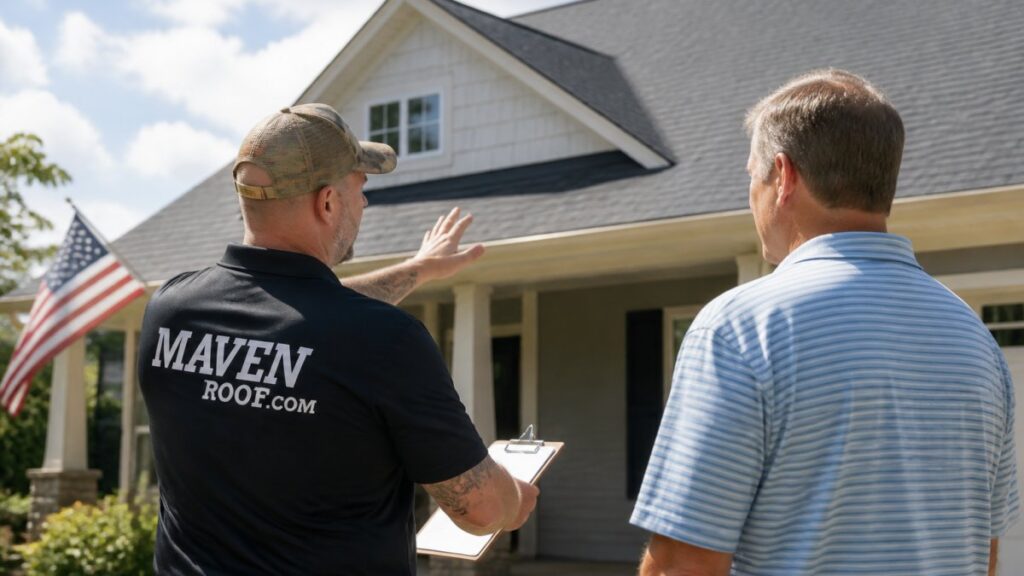
Last Updated: October 23, 2026
Quick Summary
A veteran-owned roofing contractor brings military discipline and accountability to your roof repair or replacement project. Verify their veteran status through official documentation or the VA database, confirm current licensing and insurance, and review their experience with your specific roofing material before signing a contract.
- Request a copy of the contractor’s DD214 or military service verification and check the VA’s Veteran-Owned Small Business database.
- Confirm current state contractor’s license, general liability insurance, workers’ compensation insurance, and bonding through official channels.
- Compare at least two written estimates that specify materials, labor costs, warranty details, timeline, and payment schedule.
- Ask about storm damage documentation and insurance adjuster coordination, especially for coastal properties.
- Check references from at least two recent projects and review the full contract before signing.
Table of Contents
- Why Choose a Veteran-Owned Roofing Contractor
- How to Verify Veteran-Owned Status and Credentials
- Questions to Ask a Roofing Contractor Before Hiring
- How to Compare Roofing Estimates and Bids
- Roofing Contractor Hiring Checklist: What to Review Before You Sign
- What to Do After a Storm: Roof Inspection and Damage Documentation
- Protecting Yourself: Contracts, Warranties, and Insurance Coverage
- Frequently Asked Questions
Why Choose a Veteran-Owned Roofing Contractor
When you’re looking for a veteran-owned roofing contractor, you’re not just hiring someone to fix your roof. You’re working with someone who’s used to taking responsibility, following through on commitments, and handling high-pressure situations with discipline. That mindset matters when your home is on the line.
Veteran business owners bring a different approach to customer service. They understand accountability. They know that cutting corners isn’t an option, whether it’s military protocol or a roofing job that needs to last through coastal weather.
Beyond the values, veteran-owned contractors often have access to specialized certifications, training programs, and networks that support their growth. Many carry comprehensive insurance and maintain bonds that protect homeowners.
Ask about these credentials early, they’re a strong indicator of professionalism and financial stability.
How to Verify Veteran-Owned Status and Credentials
Claiming to be veteran-owned is easy. Proving it requires documentation. Before you hire any contractor, verify their status and credentials through official channels.
Start by asking for proof of veteran status. A legitimate veteran-owned roofing contractor should provide:
- A copy of their DD214 (Certificate of Release or Discharge from Active Duty) or military service verification
- Verification through the VA’s Veteran-Owned Small Business (VOSB) database
- State-level veteran business certification, if applicable
- roofing-specific credentials
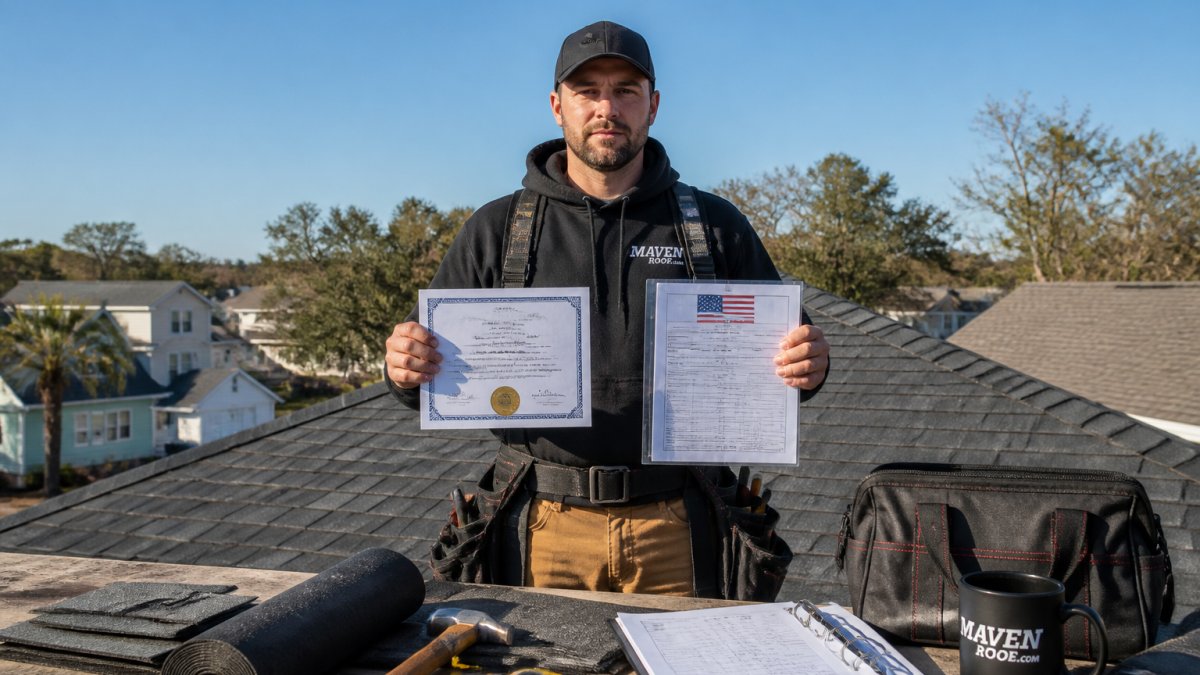
Request these documents before signing any contract. A contractor who hesitates or can’t produce them is a red flag. Legitimate businesses keep this paperwork organized and accessible.
Beyond veteran status, verify their licensing and insurance. Every contractor working in residential roofing should carry:
- Current state contractor’s license (confirm it’s active through your state’s licensing board)
- General liability insurance
- Workers’ compensation insurance (required if they have employees)
- Proof of bonding for your project size
Call the licensing board directly. Don’t rely on the contractor’s word. Many states allow you to check license status online, use it. Ask for proof of insurance and request to be named as an additional insured on their general liability policy during the project.
If a contractor can’t produce licensing, insurance, or bonding documents, walk away. Working with an uninsured or unlicensed contractor puts your home at risk and may void your homeowner’s insurance if damage occurs during the job.
Questions to Ask a Roofing Contractor Before Hiring
The questions you ask reveal whether a contractor has done this work before and whether they understand your specific situation. Don’t settle for vague answers.
Start with experience and scope. Ask:
- How many residential roofing projects have you completed in the last three years?
- How long have you been in business, and are you still operating under the same company name?
- What roofing materials do you specialize in (asphalt shingles, metal, flat roofing)?
- Have you worked on homes with similar age and condition to mine?
Move to the specific job. Ask:
- Will you conduct a free inspection and provide a written estimate before starting work?
- What’s your timeline for completing this project, and what factors could delay it?
- Who will be on my roof, your core team or subcontractors?
- How do you handle weather delays or unexpected damage discovered during the job?
Ask about insurance and damage documentation. This is critical for coastal properties:
- If I have storm damage, will you document it for my insurance claim?
- Have you worked with insurance adjusters before?
- If the insurance company disputes the damage assessment, what’s your process?
Ask about warranties and guarantees. Get specifics:
- What warranty do you offer on labor, and for how long?
- What warranty comes with the roofing materials themselves?
- If a leak develops within that warranty period, how do you handle repairs?
- Are these warranties transferable if I sell my home?
Finally, ask about the contract and payment:
- What does your contract include, and can I review it before hiring you?
- What’s your payment schedule, do you require a deposit before starting?
- Do you accept insurance payments directly, or will I need to handle that?
A contractor who answers these questions clearly and in writing is someone you can trust.
How to Compare Roofing Estimates and Bids
You’ll likely get multiple estimates. Comparing them requires more than just looking at the bottom-line price. Three estimates that look the same on the surface often differ significantly in scope, materials, and risk.
When you receive an estimate, verify it includes:
- Specific roofing material (brand and grade, not just “asphalt shingles”)
- Square footage of the roof being replaced or repaired
- Labor costs and material costs listed separately
- Removal and disposal of old roofing (if applicable)
- Warranty details (labor and materials, duration)
- Timeline and start/completion dates
- Payment schedule and deposit amount
- Permit costs (if required by local code)
Compare apples to apples. If one estimate is significantly lower than others, ask why. Common reasons include:
- Using lower-grade materials (cheaper shingles, thinner underlayment)
- Cutting corners on labor (fewer workers, rushed timeline)
- Skipping steps (inadequate ventilation, improper flashing)
- Incomplete scope (not addressing all damage or repairs)
A roofing contractor who underbids the competition often makes up the margin by cutting corners or changing the scope mid-project. That’s when you hear “we found additional damage” and suddenly the price jumps.
| Factor | What to Check | Red Flag |
|---|---|---|
| Material | Brand, grade, warranty | Generic “shingles” with no specs |
| Labor | Scope clearly defined, timeline realistic | Vague timeline or unclear what’s included |
| Warranty | Both labor and materials, duration specified | “Standard warranty” with no details |
| Payment | Schedule matches project phases | Full payment upfront or no payment schedule |
| Scope | Specific work listed, not “as needed” | Open-ended scope that can change |
Ask each contractor the same questions. This makes it easier to spot inconsistencies. If one contractor says your roof needs complete replacement and another says a repair will work, dig deeper. Request a second opinion or ask the first contractor to explain their assessment in writing.
The lowest estimate isn’t always the best deal. Compare the full scope, materials, warranty, and contractor experience. A mid-range estimate from a reputable, veteran-owned contractor often delivers better long-term value than the cheapest option.
Roofing Contractor Hiring Checklist: What to Review Before You Sign
Before you sign any contract, run through this checklist. It protects you from surprises and ensures you’re working with a professional.
- Verified veteran status through official documentation or VA database
- Confirmed current contractor’s license with state licensing board
- Reviewed proof of general liability insurance ($1M+ coverage)
- Confirmed workers’ compensation insurance is current
- Requested to be named as additional insured on their liability policy
- Received written estimate with specific materials, labor, and warranty details
- Compared at least two estimates from different contractors
- Asked about and received answers to all key questions (experience, timeline, warranty, insurance process)
- Reviewed the contract in full and understand all terms
- Confirmed payment schedule and deposit amount
- Verified the contractor’s experience with your specific roofing material
- Checked references from at least two recent projects
- Confirmed timeline and any weather-related contingencies are in writing
- Reviewed warranty terms (labor and materials) and confirmed they’re transferable
- Asked about the process for handling insurance claims and adjuster coordination
Don’t skip the reference check. Call two or three past customers. Ask them about the quality of work, whether the contractor stayed on schedule, how they handled problems, and whether they’d hire the contractor again.
Book Your Roof Inspection Online →
If anything on this checklist is missing or unclear, ask the contractor to provide it in writing before you sign. A professional contractor won’t hesitate, they expect this level of due diligence.
What to Do After a Storm: Roof Inspection and Damage Documentation
Storm damage can be subtle or obvious. Either way, documentation is critical for insurance claims. Here’s how to handle it.
First, schedule a free roof inspection immediately after severe weather. Don’t wait weeks. Insurance companies expect prompt reporting, and damage can worsen with rain and wind. A professional inspection captures damage while it’s fresh and clear.
During the inspection, the contractor should document:
- Shingle damage (missing, cracked, or curled shingles with photos)
- Flashing damage around chimneys, vents, and valleys
- Gutter damage or separation from the roof line
- Fascia or soffit damage
- Visible leaks or water stains inside the home
- Missing roof penetration seals
Ask the contractor to provide a written inspection report with photos. This report becomes your evidence for the insurance claim. Many contractors, including veteran-owned businesses like Maven Roofing, coordinate with insurance adjusters to ensure damage is properly documented and assessed.
When the adjuster arrives, have the contractor’s inspection report ready. The adjuster will conduct their own assessment, but your documentation supports your claim if there’s a dispute.
Take your own photos immediately after a storm, before any cleanup. Wide shots showing the overall damage plus close-ups of specific problem areas. This timeline matters to insurance companies, photos taken days later can be questioned.
If the insurance company denies coverage or undervalues the damage, your contractor’s detailed inspection report is essential. Some contractors will advocate on your behalf with the adjuster. That’s a service worth paying for, especially for major storm damage.
Protecting Yourself: Contracts, Warranties, and Insurance Coverage
A solid contract protects both you and the contractor. Before signing, make sure it includes:
Scope of work: Specific details about what will be done, materials used, and what’s included or excluded. “Roof replacement” is vague. “Remove existing asphalt shingles, install new GAF Timberline HD shingles in color X, replace damaged plywood, install new flashing around chimney” is clear.
Timeline: Start date, completion date, and any weather-related contingencies. What happens if rain delays the job?
Payment terms: Total cost, deposit amount (typically 10-25%), payment schedule tied to project milestones, and final payment terms.
Warranty: Labor warranty and material warranty (varies by shingle grade).
Insurance and liability: Confirmation that the contractor carries liability insurance.
Change order process: How will unexpected work or scope changes be handled?
Cleanup and site restoration: What’s included?
Don’t skip the fine print.
Regarding warranties: manufacturer warranties on roofing materials are separate from labor warranties.
Transfer warranty provisions matter too. If you sell your home, can the new owner transfer the contractor’s labor warranty?
Hiring a veteran-owned roofing contractor means choosing someone with proven discipline, accountability, and commitment to quality.
Frequently Asked Questions
How can I verify that a roofing contractor is actually veteran-owned?
Ask for proof of military service or a discharge certificate (DD-214), and verify their business registration with your state’s Secretary of State office. Many veteran-owned roofing contractors also carry certifications from veteran business networks. Request references from past clients and check their licensing and insurance records through your state’s contractor licensing board.
What questions should I ask a roofing contractor before hiring them?
Ask about their licensing, insurance coverage, warranty terms, timeline, and whether they’ll handle insurance documentation if you have storm damage. Request details on the roofing materials they recommend, their crew experience, and how they handle unexpected issues. Get everything in writing and ask for a detailed scope of work that describes what’s included and what’s not.
How do I compare roofing estimates from different contractors?
Request detailed written estimates that specify materials, labor costs, timeline, and warranty coverage. Make sure each estimate covers the same scope of work so you’re comparing apples to apples. Look for line-item breakdowns rather than lump-sum quotes. The lowest bid isn’t always the best choice, consider the contractor’s experience, certifications, and references alongside price.
Can a roofing contractor help document roof damage for an insurance claim?
Yes. Many roofing contractors can document storm damage with photos and detailed reports that support your insurance claim. Some work directly with adjusters during inspections. Discuss this service when you contact the contractor, especially if you’re dealing with wind, hail, or hurricane damage. Having professional documentation strengthens your claim and helps ensure you receive fair coverage.
