

Maven Resource Blog
How Eastern NC Homeowners Qualify for Fortified Roof Discounts
Eastern NC homeowners can qualify for fortified roof discounts by meeting certification and inspection steps. Find out what to gather first.
Book a free roof inspection
Last Updated: November 12, 2026
Quick Summary
To qualify for a fortified roof insurance discount, first confirm your insurer offers a wind mitigation or fortified roof credit. Then confirm your roof covering and deck attachment, book a qualified wind mitigation inspection, complete the recommended upgrades, and get the credit confirmed in writing.
- Ask your agent for the specific endorsement or filing language that offers the credit.
- Age alone does not qualify a roof; covering wind rating and deck attachment matter more.
- Ask which inspection form your insurer accepts before booking an evaluator.
- Do upgrades in the order the evaluator recommends to avoid repeating re-inspection.
- Get the credit amount and effective date confirmed in writing after submitting.
Table of Contents
- What a Fortified Roof Is and Why Insurers Care
- FORTIFIED Roof Certification Requirements to Plan For
- Step-by-Step: The 7 Ways to Qualify for a Discount
- North Carolina Roof Mitigation Credits and How to Check Yours
- Roof Insurance Discount Documentation You Will Need
- What Happens If Your Roof Does Not Qualify
- Start Your Fortified Roof Discount Check With a Free Inspection
- Frequently Asked Questions
What a Fortified Roof Is and Why Insurers Care
A FORTIFIED roof is a roof built and upgraded to resist high winds, which is why insurers pay attention to it (FORTIFIED Roof – FORTIFIED). For homeowners in Eastern North Carolina, where storms and coastal weather are part of life, that resistance can matter a great deal.
Some carriers offer a discount for roofs that meet wind-resistance standards. Whether you qualify depends on your roof covering, how the roof deck is attached, and your insurer’s own rules. Check with your carrier before you spend money on upgrades.
FORTIFIED Roof Certification Requirements to Plan For
Before you start, know what a FORTIFIED designation generally involves. The program looks at the roof as a system, not just the shingles on top.
Most homeowners should plan for these areas:
- Roof covering: The shingles or panels must meet the wind-resistance rating your insurer accepts.
- Roof deck attachment: The sheathing needs to be fastened to the framing in a way that holds in high winds.
- Secondary water barrier: A protective layer helps keep water out if the outer covering fails.
- Inspection and documentation: A qualified evaluator checks the work and records what was found.
Requirements can change, so confirm the current standards with the program and your insurer before you commit.
Step-by-Step: The 7 Ways to Qualify for a Discount
Work through these seven steps in order. Each one builds on the last, and skipping ahead can cause a discount request to stall.
- Confirm your insurer actually offers a FORTIFIED or wind mitigation credit. Not every carrier writes one, and some file it under a different name, wind mitigation credit, fortified roof credit, or a coastal construction credit. Ask your agent to point to the specific endorsement or filing language, not just a verbal yes.
- Pull your current policy, declarations page, and renewal date. The credit is applied at renewal or by endorsement, so knowing your effective date tells you when to submit and when to expect the change to show up. If your policy renews in a few weeks, submit now rather than after.
- Confirm your roof covering and deck attachment before you spend anything. This is the step most homeowners skip, and it usually decides the outcome. Age alone does not qualify a roof; the covering’s wind rating and how the sheathing is fastened to the framing matter more.
- Schedule a qualified evaluator and wind mitigation inspection. Ask your insurer which inspection form or report format they accept before you book, so the report you pay for is the one they will read.
- Complete the upgrades the report identifies. Items the report identifies may include re-nailing or reinforcing the roof deck, adding a secondary water barrier, or upgrading the covering to a rated product. Do the work in the order the evaluator recommends so a re-inspection does not have to be repeated.
- Assemble your documentation in one place. Keep the inspection report, invoices, photos of the deck attachment and covering, and your policy declarations together. Missing paperwork is the most common cause of delay.
- Submit and get the credit confirmed in writing. Ask your insurer to confirm the credit amount and effective date in writing before you assume it is in place. A certificate alone does not guarantee a specific discount.
Confirm your roof covering and deck attachment
Start by knowing what your roof is made of and how it is fastened. Check your permits, past invoices, or the original build records if you have them. If you are not sure, a roof inspection can tell you. On older roofs, the deck attachment is often where gaps appear, since sheathing nailed to the minimum code fasteners at the time of construction may not meet wind-resistance standards without re-nailing.
Many homeowners assume their roof qualifies because it is newer. Age alone does not decide it. How the deck is attached and what covering was installed matter more. A common mistake is paying for upgrades before knowing what the inspection will find.
Watch out: a roof covering rated for high wind does not automatically qualify the roof if the deck beneath it was never brought up to the same standard, insurers look at the assembly, not just the top layer.
Book a qualified evaluator and wind mitigation inspection
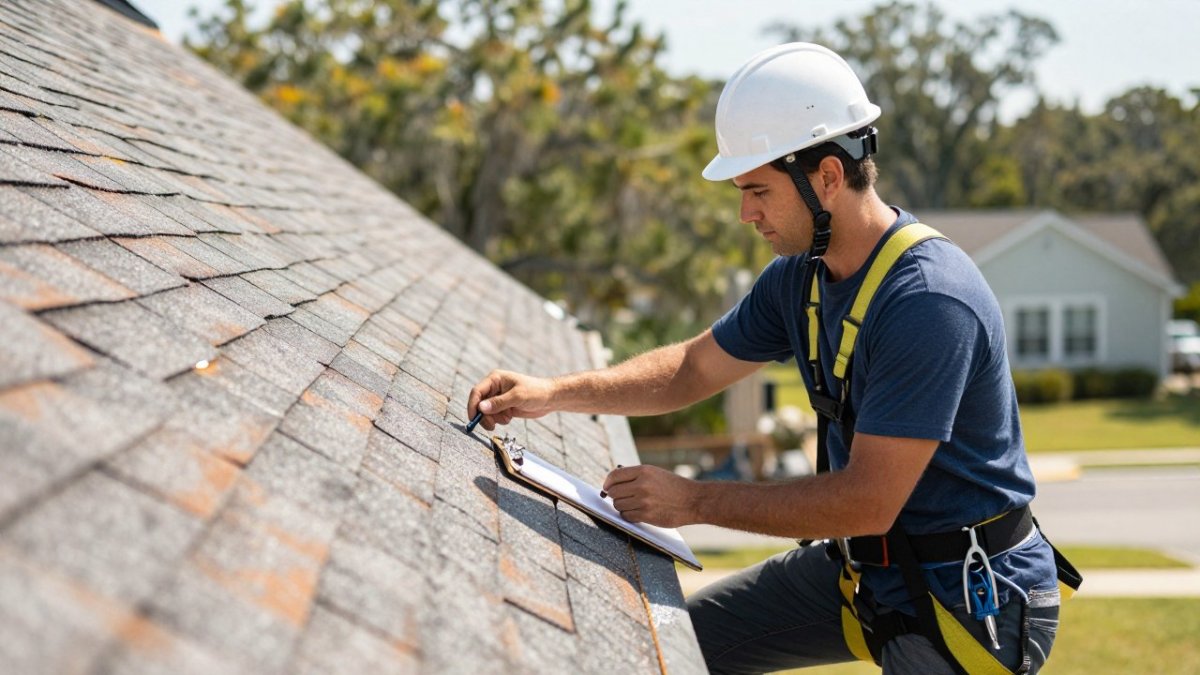
Ask your insurer which inspection forms they accept before you schedule an evaluation. During a wind mitigation inspection, an evaluator typically looks at the roof covering, deck attachment, roof shape, and openings. Ask for a copy of the report, you will need it when you submit your discount request, and you will want it on hand if the roof is later repaired or replaced.
Confirm the credit with your insurer before work begins
Before you commit to upgrades, get the expected credit in writing. Ask your agent three questions: Does my policy include a wind mitigation or FORTIFIED credit? What report do you need to apply it? What effective date will the credit take? Write down the answers and the name of the person you spoke with. If the answer is vague, ask for the policy language that describes the credit. This step is the difference between a discount you can plan around and one you hope shows up.
The seven steps below are listed in the order that keeps a discount request from stalling.
| Step | What to do | Timing |
|---|---|---|
| 1. Confirm the credit | Ask your agent for the specific endorsement or filing language | Before anything else |
| 2. Pull your policy | Check declarations page and renewal date | Submit before renewal |
| 3. Confirm covering and deck | Know the roof covering and how the deck is attached | Before spending money |
| 4. Book an evaluator | Ask which inspection form your insurer accepts | Before booking |
| 5. Complete upgrades | Do work in the order the evaluator recommends | After the report |
| 6. Assemble documents | Keep report, invoices, photos and declarations together | Before submitting |
| 7. Confirm in writing | Get credit amount and effective date in writing | After submitting |
North Carolina Roof Mitigation Credits and How to Check Yours
Homeowners may be able to receive mitigation credits from their insurers. The exact treatment depends on your carrier, your policy, and the inspection results.
To check yours, call your insurance agent and ask three questions:
- Do you offer a mitigation credit for my roof?
- What inspection report do you need?
- How long does the credit take to apply?
Write down the answers and the name of the person you spoke with.
Roof Insurance Discount Documentation You Will Need
Good paperwork speeds up the process, and a complete submission is the single biggest factor in how quickly a credit appears. Keep these items in one folder, either paper or digital:
- Your current policy and declarations page
- The wind mitigation or FORTIFIED inspection report, including the evaluator’s name and report date
- Photos of the roof covering and deck attachment taken during or after the inspection
- Invoices and proof of installation for any upgrades
- Your property address and roof age, if known
- Any prior inspection reports if the roof has been evaluated before
How to submit the package
Carriers commonly accept documentation through their agent, a customer portal, or a claims or underwriting email address. Ask your agent which channel they prefer and whether they want the full package or just the inspection report. Send the package as a single submission with a short cover note listing the property address, policy number, and the credit you are requesting. Keep a copy of what you sent and the date you sent it.
Follow up and confirm the credit
After submission, ask your agent to confirm receipt and the expected effective date. If the credit does not appear on your next declarations page, follow up in writing and reference your submission date. A common pattern is that the report was received but not matched to the policy, which is easy to fix once you point to the submission.
Watch out: do not assume a certificate or a completed inspection automatically triggers the credit, the insurer has to apply it to your policy, and that step is where most delays happen.
When a document is missing or rejected
If your insurer says something is missing, ask exactly which item and in what format. Do not guess or resend the whole package. If the inspection report is rejected because the form is out of date, ask the evaluator to reissue it in the accepted format. If an invoice is questioned, a signed contractor invoice with the roof details and installation date usually resolves it. When storm damage is part of the picture, our team can help you assemble roof-side documentation and coordinate with your adjuster. Clear roof documentation is easier to secure when you confirm the scope, credentials, and paperwork with contractor checks before you sign.
What Happens If Your Roof Does Not Qualify
Not every roof will meet the standards on the first try. If the inspection finds gaps, you still have options. Ask the evaluator which items would need to change, then decide whether the upgrades make sense for your home.
If your insurer denies a discount, ask for the reason in writing. You can request a review, and you may be able to submit an updated inspection. Some repairs may also be covered by insurance, so check what your policy says. Our team can help you understand which fixes are worth making. For more on that process, see how to appeal a denied roof insurance claim step by step.
Start Your Fortified Roof Discount Check With a Free Inspection
A discount check starts with knowing what your roof looks like today. We offer free roof inspections for homeowners across Eastern North Carolina, and we can point out the areas that matter most when reviewing your roof. We also work with insurance adjusters when storm damage is part of the picture.
Book your free roof inspection today and get a clear picture of where your roof stands.
Frequently Asked Questions
What is a FORTIFIED roof?
A FORTIFIED Roof is a construction standard designed to improve a home’s resistance to high winds and severe weather. It addresses the roof covering, the roof deck attachment, and the secondary water barrier. Homes that meet the standard and pass a qualified evaluation can receive a designation certificate that insurers may use when they consider a roof mitigation credit. Eligibility and discount amounts depend on the insurance carrier and policy, so confirm the details with your insurer before starting work.
Does a FORTIFIED roof guarantee an insurance discount?
No. Certification does not guarantee a discount. Each insurance carrier decides whether it offers a credit for FORTIFIED or similar wind mitigation features, and how much that credit is. Some carriers require a specific inspection form, while others accept a designation certificate. Ask your insurer which documents it accepts and whether your policy is eligible before paying for a certification process.
What documentation do insurers need for a FORTIFIED roof discount?
Insurers typically ask for a completed inspection report, a designation certificate if one was issued, proof of installation such as contractor invoices and product information, and your property address. Keep photos and records of any roof upgrades. Some carriers require a wind mitigation inspection form in a specific format. Submit documents through your insurer’s preferred channel and keep copies for your records in case a policy renewal requires them again.
How can I check whether my insurer offers a roof mitigation credit?
Call your insurance agent or carrier and ask whether your policy includes a wind mitigation or roof mitigation credit, and which inspection form or certificate they accept. Request the answer in writing if possible. Ask whether the discount applies at your next renewal, what documentation is required, and whether a roof replacement affects eligibility. Our team can help you understand what your roof may need before you contact your insurer.
