

Maven Resource Blog
Best Breeze Roofing Alternatives: 2026 Comparison Guide
Compare the best Breeze Roofing alternatives for 2026, from roof rejuvenation to coastal roofing materials. Find the right fit and book a free inspection.
Book a free roof inspection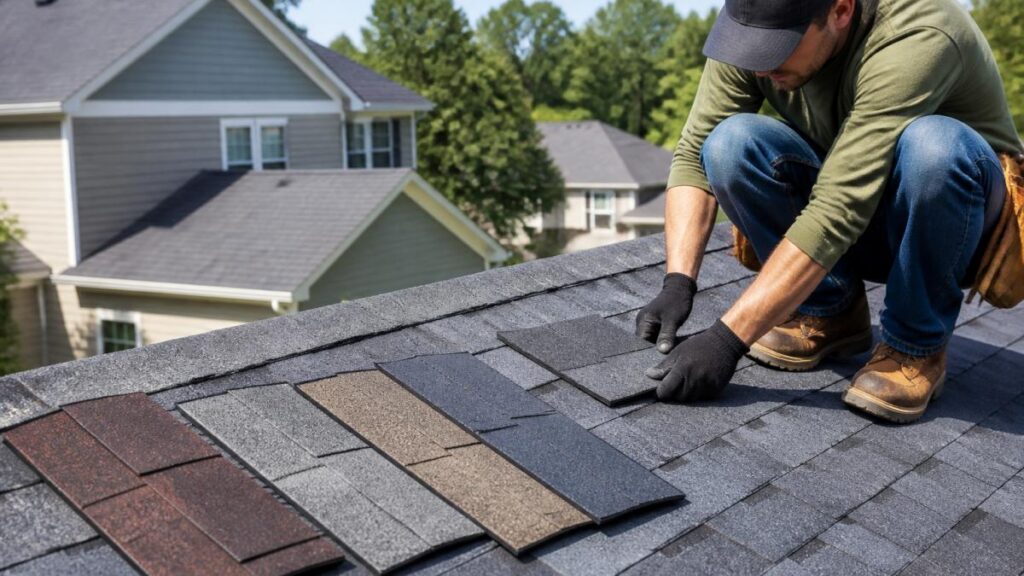
Table of Contents
- Quick Comparison: Top Breeze Roofing Alternatives
- Roof Rejuvenation vs Replacement: Which One Fits Your Roof?
- Best Roofing Materials for Coastal Areas
- How to Choose a Local Roofing Contractor
- DIY vs Professional Installation: What Coastal Homeowners Should Know
- What to Expect From the Best Breeze Roofing Alternatives
- Frequently Asked Questions
Last Updated: September 28, 2026
Quick Comparison: Top Breeze Roofing Alternatives
Homeowners searching for the best Breeze Roofing alternatives usually want the same three things: proven coastal durability, a contractor who answers the phone, and a clear path through the insurance and repair process. This guide from Maven Roofing compares the realistic options side by side, from roof rejuvenation treatments to full material replacements.
Roof rejuvenation is the process of applying a treatment to aging asphalt shingles to restore flexibility and extend service life, rather than tearing the roof off and starting over. It works on shingles that still have structural integrity. It does not work on a roof that is already failing.
Here is how the leading options stack up before we dig into each one.
| Option | Best For | Approach | Key Strength |
|---|---|---|---|
| Maven Roofing | Coastal homes needing inspection, rejuvenation, or replacement | Full-service contractor | Veteran-owned, free inspections, coastal specialization |
| Another option | Extending an aging asphalt shingle roof | Plant-based treatment | Cheaper than a tear-off |
| Another contractor | Comprehensive services | Contractor | Various inspection methods and material options |
| Architectural Asphalt Shingles | Best all-around replacement value | Material standard | Cost and durability balance |
| Standing Seam Metal Roofing | Long-term durability and energy efficiency | Premium material | 40-50 year lifespan |
The real difference between these options comes down to what your roof actually needs, not what a salesperson wants to sell you. That is the part most guides skip.
Roof Rejuvenation vs Replacement: Which One Fits Your Roof?
The honest answer is that rejuvenation is the right call for some roofs and the wrong call for others, and no honest contractor will tell you otherwise. A free inspection settles the question. A pitch from a truck does not.
When Rejuvenation Makes Sense
Rejuvenation makes sense when your shingles are aging but still structurally sound. The granules are mostly intact, the deck underneath is solid, and the roof is not leaking. In those cases, a treatment can restore flexibility and buy you years of service before a tear-off becomes necessary.
Maven Roofing offers roof rejuvenation specifically for this scenario, along with the moss and algae removal that coastal humidity makes unavoidable. If your roof is 15 to 20 years old with no active leaks, this is worth asking about before you sign anything.
When Replacement Is Unavoidable
Replacement is unavoidable when the roof has lost its structural integrity. Missing granules, curling shingles, soft spots in the deck, or repeated leaks after storms all point the same direction. So does an insurance company that has already flagged your roof’s age.
Treating a roof that has already failed structurally wastes money and can hide active leaks. If the deck is soft or water is entering the attic, rejuvenation is not a fix. It is a delay that costs you more later.
Best Roofing Materials for Coastal Areas
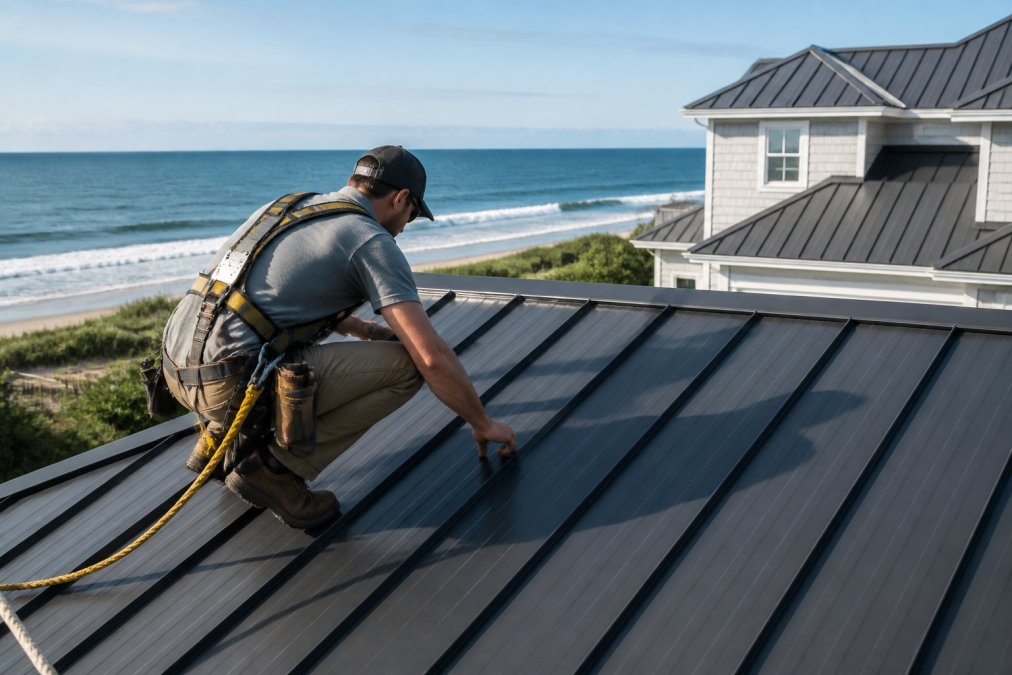
The best roofing materials for coastal areas resist wind uplift, salt spray, and UV degradation at the same time.
| Material | Typical Lifespan | Wind Rating | Salt/Air Performance | Relative Upfront Cost |
|---|---|---|---|---|
| Architectural asphalt shingles | 20-30 years | Often rated to 110-130 mph when installed to spec | Good, but granules wear faster near salt spray | Lowest |
| Standing seam metal | 40-70 years | Commonly rated 140 mph+ with concealed fasteners | Excellent; coatings resist salt corrosion | Highest |
| Membrane roofing | Varies | Varies | Good on low-slope | Varies |
| Tile roofing | Long-lasting | High | Excellent | High |
| Synthetic composite tile | Durable | High | Good | Varies |
Ask your contractor for the manufacturer’s wind warranty in writing before you sign. A verbal “it’s rated for hurricanes” is not the same as a documented rating tied to the specific installation method being used on your roof.
One more consideration competitors rarely mention: the fastener and flashing metal. Galvanized steel fasteners corrode faster in salt air than stainless or hot-dipped options. On a coastal roof, the small hardware is often what fails first, long before the surface material does.
How to Choose a Local Roofing Contractor
Choosing a local roofing contractor comes down to verifying three things before you sign: credentials, insurance, and warranty terms. Everything else is sales talk.
Credentials, Insurance, and Warranty Check
Run this checklist before you commit to anyone:
Book Your Free Roof Inspection Online →
- Verify the contractor’s state license is active and in good standing
- Request a certificate of insurance for both general liability and workers’ compensation
- Confirm the workmanship warranty length in writing, not verbally
- Get the manufacturer warranty terms for the materials being installed
- Ask whether the company is local and how long it has operated in the area
- Request two or three recent local references you can actually call
Ask who will be on your roof. A local contractor with its own team gives you one point of accountability.
Maven Roofing has served Eastern North Carolina since 2015 as a veteran-owned contractor, and free roof inspections are part of how the company works. That matters when you are trying to decide between a repair and a full replacement under pressure.
DIY vs Professional Installation: What Coastal Homeowners Should Know
Most guides treat DIY versus professional as a single yes-or-no question. It is not. The honest answer depends on the specific task, and the line between “safe to do yourself” and “call a licensed contractor” is clearer than most homeowners realize. Here is the task-by-task breakdown that competitors skip.
Tasks That Are Genuinely DIY-Friendly
These jobs protect the roof without touching its structure, and a careful homeowner can handle them with basic tools and a stable ladder:
- Clearing leaves, pine straw, and debris from valleys and behind chimneys
- Removing moss and algae with a soft brush and a manufacturer-approved cleaner
- Cleaning gutters and downspouts before storm season
- Replacing a cracked pipe boot or a missing shingle tab on a low-slope section, if you can do it from a ladder without walking the roof
- Sealing a small exposed nail head with roofing sealant
Tasks That Require a Licensed Contractor
These are the jobs where DIY goes wrong, and where the consequences show up months later:
- Full tear-off and replacement
- Deck repair or replacement (soft spots, rot, delamination)
- Underlayment installation, which must meet manufacturer spec to preserve the warranty
- Flashing at valleys, chimneys, skylights, and wall intersections
- Ridge and soffit ventilation design
- Any work on a roof steeper than you can safely walk
The Insurance and Warranty Angle
This is the part most DIY guides leave out. Homeowners insurance policies typically require that roof work be done by a licensed contractor to be covered. If a storm damages a roof that was self-installed, the claim can be denied outright. On top of that, manufacturer warranties on shingles, metal panels, and membranes almost always require installation by a certified contractor.
Working on a roof is one of the most dangerous home maintenance tasks there is. Falls are the leading cause of serious injury in home improvement work. If a task requires walking the roof, harness work, or more than one person, hire a professional. No repair is worth a hospital visit.
A Practical Decision Rule
If your goal is to extend roof life, professional rejuvenation and regular maintenance deliver more value than a weekend DIY project. If your goal is a new roof, hire a licensed contractor and keep the warranty intact. The middle ground, small maintenance tasks done safely from a ladder, is where DIY actually pays off.
One more point competitors miss: ask your contractor which tasks you can safely take over after the install. A good roofer will tell you exactly what to check each season and what to leave alone. That handoff is worth more than any DIY video.
What to Expect From the Best Breeze Roofing Alternatives
A free inspection comes first, with photos and a written assessment of your roof’s actual condition. From there, you get a recommendation: rejuvenation, targeted repair, or full replacement.
Frequently Asked Questions
What is the difference between roof rejuvenation and full replacement?
Roof rejuvenation applies a treatment to restore flexibility and granule adhesion on asphalt shingles that still have structural integrity. It extends the roof’s lifespan without a tear-off. Full replacement removes the old roofing and installs new materials, which is required when the deck, underlayment, or shingles are too far gone. Rejuvenation costs less and takes less time, but it only works on roofs that are otherwise sound.
What factors should I consider when choosing a local roofing contractor?
Check licensing, insurance, and local experience with coastal weather. Ask how long the company has operated in your area, whether it offers free inspections, and what warranty covers both materials and workmanship. Get written estimates and confirm the contractor will handle insurance claim documentation if storm damage is involved. A veteran-owned company with a physical local presence is easier to hold accountable than an out-of-state crew.
How do I compare roofing materials for coastal weather?
Focus on wind resistance, impact resistance, and corrosion protection. Standing seam metal roofing with concealed fasteners handles salt spray and high winds well. Architectural asphalt shingles offer a balance of cost and durability. Match the material to your roof pitch, substrate condition, and how long you plan to stay in the home.
What are the benefits of hiring a veteran-owned roofing company?
Veteran-owned roofing companies often bring discipline, accountability, and a service-first mindset to every project. Many offer free inspections, transparent communication, and a strong commitment to standing behind their work. For coastal homeowners dealing with insurance claims and storm damage, that reliability matters. Ask about certifications, insurance coverage, and whether the company has handled claims similar to yours before signing anything.
How can I ensure my roof replacement is built to last?
Insist on a full tear-off so the deck can be inspected and repaired. Verify that underlayment, flashing, and pipe boots are replaced, not reused. Choose materials rated for your wind zone and salt exposure. Confirm the contractor follows manufacturer specifications, since improper installation voids most warranties. Schedule regular maintenance inspections every year or two to catch small issues before they become leaks.